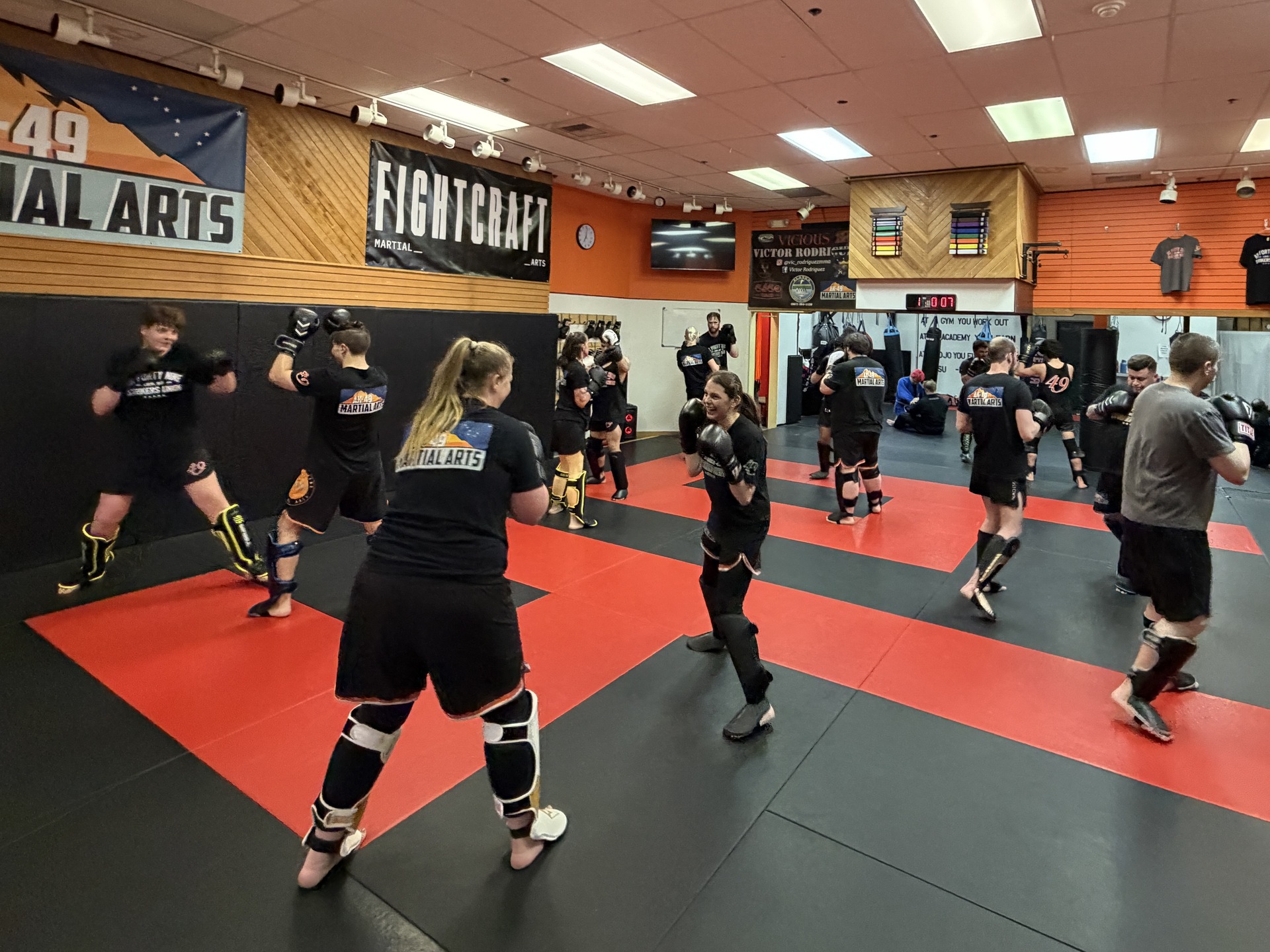
Jab Cross Switch Kick
Kickboxing | Combos
How to Throw Jab, Cross, Switch Kick in Kickboxing
Jab, cross, switch kick is two straight punches to the head, then a quick swap of your feet and a round kick to the body with the leg that started in front. Keep a good athletic base, hands up and elbows in, punch from the face and bring each punch back to the face before the kick goes. The punches bring their hands up, and the kick goes into the body they just uncovered.
- 01
Good athletic base
Feet about shoulder width apart, front toes pointing forward, knees a little bent and your weight in the middle. Keep the stance a little shorter than usual for this combo, because a long stance makes the switch slow. You should feel ready to move your feet without having to reset.
- 02
Hands up, elbows in
Both fists sit at your cheeks with your chin tucked a little and your elbows close to your ribs. One hand stays on your face while the other punches, and both are on your face when you switch and kick. That's what keeps you safe during the moment your feet are moving.
- 03
Punch from the face
The jab and the cross both leave straight from your cheek, with no wind up and no dropping the hand first. Reach until each arm is nearly straight, with a soft elbow, and turn the fist over at the end. Land on the first two knuckles with a straight wrist, and keep breathing steady.
- 04
Back to the face
Each punch comes straight back to your cheek as fast as it went out, before the next strike starts. If the cross is still out there when you switch, your face is open and your balance is off.
- 05
Switch right off the cross
The cross turns your hips and puts your weight forward, so use that to swap your feet. Your front foot hops back and your back foot hops forward at the same time, so for a moment you're in the opposite stance. The leg that just went back is your kicking leg, and the foot that came forward is your standing foot. So if you stand left foot forward, it's a left kick. Make it a small, quick hop, low to the floor, with your head and hips moving together. Hopping up tall is the common mistake, because it's slow and shows the kick. Your feet should barely leave the mat. It should feel like you bounce off the mat right out of the cross.
- 06
Back foot straight, lead shoulder in front
As your feet swap, your back foot comes up straight and lands on its own side of the center line, never across it. Keep your same front shoulder forward instead of turning square. Square shoulders or a bent hip both cost you power and leave your chin open.
- 07
Turn the hip into the body
Get up on the ball of the standing foot and turn it so your knee and toes point where the kick is going, then swing the kick around into their body with the leg slightly bent. Land with the shin, not the foot. The kick goes around in a circle with your hip turning through it, not straight up. While it swings, the hand on the kicking side can drop a little to help you turn, but the other hand stays glued to your face.
- 08
Back to your stance
Put the kicking foot down and land back in your normal stance with both hands on your face. Then step out or start again. Don't stand in front of them admiring the kick. Bring the leg back fast, because a body kick that hangs there is easy to catch, and if it misses, get your feet back under you before anything else.
When to use it
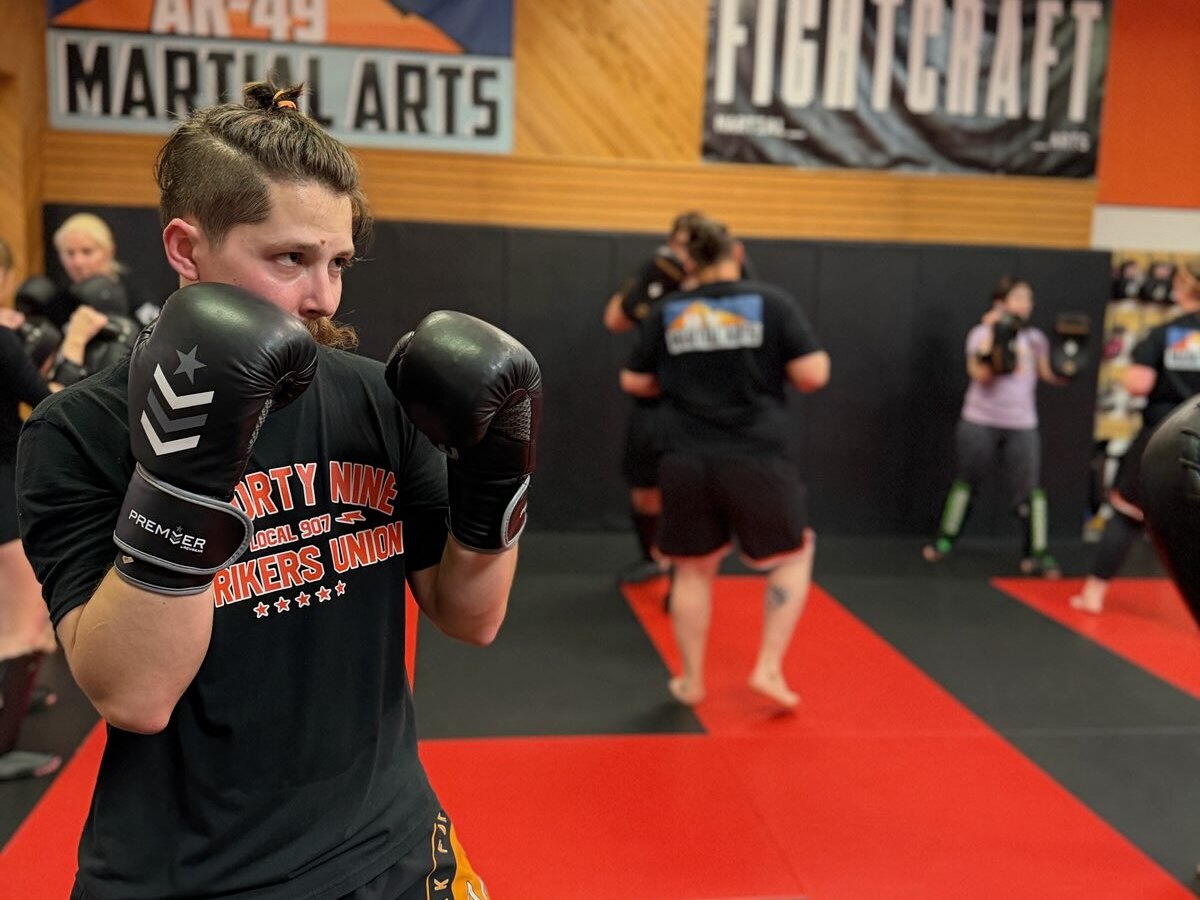
When they cover up from your punches. The jab and cross go to the head, and most people bring their hands and elbows up to block them. That leaves the side of the body open for a kick. This combo uses that: the punches go high, then the kick goes low to the body. You'll drill it on pads in class long before you use it anywhere else, with your partner holding Thai pads or a shield on their side at rib height and you starting light. If they keep their elbow down on that side, the kick lands on the elbow, so go back to the head with punches instead.
When they stay right in front of you. The switch kick is quick because your front leg is already close to them. That only works if they stay where they are after your punches. If the punches move them back, a switch kick falls short, so step into the kick instead. Learning to tell the difference starts on the pads, where your partner will stay or step back.
Things to look out for
Leaving the cross out
You start the switch while the cross is still out in front of you. Your chin is open, your weight is tipping forward, and the kick comes out off balance.
The fix: Bring the cross all the way back to your cheek before the feet move. Think punch, back to the face, then switch.
Switching from a long stance
Your feet are too far apart, so the switch becomes a big, slow step. They see it coming and can punch you while your feet are moving.
The fix: Shorten your stance a little for this combo. The switch only needs to be big enough to swap your feet.
Dropping your hands on the kick
Your hands fly down as the leg swings, often the same hand that just threw the cross. Your face is open the whole time your leg is in the air.
The fix: Keep both fists at your cheeks and let your hips swing the kick. Slow it down until you can kick with your hands up and still stay balanced.
Squaring your shoulders
Both shoulders face them as you switch. For that moment your whole front is open, and a straight punch lands easily.
The fix: Keep your lead shoulder forward through the switch. Feel like you stay a little sideways until the kick goes.
Back foot stepping across
Your back foot lands across the center line and your hip ends up bent. The kick goes off to the side and loses most of its power.
The fix: Practice on a line on the floor. Back foot comes up straight and stays on its own side of the line.
Switch kicking when they've stepped back
The punches made them step back, but you switch anyway. The kick falls short, and you're standing on one leg in front of them.
The fix: If they move back, step into the kick instead of switching. On the bag, practice both so you can pick the right one.
Holding your breath
You tense up and hold your breath through all three strikes. You gas out after a few rounds and the kick gets slow and stiff.
The fix: Breathe normally and keep it steady, and let a breath out as the kick lands. Stay loose between them and only tighten up on contact.
What to Practice at Home
Drill 01
Shadow box it slow
3 rounds of 2 minutes with 1 minute rest, in front of a mirror if you have one. Round one, jab and cross only, checking that each punch comes back to your cheek. Round two, add the switch with no kick and check that your back foot stays on its side of a tape line. Round three, the full combo slow, landing back in your stance every time.
Drill 02
Combo for reps
4 sets of 10 full combos in the air at medium speed, with 1 minute rest between sets. Keep breathing steady the whole set. Keep both hands at your cheeks during the kick and land in your stance before the next rep.
Drill 03
Bag rounds, switch or step
If you have a bag, 4 rounds of 2 minutes with 1 minute rest. Stand close and throw jab, cross, switch kick to the body, then take a step back and throw jab, cross with a step into the kick. Kick light at first so your shins get used to it, and never kick a wall or anything hard.
Frequently Asked Questions
What's the difference between this and jab, cross, kick?+
They're close. In jab, cross, kick you pick between a switch and a small step depending on how far away they are. Here you drill the switch on every rep, so it gets small, fast and automatic. Get jab, cross, kick working first, then use this one to sharpen the switch.
Where do I aim the switch kick?+
The body, on the side of the ribs under their arm. The punches to the head bring their hands up, which opens that spot. Land it with your shin, not your foot.
Why does my switch kick feel slow after the cross?+
Usually your stance is too long or you're switching big. Shorten your stance, make the switch a quick little hop, and let the cross's hip turn flow straight into it. A small switch is faster than a big jump.
What if they step back after my punches?+
Then the switch kick won't reach. Step into the kick instead, which covers more ground. On pads and the bag, practice both so you can tell which one the distance calls for.
Can I practice this combo at home?+
Yes. Shadow box it slowly in front of a mirror first, then speed it up. If you have a bag, work it on the bag with light kicks. Focus on bringing each punch back to your face before the switch.
Are You Ready?