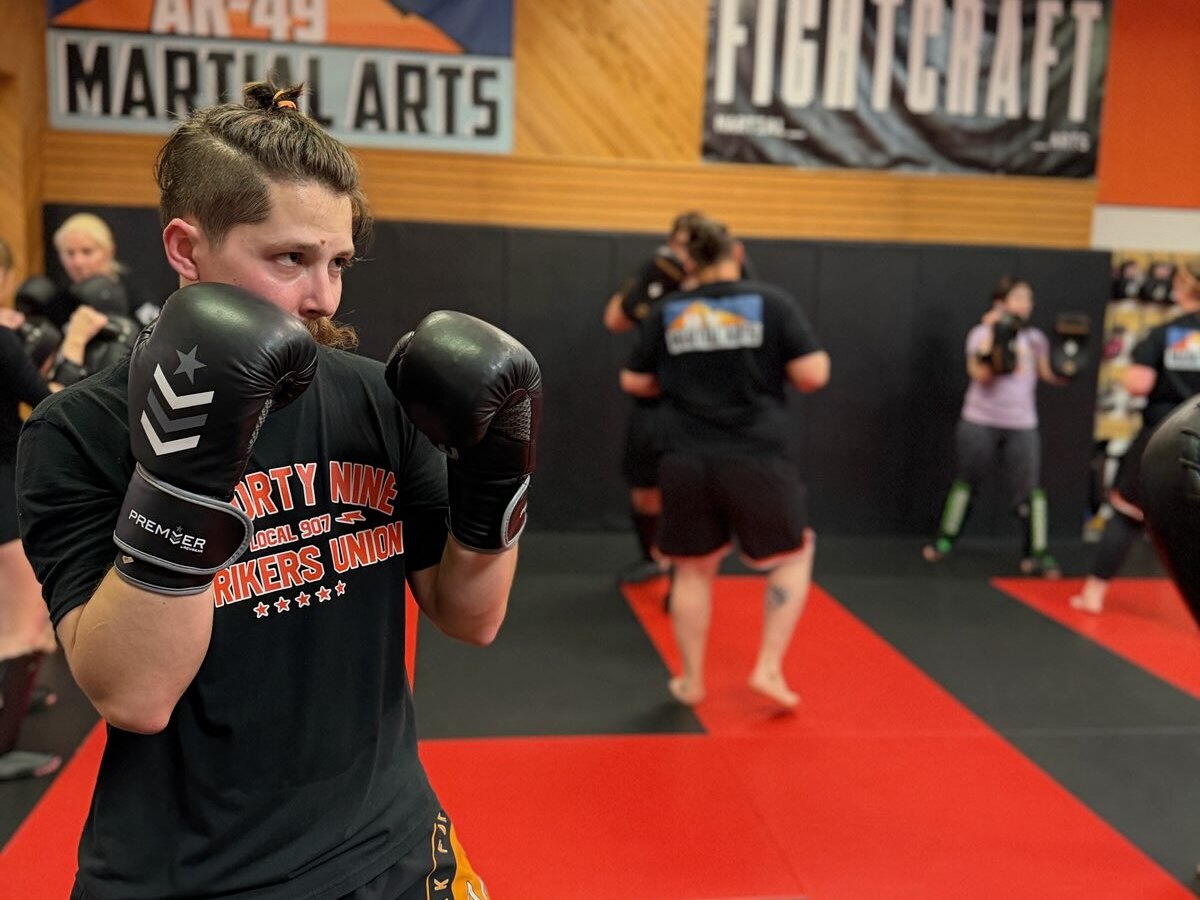
Kickboxing for Self Defense
Kickboxing | Questions
Is Kickboxing Good for Self Defense
Kickboxing gives you real tools for trouble on your feet: a guard, balance, footwork, distance and strikes you've practiced against a partner who moves. Real self defense starts earlier, with paying attention to where you are and staying out of bad situations. The physical part takes regular training over time, and one class won't get you there.
What kickboxing trains
- 01
A guard that stays up
You learn to keep your hands up by your face and your elbows in, with your chin tucked. Protecting your head comes first in any fight. After enough rounds, your hands go there on their own when you're surprised, which is the whole point of training it over and over.
- 02
Seeing strikes coming
Kickboxing trains you to keep your eyes up and watch the person in front of you. Everything you see coming is a lot less dangerous than the stuff you don't see. Week by week, punches stop looking like a blur and start looking like something you can block or move away from.
- 03
Distance and footwork
You learn how far away you need to be so a punch or kick can't reach you, and how to step in and out without crossing your feet. Distance is what keeps you safe and gives you room to leave. Kickboxing drills this in every class.
- 04
Balance under pressure
A good athletic base helps you stay on your feet when someone pushes or swings at you. Strikers use footwork and their stance to stay standing and make takedowns harder, but stopping a real grab or takedown takes grappling practice too. If you stay on your feet, you have a better chance to get away.
- 05
Staying calm
Pad work, partner drills and, if you choose, sparring put you in front of someone who moves and hits back, with a coach watching. Over months of training, that pressure stops feeling new. Being able to breathe and think when your heart is pounding is a big part of what training gives you.

What self defense really takes
Awareness comes first. Real self defense is knowing your surroundings and what you do and don't do to stay out of bad situations. Keep your head up and off your phone when you're walking, stick to well lit places, notice what looks out of place and know where your exits are. It's always better to avoid trouble or leave early than to rely on fighting your way out of it.
It takes training over time. Once it turns physical, one class won't prepare you for someone strong and athletic. That takes regular training, the same way any skill does. Kickboxing is fought standing, and most kickboxing rules don't allow throws, so it doesn't train takedowns or the ground much. Brazilian Jiu Jitsu and wrestling cover that part.
Things to look out for
Thinking a few classes make you ready
Some people take a couple of classes or a one night seminar and feel prepared. Under real stress, a move you've done a few times won't show up, and false confidence can put you in a worse spot.
The fix: Plan on training regularly for months, not weeks. Real skill comes from repeating the basics against a partner until they happen without thinking.
Ignoring grappling
A lot of real trouble turns into grabbing, clinching or ending up on the ground. Most kickboxing rules don't allow throws, so a striker who's only ever kickboxed often has no plan once that happens.
The fix: Add Brazilian Jiu Jitsu or wrestling to your kickboxing. At AK-49 Martial Arts, No Gi classes are a hybrid of both.
Skipping awareness
Earbuds in, eyes on the phone, walking somewhere dark and empty. Most of the time nothing happens, but when it does, you're surprised, and no amount of training helps much against a hit you never saw.
The fix: Make paying attention a habit. Head up, phone away when you're walking, well lit routes, and a quick look around when you get out of the car.
Staying when you could leave
Pride or anger keeps you in an argument that's heating up. Every second you stay is a chance for it to turn physical.
The fix: Your goal is to get home safe. Talk calmly, keep your open hands up in front of you, which looks calm but still has your hands near your face, and give them room. If you can walk away, leave, and use distance and your guard only if you have to. Use only the force you need to get away, and don't assume there's only one person or no weapon.
Only hitting things that don't move
Hitting the bag gets you fit, but the bag never moves or hits back. If that's all you do, your timing, distance and calm have never been tested.
The fix: Work pads with a partner who moves and throws back, and do partner drills in class. Sparring is optional, and it's there later if you want it.
Frequently Asked Questions
Is kickboxing good for self defense?+
It teaches useful skills, like keeping your hands up, moving your feet, keeping your distance and staying calm under pressure. No single style covers everything, because kickboxing doesn't train the ground. It's a solid place to start, and it works best with awareness and some grappling.
Can one self defense class prepare me?+
No. Once it turns physical, one class won't prepare you for someone strong and athletic. That takes regular training over time. A first class is a good start, and it's free at AK-49 Martial Arts.
What should I train along with kickboxing?+
Brazilian Jiu Jitsu or wrestling, because kickboxing doesn't train takedowns or the ground. At AK-49 Martial Arts, our No Gi classes are a hybrid of Brazilian Jiu Jitsu and wrestling.
Where does self defense start?+
With awareness of your surroundings and staying out of bad situations. Keep your head up, notice what's around you and leave early when something feels wrong. Physical skills are for when that doesn't work.
Is Muay Thai better than kickboxing for self defense?+
Muay Thai adds elbows, knees and the clinch, so it covers more of the grabbing range up close. Both are striking arts, and both still leave out the ground. Either one paired with grappling and regular training is a good plan.
Are You Ready?