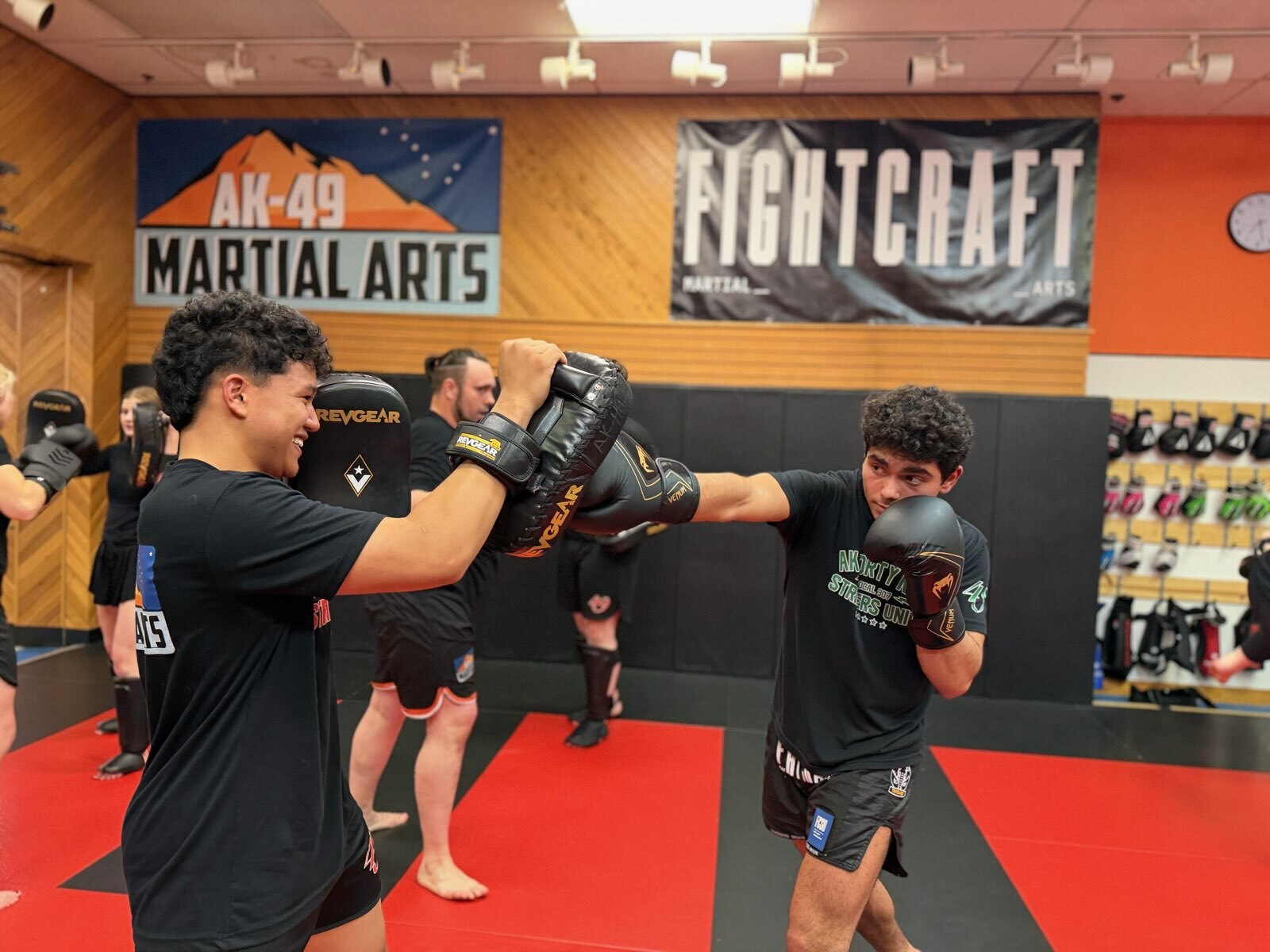
Stretching for Higher Kicks
Kickboxing | Conditioning
Stretching for Higher Kicks
Higher kicks come from stretching your hips, groin and hamstrings a little every day, then kicking from low to high so your body learns to use the new range. Warm up before you stretch, keep holds short before class and save the long holds for after. Turn your standing foot as you kick, which opens your hip so the leg can rise higher.
Five stretches to start with
- 01
Warm up first
Stretching isn't a warm up. Move for 5 to 10 minutes first, like jumping rope, easy shadowboxing or a light jog in place, then add 10 easy leg swings front to back and side to side on each leg. Warm muscles stretch further and it feels a lot better.
- 02
Deep squat hold
Sit down into a deep squat with your feet flat, chest up, and use your elbows to push your knees open, with your knees pointing the same way as your toes. If your heels lift, put a small plate or folded towel under them, or hold onto a door frame. If your knees complain, sit back onto a low box or step instead of going all the way down, and skip pushing the knees open. Rock a little side to side and front to back. Start with a minute or two, and over weeks work toward being able to sit there for 5 minutes.
- 03
Hamstring hang
Stand with your feet together, knees soft, and fold forward from your hips, letting your upper body hang. Don't pull or bounce, just let your weight do it and breathe. Roll up slowly to stand, and if your lower back complains, bend your knees more or rest your hands on a chair. To get the calves too, stand with your toes up on a step or a small board.
- 04
Kneeling hip and groin rocks
Get on your hands and knees with your knees apart and rock your hips slowly back and forward. Then straighten one leg out to the side and keep rocking. Spend extra time wherever you feel tight, because everybody is tight in different spots.
- 05
Lunging hip flexor stretch
Drop into a lunge with your back knee on the floor and push your hips forward. Squeeze the glute on the back leg side and you'll feel it in the front of that hip. Turn your feet so they make an L shape and the stretch moves more into your groin.
- 06
Wide stance shifts
Stand with your feet wide and shift your weight slowly from one side to the other, bending one knee while the other leg stays long. Turn your hips a little as you go. This opens the inner thighs and hips in the way a round kick needs.
- 07
Then kick, low to high
After you stretch, throw slow kicks that start low and get a little higher each time, keeping one hand at your face. Turn your standing foot so the heel points toward the target, which lets your hip open. Stretching gives you more range, and kicking through it is how you learn to use that range in a real kick.
When and how long
Every day, a little. Stretching once a week won't change much. Ten to fifteen minutes every day, even on days you don't train, is what makes the difference. A good time is in the evening or after a workout when you're already warm. Expect it to take weeks to notice, and months to really see the difference.
Before and after class. Before class, warm up, keep any stretch holds under a minute, and finish with moving kicks so your legs are ready to work. Research suggests long holds, about a minute or more on one muscle, right before hard training can take a little pop out of your kicks for a short time. The effect is small, and moving kicks afterward help. After class, when you're warm, is the best time for the longer holds.
Things to look out for
Stretching once a week
You do one big stretch session on the weekend and nothing the rest of the week. Your body goes right back to where it was, and your kicks never get higher.
The fix: Do a short routine every day instead. Cue: ten minutes, every day.
Stretching cold
You walk in and drop straight into a deep stretch. Cold muscles fight the stretch, it feels worse, and you don't get as far.
The fix: Move for 5 to 10 minutes first until you're a little warm. Cue: warm, then stretch.
Bouncing or forcing it
You bounce in the stretch or push until it really hurts, trying to get there faster. Your body tightens up to protect itself, and you can end up sore and set back.
The fix: Ease into it slowly, hold where you feel a stretch, and breathe. Stretching should feel like tension, not pain. Stop if you feel sharp pain, pinching in the front of the hip, or numbness or tingling down the leg. If you've hurt your hip, knee, hamstring or lower back before, go easier and ask your coach or a doctor what's safe. Cue: slow and breathe.
Long holds right before hard work
You do long static holds right before pads or sparring. For a short time afterward, your kicks can feel a little flat.
The fix: Before class, keep holds under a minute and follow them with moving kicks. Save long holds for after. Cue: short before, long after.
Leaning back to get height
Your hips won't go higher yet, so you lean way back to get the foot up. Your chin is open, you lose balance, and the kick has no power.
The fix: Kick only as high as you can with your upper body staying over your hips and a hand at your face. Build the height slowly with stretching and low to high kicks. Cue: kick at the height you own.
Not turning the standing foot
Your standing foot stays pointed forward, so your hip can't open. The kick stops at your waist no matter how flexible you are.
The fix: Turn on the ball of your standing foot so your heel points toward the target as you kick. Cue: heel to the target, hip over.
Drills you can practice
Drill 01
Daily stretch routine
Every day, about 12 minutes, after a short warm up. Deep squat hold for 2 minutes. Hamstring hang, 2 holds of 30 to 45 seconds. Kneeling hip rocks, 1 minute each side. Lunging hip flexor stretch, 2 holds of 30 seconds each side. Wide stance shifts for 1 minute. Breathe slowly the whole time.
Drill 02
Low to high kicks
3 rounds of 2 minutes with 1 minute rest, after your warm up and stretches. Round one, slow round kicks at knee height. Round two, at hip height. Round three, as high as you can with good form and no leaning back. Alternate legs, turn your standing foot, and keep a hand at your face.
Drill 03
Hip strength and balance
2 or 3 days a week. 3 sets of 10 single leg Romanian deadlifts on each side with no weight, hinging at the hips with a flat back. Then 3 sets of 5 slow hip airplanes on each side: balance on one leg, hinge forward and turn your hips open and closed. Rest 1 minute between sets. Strong, steady hips help you hold your balance on high kicks. To build the strength to lift the leg, add 2 sets of 8 slow standing leg raises to the front and side on each leg, holding the top for a second.
Frequently Asked Questions
How often should I stretch for higher kicks?+
Every day if you can, even just 10 or 15 minutes. Once a week won't do much. Consistency matters more than how hard you push any one session.
Should I stretch before kickboxing?+
Warm up first, then keep any static stretches under a minute and follow them with moving kicks. Long holds right before training can make your kicks feel a little flat for a short time. Do your longer stretching after class or later in the day.
What should I stretch for high kicks?+
Hips, groin and hamstrings are the big ones, plus the front of the hip. Most kickboxers are tight in those spots, but everybody is different. Pay extra attention to wherever you feel tightest.
How long until my kicks get higher?+
It depends on where you start, but expect weeks before you notice and months before it's a big change. Stretching every day and kicking low to high after makes it come faster. Turning your standing foot often adds a little height right away.
Do I need to do the splits to kick high?+
No. Plenty of good kickers can't do the splits. You need enough range in your hips and hamstrings, the strength to lift your leg through that range, the balance to stand on one leg, and good technique, like turning your standing foot and opening your hip. Being able to reach a stretch on the floor doesn't mean you can lift the leg that high in a kick, which is why the strength work matters.
Are You Ready?