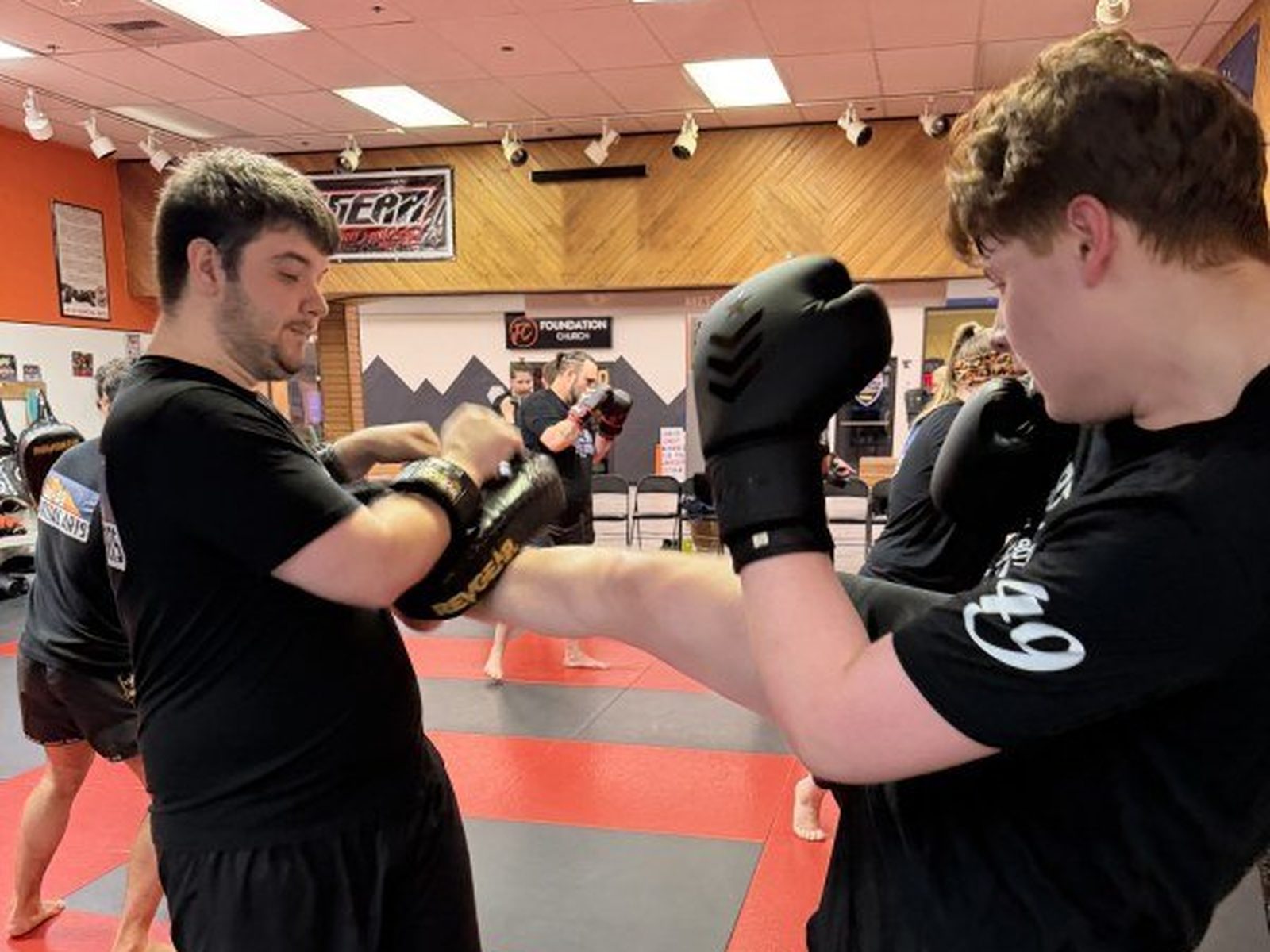
Kicking the Heavy Bag
Kickboxing | Bag Work
How to Kick a Heavy Bag
To throw the rear round kick on the heavy bag, start from a good athletic base with your hands up, step to lengthen your stance, come up on the ball of your standing foot and turn your hip over so your shin goes through the bag. Then bring the leg straight back to your stance. When the bag swings back at you, meet it with the next kick or a straight punch instead of grabbing it.
- 01
Good athletic base
Start in your stance: feet about shoulder width apart, front toes pointing forward, knees a little bent and your weight in the middle. Stand about where your shin would land on the bag if you kicked, not right up against it. You'll lengthen the stance as you step to kick, but you start balanced.
- 02
Hands up, elbows in
Start with both fists up at your cheeks and your elbows in close to your ribs. The hand on your front side stays up by your face while you kick. On a power kick, some coaches let the arm on the kicking side swing down and back for balance, but the front hand stays home. The bag doesn't hit back, so this is where a dropped hand habit gets built. Keep them up on the bag and the habit is there when someone does kick back.
- 03
Step to lengthen your stance
Step the front foot a little forward and just off to the side, landing on the ball of the foot with the knee over the foot. If you stand with your left foot forward, step slightly left, and if your right foot is forward, step slightly right. That opens your hip so you can kick through the bag instead of into it. This is for the rear leg kick. A lead leg kick usually needs a small switch or skip step first, which is its own lesson.
- 04
Up on the ball of the foot
Push off the back foot and turn on the ball of your standing foot so the heel swings around toward the bag and the toes end up pointing away from it, with your whole body turning behind the kick. Don't let that heel drop flat. A flat standing foot stops your hip from turning, and the kick loses most of its power.
- 05
Turn the hip over
Pull the shoulder on your kicking side back as the hip turns over, and swing the leg through. On low and body kicks, keep a slight bend at the knee so your whole body goes into it, with the shin firm as it lands. Aim to kick through the bag, as if the target were on the far side of it.
- 06
Land with the shin
Hit with the shin, from a little below the knee down toward the ankle, not with the foot or toes. The foot has a lot of small bones that are easy to hurt. A shin kick on the bag sounds like a deep thud, and a foot kick sounds like a slap.
- 07
Back to your stance
Bring the leg straight back down into your stance, with your feet under you and your hands on your face. Keep breathing steady, and let a breath out as the kick lands. Don't stand there with the leg up looking at the bag.

Getting more out of it
To practice your kicks at full speed. The bag is where you can build up to hard kicks without hurting a partner. Start around half power and add more over weeks, as your shins and your form can handle it. You can work low kicks, body kicks and, later, higher kicks, and feel whether your shin is landing and your hip is turning. Pick one kick per round and work on it. Give every kick a reason.
To learn timing. Once single kicks feel solid, start meeting the bag as it swings back toward you, at half power, with your next kick or a straight punch. That's like meeting a person as they come toward you. It teaches you to hit something moving, which is a lot closer to the real thing than a still bag. It also keeps the bag under control instead of swinging all over.
Things to look out for
Dropping your hands
Your arms swing down as the leg goes out because nobody is hitting back. It feels fine on the bag, but you're building the habit that gets you hit in class.
The fix: Keep the front side hand up by your cheek on every kick. If it comes off your face, throw that kick again slowly.
Standing flat footed
The standing foot stays flat and pointing at the bag. Your hip can't turn over, so the kick is all leg and feels weak, and it can strain your knee.
The fix: Come up on the ball of the standing foot and let the heel turn toward the bag. Practice it slowly with a hand on the bag.
Kicking with the foot
You land with the foot or toes instead of the shin. It's weak, and it's an easy way to hurt your foot.
The fix: Step a little closer so the shin lands. Listen for the thud, and look for the mark on your shin.
Square shoulders
Your shoulders stay facing the bag, so the hip never turns over. The kick slaps the bag instead of going through it.
The fix: Pull the shoulder on your kicking side back as you kick. You should feel your hip open and turn over.
Overstepping and leaning back
You take too big a step or step in again because the bag feels far away, then lean back to make room. Your chin is up and open, and you're off balance.
The fix: Start at the right distance so one small step is enough. Keep your head over your hips and your chin down.
Letting the bag swing everywhere
Each kick sends the bag swinging more and more, and you chase it around or wait for it to settle.
The fix: Meet the bag with your next kick or a straight punch as it swings back to you. Kick it as it comes back to you.
Grabbing the bag between kicks
You reach out and hug the bag to stop it. In a fight that's your hands off your face for no reason.
The fix: Steady it with a jab, a straight punch or a kick instead. Your hands go back to your face after every strike.
Drills you can practice
Drill 01
Slow kick to the bag
3 sets of 10 slow kicks on each leg. First check the bag is hung securely and nobody is near its swing. Step, turn on the ball of the standing foot, turn the hip over and rest your shin against the bag, then bring the leg back to your stance. Check the heel turned, the shin landed and your hand stayed on your face before you add any speed.
Drill 02
Kick and return rounds
4 rounds of 2 minutes with 1 minute rest. Throw single kicks, coming all the way back to your stance after each one. Spend a bit more of the round on your stronger side while you learn the shape, and give the other side real work every round too. Keep your breathing steady the whole round.
Drill 03
Meet the bag
3 rounds of 2 minutes with 1 minute rest. Kick the bag, and as it swings back, meet it with a straight punch or the next kick to stop it. Go at half power, and if the bag is swinging hard, let it slow down before you meet it. If your hips are tight, keep the kicks low and build up to body height over time.
Frequently Asked Questions
How do you kick a heavy bag without it swinging everywhere?+
Meet the bag with your next kick or a straight punch as it swings back toward you. Don't wait for it to stop, and don't grab it. That timing is part of the drill.
Why do my kicks feel weak on the bag?+
Usually it's a short stance, a flat standing foot or square shoulders. Step to lengthen your stance, come up on the ball of your standing foot and pull the shoulder back so your hip turns over. Then kick through the bag instead of at it.
Should I kick with my shin or my foot?+
Your shin. It's much stronger than the foot, which has a lot of small bones. Start light while your shins get used to it and build up over time. A sharp pain in your foot, shin, knee or hip means stop and tell your coach.
Should I kick with both legs?+
Yes. As a beginner it's fine to spend a bit more time on your stronger side while you learn the shape, but give the other side real work every session. Both sides get better, and you won't be stuck kicking with one leg.
What if my hips are too tight to kick high?+
Start with low kicks and build up to body kicks. There's no rush to kick high on the bag. A clean low kick with the hip turned over is worth more than a high kick that throws you off balance.
Are You Ready?