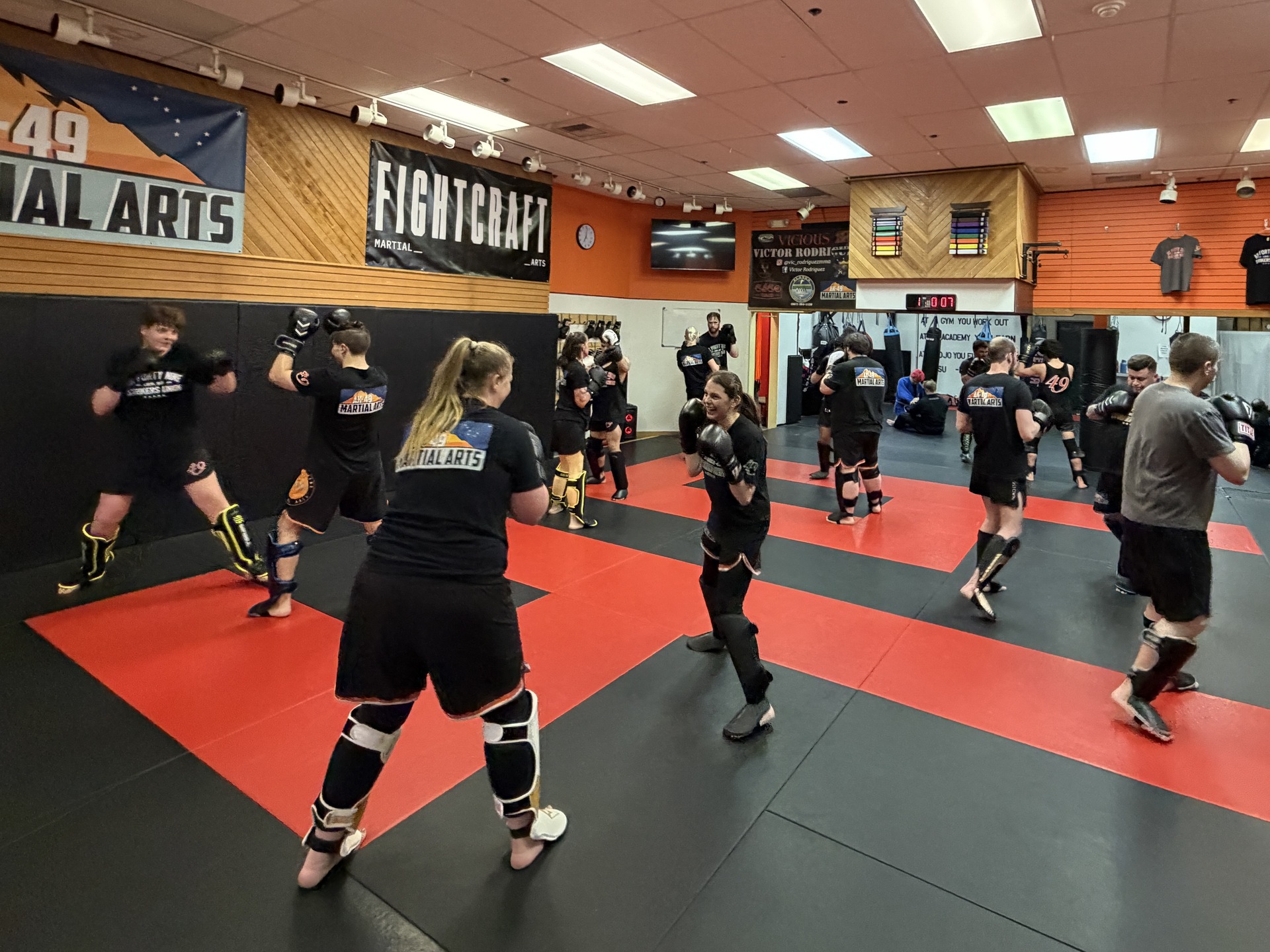
The Lead Hook
Kickboxing | Punches
How to Throw a Lead Hook in Kickboxing
The lead hook is a curved punch thrown with your front hand, powered by turning your hip and shoulder with your elbow up level behind the fist. Stay in a good athletic base with your hands up and elbows in, punch from the face and bring it right back to the face. At AK-49 Martial Arts the front foot stays planted while you're moving, and you pivot it for full power when they're against the ropes or the cage.
- 01
Good athletic base
Feet about shoulder width apart, front foot ahead with the toes pointing forward, knees a little bent and your weight in the middle. The hook gets its power from turning your body, and you can only turn well from a balanced base. You should feel ready to turn without leaning out over your front foot.
- 02
Hands up, elbows in
Both fists sit up by your cheeks with your chin tucked a little, and your elbows stay in close to your ribs. Your rear hand stays on your face the whole time, because the punch most likely to come back at you is their own hook. That back glove protects your jaw and temple while the front hand works.
- 03
Punch from the face
The hook starts right where your hand already is, at your face, with no pulling it back and no dropping it first. On a hook to the head, lift the elbow to about shoulder height so it sits level, right behind the fist, with the arm bent in a hook shape. Hooks to the body and very short hooks use a lower elbow, and those are their own lessons. A wind up tells them it's coming, and a low elbow leaks power.
- 04
Back to the face
Bring the hand straight back to your cheek as soon as it lands, and don't swing on through past the target. Keep breathing steady, let a breath out as it lands, and keep your eyes on them. Both hands finish on your face, ready for whatever comes back, and then you keep punching or step off to the side instead of standing in front of them.
- 05
Turn the hip and shoulder
Push your lead hip to the side and turn your shoulder through, so your body carries the arm around. Your lead shoulder comes up over your chin as you turn. Your weight sits in the middle or shifts a touch toward the front leg as you turn, and the back foot stays light so the hips can move. Stay relaxed until the last moment and squeeze the fist only as it lands. It should feel like your whole front side turned, not like your arm swung out on its own.
- 06
Land with the knuckles
Aim at the side of the jaw, and land on the first two knuckles with your wrist straight, in line with your forearm. The hook lands from close to middle range, about where a jab would land with your elbow still bent. Thumb up is a good place to start, and some coaches turn the palm down on longer hooks. Don't slap with the inside of the glove, because a slap makes noise but has nothing behind it.
- 07
Front foot planted while you move
While you're moving around, keep the front foot planted, or stepping forward, and let your hip and shoulder do the turning. Once the hip turns on a big pivot, that foot can't step and you're stuck in place. Planted doesn't mean locked, so if you feel your front knee twist, let the heel turn a little with your hip.
- 08
Pivot for power on the ropes or cage
When they're stuck against the ropes or the cage, turn and pivot the front foot to put everything into the hook. They can't back away there, so it's the time to sit down on the punch. Then get right back to your stance.
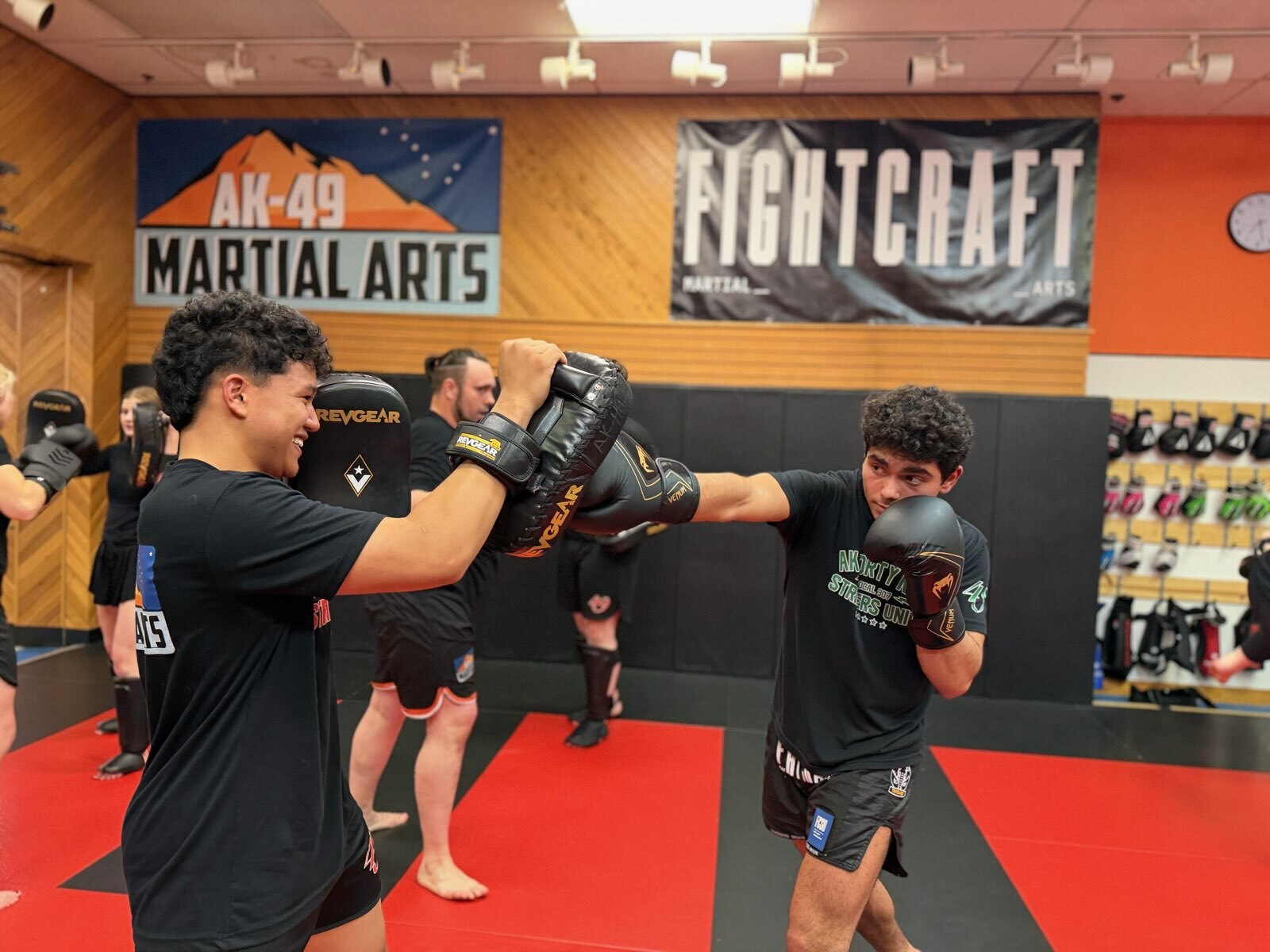
When to use it
After the jab and cross. Jab, cross, lead hook is one of the first three punch combinations you'll learn. The cross turns your body toward one side, which sets the hook up to come right back the other way. Once your one two feels smooth, the hook is the next punch to add. Bring everything back to your face before you move.
Before the low kick. Lead hook, then the rear low kick, is a classic kickboxing combination. The hook makes them think about their head and lift their hands, and the kick goes low while they're covering up. It's one of the first ways you'll learn to mix your hands and your feet. Keep your hands at your face while you kick.
Things to look out for
Dropping the rear hand
As the hook goes out, the back hand slides down off your face. That leaves your jaw and temple open to the exact punch you're throwing, their hook coming back at you.
The fix: Keep the rear glove touching your cheek on every hook. Shadow box in front of a mirror and watch that hand, not the one that's punching.
Elbow down
The elbow hangs low and the punch scoops up or pushes instead of turning. Your weight isn't behind it, so it lands soft even when you throw it hard.
The fix: Lift the elbow level with your fist so your forearm is flat. You should feel your shoulder, elbow and knuckles in one line as it lands.
Winding up
You pull the hand back or drop it before you throw. They see it coming a mile away, and your face is open the whole time.
The fix: Start the hook from your guard, right where the hand already sits. Go slow in a mirror and make sure the glove goes straight from your cheek into the hook.
All arm
Your feet and hips stay still and only the arm swings. The hook is weak, your shoulder tires out fast, and you end up muscling every punch.
The fix: Turn your lead hip and shoulder together as the hand comes around. Feel your front hip turn in with the punch, and let the arm just ride along.
Reaching from too far
You throw the hook from outside its range and loop it wide to reach them. It's slow, easy to see, and it pulls you off balance and open to a counter.
The fix: The hook lands best from close to middle range, so get closer first with a jab or a small step and keep it tight. If you'd have to reach for it, throw a straight punch instead.
Slapping with the glove
The inside of the glove lands instead of the knuckles. It sounds loud on the pads, but there's nothing behind it and your wrist bends on impact.
The fix: Land on the first two knuckles with the wrist straight. Hit the bag slowly with wrapped hands and gloves and feel where the knuckles meet it.
Over pivoting while you move
The front foot spins all the way around on every hook. Your lead leg is turned and stuck, so you can't lift it to check a low kick. One coach calls that the low kicker's dream.
The fix: Keep the front foot planted while you're moving and let your hips turn. Save the big pivot for when they're against the ropes or the cage.
What to Practice at Home
Drill 01
Shadow box the hook
3 rounds of 2 minutes with 1 minute rest, in front of a mirror if you have one. Round one, slow single lead hooks, checking that the elbow is level and the rear hand stays on your cheek. Round two, jab then hook, turning the hip and breathing steady. Round three, jab, cross, hook, bringing every punch back to your face.
Drill 02
Planted foot check
Put a strip of tape on the floor under the ball of your front foot. Do 3 sets of 15 slow hooks: take a small step, set your feet, throw the hook, and check that the front foot didn't spin off the tape. Rest 30 seconds between sets, then finish with 10 hooks where you pivot fully, picturing them against the ropes.
Drill 03
Bag rounds
If you have a heavy bag, wrap your hands, put your gloves on and do 3 rounds of 2 minutes with 1 minute rest. Round one, jab, cross, hook at half speed. Round two, lead hook into a rear low kick at half speed, hands at your face during the kick and landing back in your stance before the next rep. Round three, short hooks from close range with the front foot planted, stepping out after every few. With a partner on focus mitts, they hold the mitt facing in at the side of their head, and you throw the hook only from the distance where your elbow stays bent, then step or roll out after it.
Frequently Asked Questions
How do you throw a lead hook in kickboxing?+
Start in a good athletic base with your hands up and elbows in. Turn your hip and shoulder and bring the front hand around from your face, with the elbow level behind the fist, and land on the first two knuckles. Then bring it straight back to your face. Your rear hand stays on your cheek the whole time.
Should you pivot your front foot on a lead hook?+
There's a time for both. At AK-49 Martial Arts we keep it planted while you're moving, so you can still step and still lift your leg to check a kick. When they're on the ropes or the cage, pivot it for the most power. Boxers pivot more because nobody is kicking their legs.
Thumb up or palm down on a hook?+
Both work, and coaches teach both. Thumb up is a good place to start, and some people turn the palm down on longer hooks. What matters is a straight wrist and landing on the first two knuckles. Try both slowly on the bag and use the one that keeps your wrist straight.
Why does my hook feel weak?+
Usually it's all arm, or the elbow is hanging low. Turn your hip and shoulder with the punch and lift the elbow level with your fist. You might also be too far away, since a hook you have to reach for loses its power. Get closer first and keep it tight.
What do you throw after a lead hook?+
The rear low kick is a classic kickboxing follow up. A cross after the hook works well too, because the hook turns your body back into position for the back hand. Whatever you throw, bring your hands back to your face and move when you're done.
Are You Ready?