
The Rear Hook
Kickboxing | Punches
How to Throw a Rear Hook in Kickboxing
The rear hook is a curved punch thrown with your back hand, your right hand if you stand with your left foot forward. The power comes from pivoting the back foot and turning your hip and shoulder through the punch, while your lead hand stays on your face. It opens you up more than a straight punch, so you throw it at closer range, at the end of a combination set up by a jab or other punches.
- 01
Good athletic base
Feet about shoulder width apart, front foot ahead with the toes pointing forward, knees a little bent and your weight in the middle. The power for this punch starts in your back leg, so you need a solid base to turn on. You should feel balanced enough that a light push wouldn't knock you over.
- 02
Hands up, elbows in
Both fists sit up by your cheeks with your chin tucked a little, and your elbows stay in close to your ribs. Your lead hand stays glued to your face as the hook goes out. The hook turns your body, so that lead hand is what covers your chin while you're turned.
- 03
Punch from the face
The hook starts from your cheek, with no pulling the arm back or dropping it first. Pulling it back to load up is how they see it coming. The arm stays bent and the fist travels around in a curve toward the side of their jaw. The foot pivot and hip turn below happen at the same moment the arm goes, as one move.
- 04
Back to the face
Bring the hand straight back to your cheek after it lands, as fast as it went out. Both hands end up on your face and your feet end up back in your stance. Keep breathing steady, and let a breath out as the punch lands.
- 05
Pivot the back foot
Turn on the ball of your back foot so the heel comes up and around, the way you'd squash a bug. Keep the big toe and arch strong so the foot doesn't roll. The power travels from that back foot up through your hip and shoulder into the punch.
- 06
Turn the hip and shoulder
As the foot pivots, turn your hip and get your shoulder behind the punch. On a hook to the head at normal range, lift the elbow so it sits about level behind the fist, with the elbow following the hand. Very tight hooks can sit a little lower. A low elbow on a normal hook leaks power, and an arm swung on its own has little.
- 07
Land with the knuckles
Land on the first two knuckles, the same as every punch, with your wrist straight and your fist squeezed only as it lands. Keep your chin tucked behind your shoulder. This is a close range punch, so if you have to lean or reach to get there, you're too far away; step in first or throw something straight.
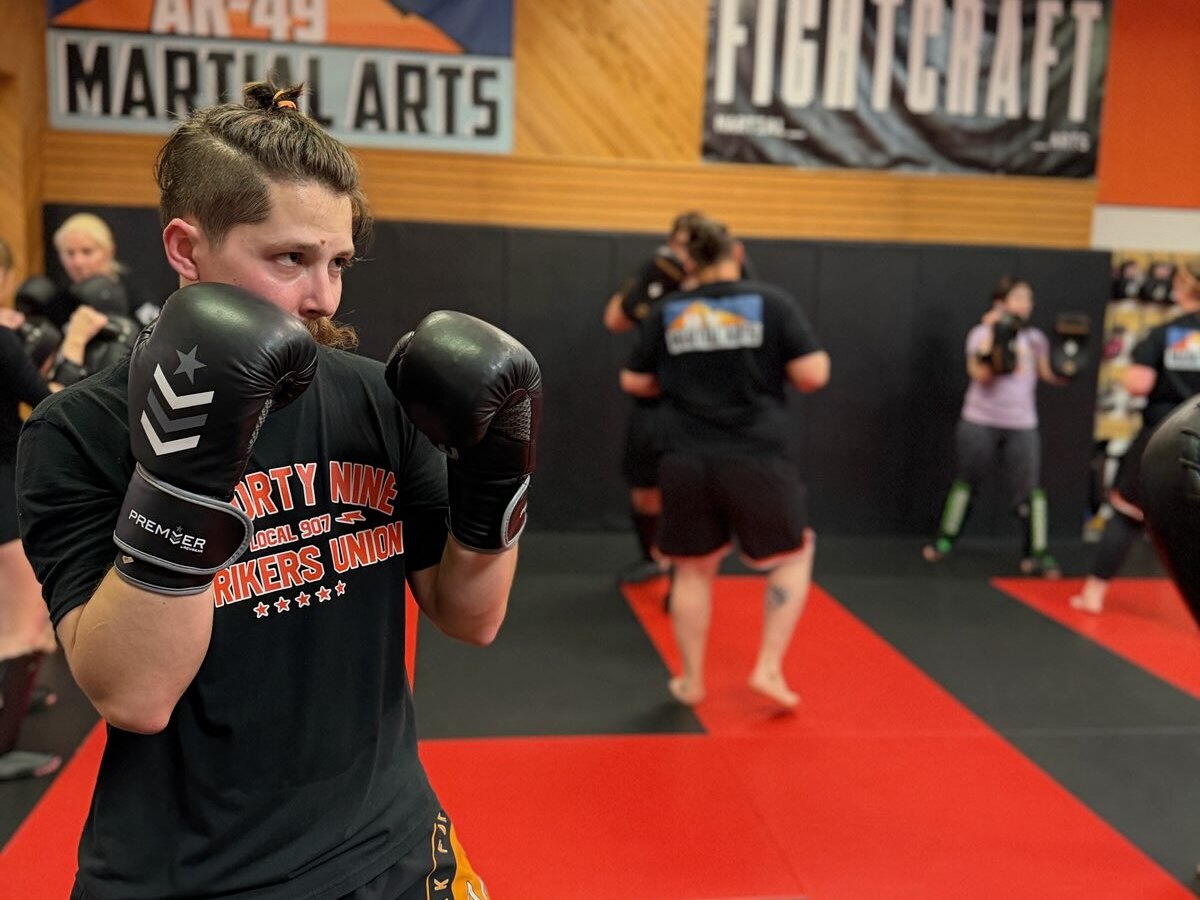
When to use it
At the end of a combination. For a beginner, the rear hook works best behind other punches, though later you'll also learn to time it as a counter. A jab first is the easiest setup: the jab keeps their eyes busy and gets you close enough, then the hook comes around the side. In class you'll see it at the end of combinations, after the punches in front of it have done their job.
After your straight punches. When you've been throwing jabs and crosses, the other person gets used to blocking down the middle. That's when the hook coming around the side surprises them. Throw it now and then as a surprise, and the straight punches you throw will start working better too.
Things to look out for
Winding it up
You pull the elbow back to load up before you throw. It looks powerful, but the other person sees it coming from a mile away and has time to block it or hit you first.
The fix: Start the hook from your cheek with no pull back. The power comes from your feet and hips, not from loading up the arm. Shadow box in front of a mirror and watch that the fist doesn't move backward before it goes forward.
Dropping the lead hand
As the rear hook goes, the lead hand slides down off your face. It's the most common beginner habit with this punch, and it leaves your chin open right when your body is turned.
The fix: Keep the lead fist touching your cheek the whole time. Watch that hand in the mirror, not the one that's punching. If it moves, slow down until it stays.
No pivot
Your back foot stays flat and your hip doesn't turn. The punch turns into an arm swing with no weight behind it, and your shoulder does all the work.
The fix: Turn the back heel up and around on every hook. You should feel the turn start in your back foot and finish in your shoulder. Practice the pivot slowly on its own before adding speed.
Elbow dropping
The elbow hangs down below the fist and the punch comes up more than around. It loses power, and you end up landing with the wrong part of your hand.
The fix: Lift the elbow so it's about level behind the fist as the punch lands. Think of your forearm as level, like a tabletop. Check it in the mirror at the end of each slow rep.
Swinging wide
The hook gets bigger and rounder as you try to hit harder. It takes longer to land, you overturn and lose your balance, and if you miss you're turned away from them with your chin open.
The fix: Keep the hook tight and turn through the target, not past it. Your fist should stop about where their head is, and your feet should stay in your stance. Short and fast beats big and slow.
Bent wrist
Your wrist bends as the punch lands, so you hit with the back of the hand or the side of the fist. It doesn't land clean and it's hard on the wrist.
The fix: Keep your wrist straight in line with your forearm and land on the first two knuckles. Squeeze the fist only as it lands. Go slow on the bag until it lands clean every time.
Not coming back
You throw the hook and leave the arm out, or you miss and stay turned. Your face is open and your feet are out of position for whatever comes back.
The fix: Bring the hand straight back to your cheek and your feet back to your stance on every rep, hit or miss. If you miss, let the turn finish, then pivot back into your stance with both hands covering. The return is part of the punch.
What to Practice at Home
Drill 01
Shadow box the rear hook
3 rounds of 2 minutes with 1 minute rest, in front of a mirror if you have one. Round one, slow single hooks, checking the back foot pivot and that the lead hand stays on your face. Round two, jab then rear hook, coming back to your stance after each one. Round three, the same at normal speed, breathing steady the whole round.
Drill 02
Square stance hooks
3 sets of 10 hooks on each side, with 30 seconds rest. Stand with your feet square, shoulder width apart, hands up. Throw a slow hook by turning your foot, hip and shoulder together, letting the foot spin with the hip on every rep so your knee never twists on its own. Come back to center and throw the other side. Standing square forces you to turn your body to get any power, so you feel where the punch really comes from.
Drill 03
Bag hooks
If you have a heavy bag, 4 rounds of 2 minutes with 1 minute rest, with wraps and gloves on. Build power over a few weeks, and have your coach check your wrist. Round one, single rear hooks at a slow pace, landing on the first two knuckles. Round two, jab then rear hook. Round three, double jab then rear hook, stepping in so you're close enough. Round four, move around the bag between combinations and set your feet before each hook.
Frequently Asked Questions
How do you throw a rear hook?+
From your stance, with your hands up, pivot your back foot and turn your hip and shoulder so the bent arm comes around in a curve. Keep the elbow up about level with the fist and land on the first two knuckles. Your lead hand stays on your face, and the punch comes right back to your cheek.
How do you set up a rear hook?+
With your other punches. A jab is the easiest setup. After a few jabs and crosses the other person starts blocking down the middle, so a hook around the side catches them by surprise.
What's the difference between a rear hook and an overhand?+
They're in the same family. The hook comes around from the side, level with the floor. The overhand loops over the top of their guard and comes down at an angle.
Is the rear hook a good punch for beginners?+
Beginners learn the shape early, and it's a great punch for learning how to turn your body. It does open you up, so learn to set it up with other punches before you lean on it.
Should my palm face down or toward me on a hook?+
Coaches teach it both ways, and it can change with how close you are. The part that doesn't change is landing on the first two knuckles with a straight wrist. Your coach will help you find what works for you.
Are You Ready?