Pad Work Explained
Kickboxing | Pad Work
What Is Pad Work in Kickboxing
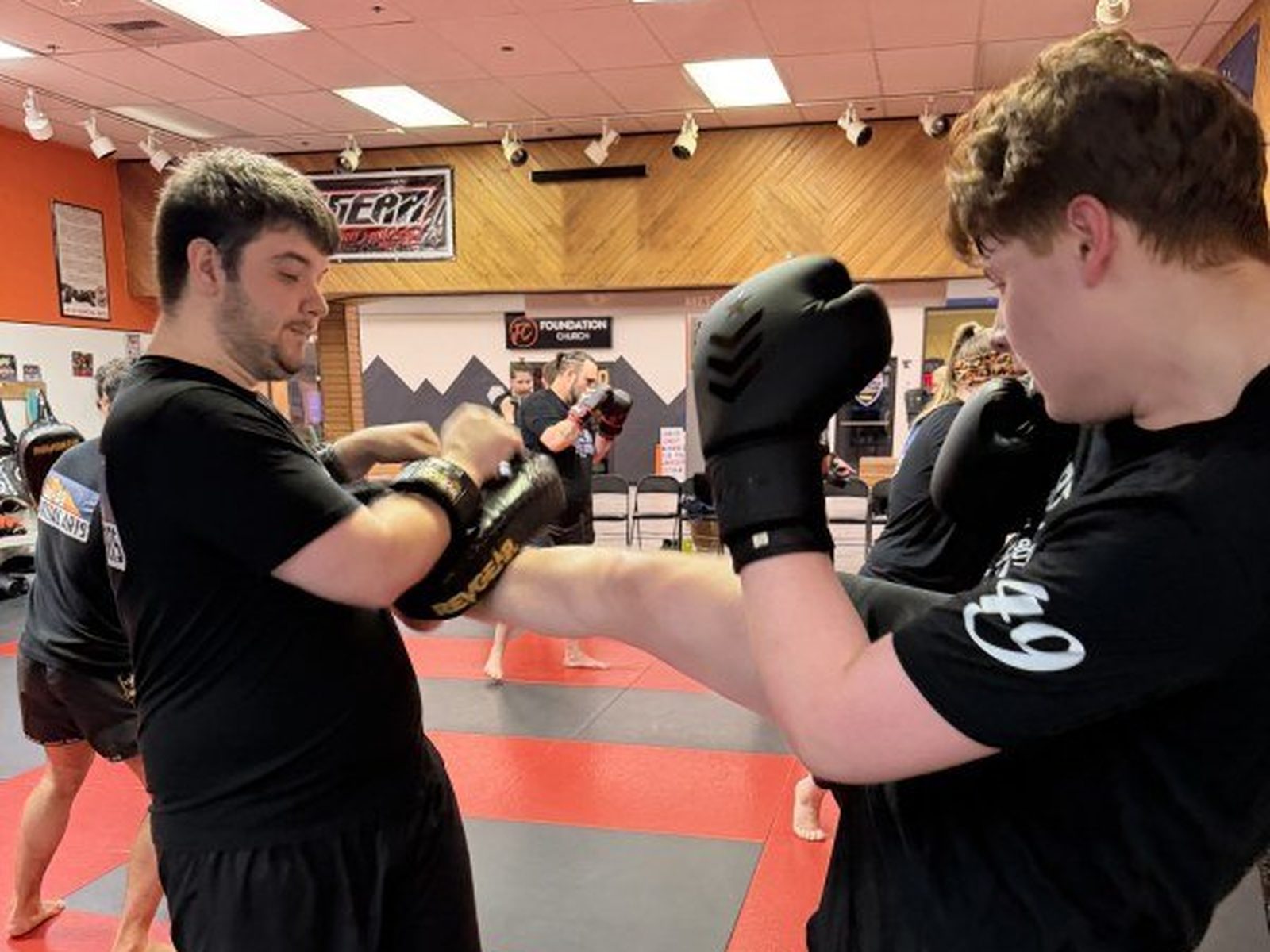
In pad work, a partner or coach holds targets like focus mitts, Thai pads or shields while you throw combinations at them. The holder can move, give you angles and throw back at you, which makes pad work closer to sparring than the bag is. The basics still run everything: a good athletic base, hands up, elbows in, every punch from the face and back to the face, and back to your stance after every combination.
How pad work runs
- 01
Start in your stance, out of range
Wrap your hands, put your gloves on and get in a good athletic base with your hands up and elbows in before the first combination. Stand where you can't reach the pad without stepping, so the step becomes part of the strike. It teaches you the distance you'd really be at with a person in front of you.
- 02
Read the pads
The holder shows you what to throw by how they hold the pads. Every holder has their own signals, so learn the ones your holder uses. For example, a punch pad then a kick pad might mean a full punch, then the kick. If you're not sure what a pad means, ask before the round, and watch the pads instead of guessing ahead.
- 03
Land at the right distance
Your punches should land with the arm nearly straight and a soft elbow, and your kicks with the hip turned over while you stay balanced, then the leg comes straight back to your stance. Too close and your arm stays bent and jammed. Too far and you lunge and lose your power. A sharp, solid pop on the pad tells you you're in the right spot.
- 04
From the face, back to the face
Every punch starts at your face and comes straight back to it, and the other hand stays on your cheek. After the last strike of every combination, you're back in your stance with your hands up. That's the habit that carries over to sparring.
- 05
Keep moving
The holder will step in and out, circle and change angles, because a person doesn't stand still. Follow with small steps and never cross your feet. Moving between combinations makes pad work feel like a real round.
- 06
Watch for the pad coming back
Good holders throw back at you, like a light hook after your jab and cross. If your hands came back to your face, you block it without thinking. If they didn't, the light tap reminds you. These are slow, light taps your partner agrees to, aimed where you can block them. First timers and kids usually start with no throw backs at all and slower combinations, and add them once the basics are steady.
- 07
Switch and hold
After your round, you hold for your partner. Stand in your own stance with your elbows bent and firm, and hold the pads close to where the target would be, never right in front of your own face. For kicks, brace the Thai pads together beside your body and lean into the kick a little. Meet each strike with a little push so the pad doesn't just fly back, and keep the next combination ready so they're never waiting. Holding teaches you a lot, because you watch every punch come at the pad.

What each pad is for
Focus mitts. Small hand targets for punches, speed and a lot of volume. The holder can move them fast and call quick combinations, so they're great for accuracy and timing. They're built for crisp, accurate punches, so you don't need to load up full power on every shot.
Thai pads and shields. Thai pads strap to the holder's forearms and take punches, kicks and knees, so they're the pad for power kicks and full combinations of punches and kicks. They're bigger and a little less precise than mitts. Kick shields take hard kicks and knees to the body, and coaches use them to mix things up.
Things to look out for
Dropping your hands after the combination
You finish the combo and your hands fall to your chest while you catch your breath. It's the most common pad work habit, and it carries straight into sparring, where that's exactly when you get hit.
The fix: Finish every combination back in your stance with your hands up. If you need a breather, take it with your guard up, still facing your partner.
Standing still the whole round
You plant your feet and throw from the same spot every time. Fighting doesn't stand still, so you're practicing a fight that never happens.
The fix: Step in to strike and step back out after. Follow the holder's angles with small steps, without crossing your feet.
Too close or too far
Too close, your punches land with a bent arm and no snap. Too far, you dive at the pad, lose your balance and lose all your power at the end.
The fix: Start out of range and step in to strike. Adjust until the pad pops sharp and solid with your arm nearly straight.
Swinging as hard as you can
Every shot is a full power swing. Your form falls apart, you gas out in a minute and your partner has to brace against every shot.
The fix: Hit sharp and clean first. Let power come from your legs and hips, and save the hardest shots for power rounds on Thai pads when the coach calls for them.
Holding your breath
You tense up through the whole combination. You're out of air halfway through the round and the punches get slow.
The fix: Keep breathing normally the whole round, and let a breath out with your power shots. Relax between combinations.
Turning away to rest
Hands on your hips or your back turned to your partner between combinations. It builds a habit of switching off when things get hard.
The fix: Stay facing your partner in your stance the whole round. Walk in your stance if you need to recover.
Leaving your partner waiting
When you hold, you stand there thinking about what to call next. Your partner cools off and the round loses its pace.
The fix: Have the next combination and target ready before they finish the last one. Keep your arms firm and meet every strike.
Drills you can practice
Drill 01
Shadow box your pad combos
3 rounds of 2 minutes with 1 minute rest. Throw the combinations you did on pads in the air, starting from a step out of range. Round one, slow, checking that every punch comes back to your face. Round two, finish every combination by stepping back out to your stance. Round three, add a block after each combination, like the holder threw one back.
Drill 02
Range finder on the bag
4 rounds of 2 minutes with 1 minute rest, if you have a bag. Start a full step away, step in with a jab and cross, then step back out. Notice where the punch pops with your arm nearly straight. Round three and four, add a kick and make sure you still end back in your stance.
Drill 03
Guard up while you recover
3 rounds of 3 minutes with 1 minute rest, shadow boxing. Throw a combination, then walk in your stance for 10 to 15 seconds with your hands up and elbows in, then go again. It trains the habit of resting with your guard up, which is what you want between combinations on the pads.
Frequently Asked Questions
What's the point of pad work?+
To make your sparring, your fighting and your technique better. The holder moves you around, gives you angles and throws back at you. It's the closest thing to sparring without the other person trying to hit you for real.
Do I have to hold pads too?+
Yes. Your partner holds for you, then you switch and hold for them. Holding is a skill too, and watching each strike come at the pad helps you see what clean technique looks like.
What pads are used in kickboxing?+
Focus mitts for punches, speed and volume, Thai pads for power kicks and full combinations, plus kick shields for hard kicks and knees to the body.
How is pad work different from the heavy bag?+
The holder can move, give you angles, call combinations and throw back at you. The bag just hangs there. Both have a place: the bag for power and conditioning, pads for timing, distance and defense.
How hard should I hit the pads?+
Sharp and clean, not all out. On focus mitts, think accuracy and speed. On Thai pads, the coach will tell you when it's a power round. Your partner is holding with their arms, so control matters.
Are You Ready?