
Parrying
Kickboxing | Defense
How to Parry a Punch in Kickboxing
A parry is a small, firm touch with your hand that turns a straight punch, like a jab or a cross, away from your face. Start from a good athletic base with your hands up and elbows in, meet the punch close to you, and tap it off line with a short move that never crosses past the middle of your face. Then get right back to your stance, and answer with your own punch or kick when you see the opening.
How to parry
- 01
Good athletic base
Feet about shoulder width apart, front foot ahead with the toes pointing forward, knees a little bent and your weight in the middle. The parry is a hand move, so your feet stay balanced and ready to answer. You should feel settled enough that you don't need to lean or step to defend.
- 02
Hands up, elbows in
Both fists sit up by your cheeks with your chin tucked a little, and your elbows stay in close to your ribs. The parry starts from here, close to your face. Your other hand stays on your face the whole time, so if the parry misses, you're still covered.
- 03
Eyes on the punch
Watch their chest and shoulders and keep your eyes open as the punch comes. You can't parry what you don't see. Chin down, eyes up.
- 04
Same side for same side
Your rear hand parries their jab, and your lead hand parries their cross. When you're both in the same stance, their jab comes in on your rear side and their cross comes in on your lead side, so the closest hand takes it. If they stand the other way from you, that can change, and your coach will show you how. The hand that isn't parrying stays on your chin.
- 05
Let it come to you
Start moving as soon as you see the punch, but don't reach out for it. Meet it close to your face and give it a short tap off line, down or slightly across, like a cat swatting with a paw. The hand moves a few inches, not a foot.
- 06
Straight punches only
Parry jabs and crosses, the punches that come straight at you. Hooks and overhands come around the side, so you block those instead: bring the glove up tight to the side of your head with the elbow in and your chin down, so the punch lands on your glove and forearm. Reaching out to parry a hook leaves your head wide open.
- 07
Firm hand, stay inside your center line
Open the glove a little with the fingers up and the palm turned slightly toward the punch, and tap with the hard part near the heel of the palm, keeping the hand firm and the touch light. You're turning the punch, not hitting it. Don't let the parrying hand travel past the middle of your face, because then your head is open on that side and the hook comes in behind it.
- 08
Back to your stance
After the parry, your hand comes straight back to your guard and you're balanced in your stance. Their arm was just pushed off line, so that's your chance to answer. A jab or cross back is the safest first answer for a beginner. Save the kick for when you have room for it and your balance is set. If you don't see an opening, stay covered and move.
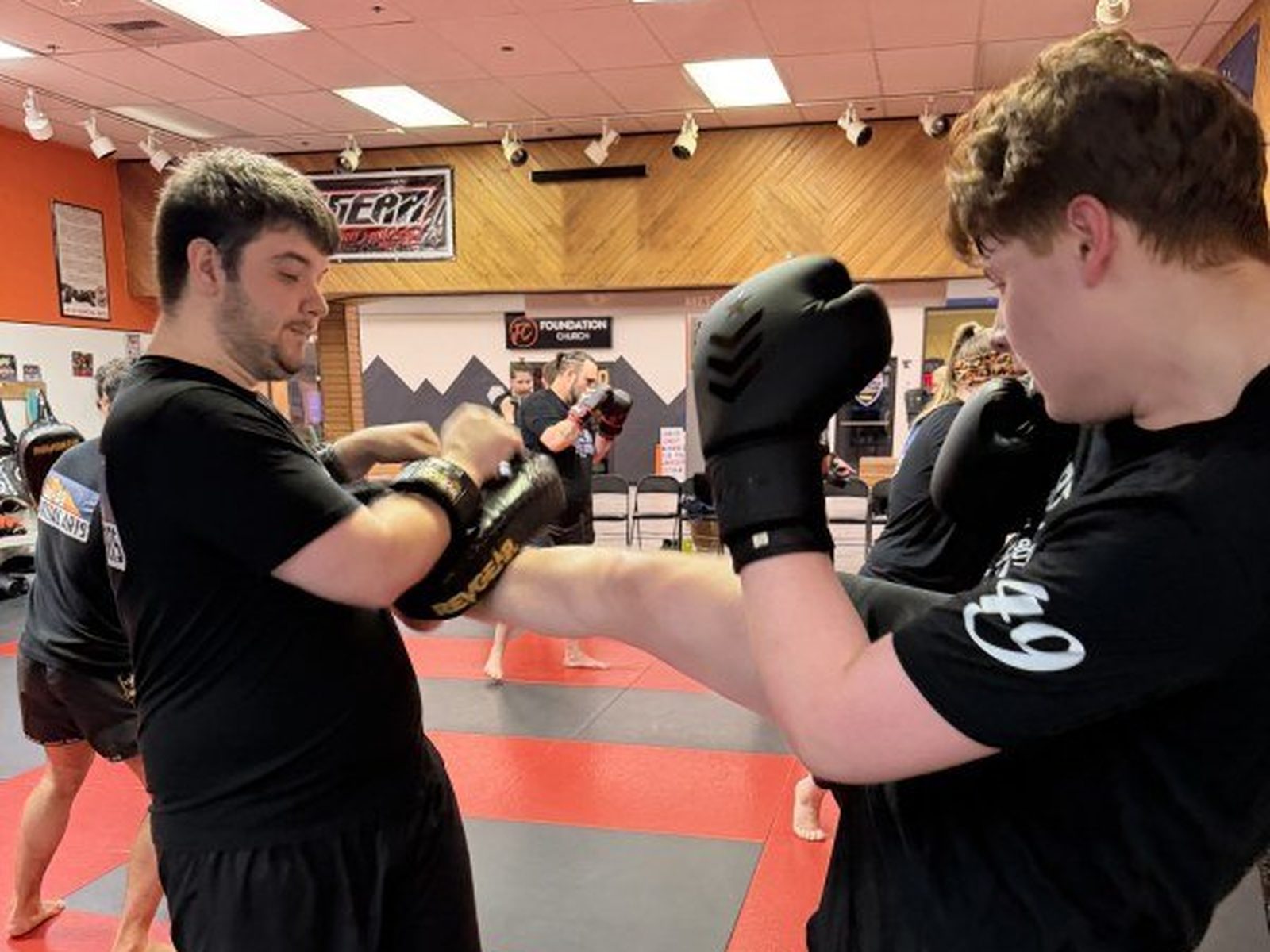
When to use it
Against a jab. The jab is the punch you'll see the most, and it's a good one to parry because it's straight and comes from the front. Turn it away with your rear hand and you stay right where you are, with their arm off line for a moment. At the gym you'll start with a partner throwing light, slow jabs that stop short of your face, and speed it up only when your coach says so. Once it's smooth, answer with your own jab or cross.
To stay at kicking distance. A parry handles a punch without big head movement or stepping in. That keeps you upright and in your stance, ready to answer or step back out to where your kicks reach. In kickboxing that matters, because ducking a lot puts your head where a knee or a kick can find it. Parry, answer, and get back out to your range.
Things to look out for
Reaching for the punch
Your hand shoots out to meet the punch before it gets close. That pulls your guard away from your face, and a fake gets you to open up for the real punch behind it.
The fix: Let the punch come to you and parry it close to your face. Think of the parry as a small tap, a few inches at most.
Crossing your center line
The parrying hand swings past the middle of your face. That side of your head is wide open, and the hook comes right into the gap.
The fix: Keep the parry short so the hand stops at about your nose. Check it in a mirror: your hand should never cross the middle of your face.
Parrying wide
You knock the punch way out to the side with a big swing. In kickboxing that open space is where the next punch or a kick comes in.
The fix: Turn the punch just enough to miss your head and get the hand right back. If you keep swinging wide, block all the way instead until the parry gets smaller.
Soft, floppy hand
You slap at the punch with a loose, open palm. The punch pushes right through your hand and lands anyway.
The fix: Use a firm hand and the hard part near the heel of the palm. It should feel like a short, solid tap.
Dropping the other hand
As one hand parries, the other slides down off your chin. If the parry misses or a second punch comes, there's nothing in the way.
The fix: Only the parrying hand moves. Keep the other glove on your chin and watch it in the mirror while you drill.
Looking away
You blink or turn your head as the punch comes, and your hand goes out blind. You either miss the punch or reach for one that isn't there.
The fix: Keep your eyes on their chest the whole time. Drill slowly enough that you can watch every punch all the way in.
Parrying and doing nothing
You parry and then wait. They just throw again, and you've given them a free try every time.
The fix: Get the parrying hand back to your face, then answer while their arm is still off line: a jab, a cross, or a kick if you're at kicking range. If you don't see an opening, move.
What to Practice at Home
Drill 01
Mirror parries
3 rounds of 2 minutes with 1 minute rest, in front of a mirror. Round one, picture a jab coming and parry it with your rear hand, a few inches only, and bring the hand straight back. Round two, parry an imagined cross with your lead hand. Round three, mix them, keeping the other hand on your chin and your eyes on the mirror.
Drill 02
Center line check
Put a strip of tape straight down the middle of a mirror and line your nose up with it. Do 3 sets of 20 slow parries, 10 with each hand, with 30 seconds rest. The parrying hand should never cross the tape, and the other hand never leaves your face.
Drill 03
Parry and answer
4 rounds of 2 minutes with 1 minute rest, shadow boxing. Round one, parry a jab and answer with your own jab. Round two, parry a jab and answer with a cross. Round three, parry a cross and answer with a round kick. Round four, mix all three and step off to the side after some of them. With a partner, they start with slow, light jabs that stop short of your face, then add the cross, and only later add speed or a fake, with your coach watching.
Frequently Asked Questions
What is a parry in kickboxing?+
A parry is a small, firm tap with your hand that turns a straight punch away from your face. A block takes the punch on your arms. A parry moves it a few inches so it misses, and then you answer.
Which hand parries the jab?+
Your rear hand parries their jab, and your lead hand parries their cross. Each punch comes toward the side of that hand, so the closest hand takes it. Keep the other hand on your chin.
Is it better to parry or block in kickboxing?+
You'll learn both. Some coaches lean on blocking in kickboxing because a wide parry opens you up to a kick, and others teach the parry as a first line of defense. A small, tight parry against straight punches and a full block against hooks and hard shots is a good way to start.
Can you parry kicks?+
You can parry a front kick with your front hand, turning it away. Round kicks are a different story, and you check or block those instead. Learn the punch parry first.
What should I do after I parry a punch?+
Get your hand back to your face first, then answer while their arm is off line. After you parry a jab, a jab or a cross back works well. If you're at kicking distance, a kick works too. If nothing is open, stay covered and move.
Are You Ready?