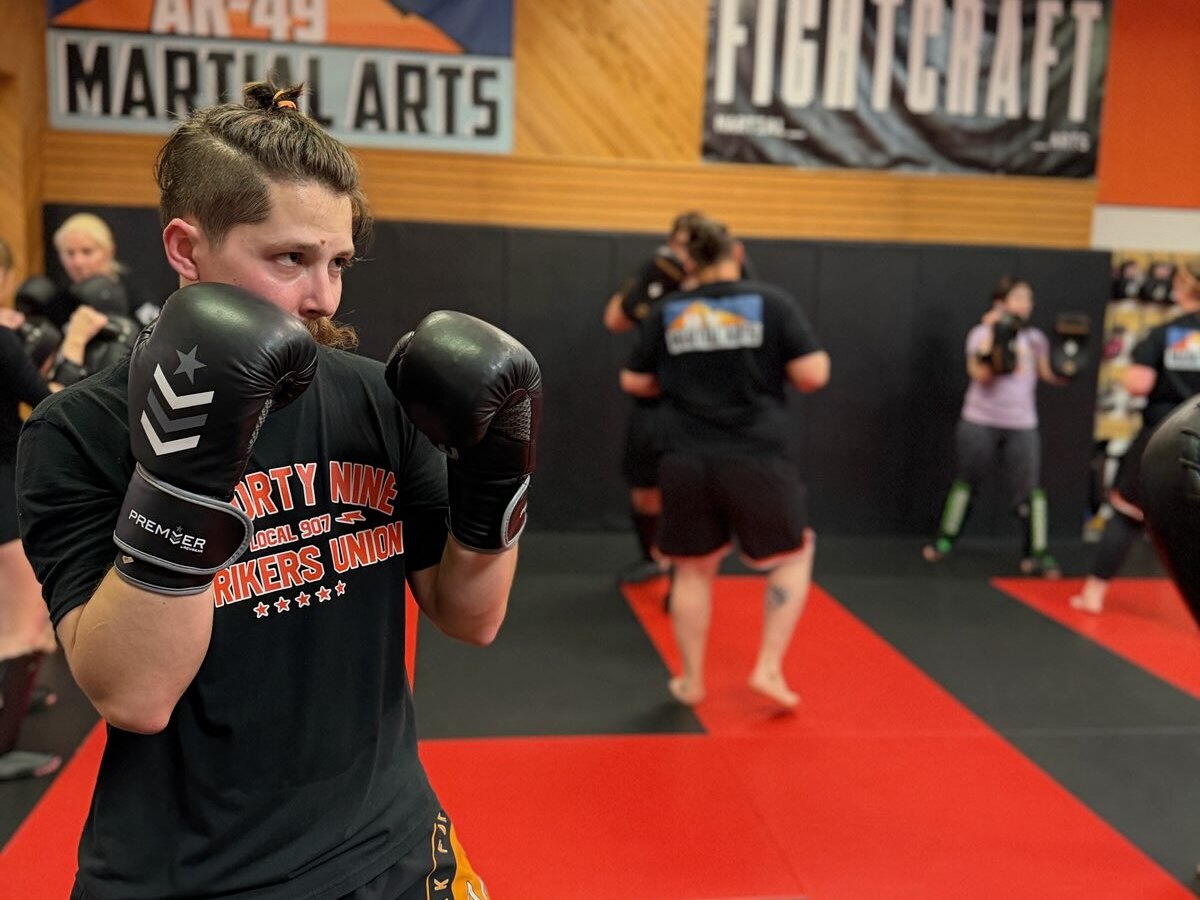
Pivots
Kickboxing | Footwork
How to Pivot in Kickboxing
A pivot is turning on the ball of your foot, either so your hip can turn into a punch or kick, or so you can turn your body to a new angle. On the cross the back heel turns out, and on a round kick the standing foot turns about 90 degrees. Keep a good athletic base and your hands up on your face while your feet turn, and finish every pivot back in your stance.
How to pivot
- 01
Good athletic base
Feet about shoulder width apart, front toes pointing forward, knees a little bent and your weight in the middle. A pivot only works from a balanced stance, and a stance that's too long makes it hard to turn. You should feel springy on your feet, not planted flat.
- 02
Hands up, elbows in
Both fists sit at your cheeks with your chin tucked a little and your elbows close to your ribs. Your feet turn, but your hands stay on your face the whole time. A pivot that drops your hands just trades power for an open chin.
- 03
Turn on the ball of the foot
Pivot on the ball of your foot, the pad just behind your toes, with the heel lifted so the foot can turn. A lot of people think they're on the ball but are really up on their toes. Let your knee turn with your foot, so the knee and toes point the same way instead of the knee twisting over a stuck foot. You should feel solid and able to push off. Sharp pain in the knee, ankle or hip means stop and tell your coach.
- 04
Back foot on the rear hand
On the cross, rear hook and rear uppercut, turn the back heel out as you punch so your hip turns with it. Keep the big toe and arch firm so the foot doesn't roll in and leak power, while your front foot stays solid on the floor. Your back foot is your right if you're orthodox and your left if you're southpaw, and everything on this page flips for southpaw. You should feel the push start in the floor and come up through your hip.
- 05
Standing foot on the round kick
On a rear round kick to the body, step onto the ball of your front foot and turn it about 90 degrees or a little more as you kick, so the heel turns toward them. Higher kicks usually need more turn. Stay on the ball of the foot through the kick, because if the heel drops flat early, the pivot stops short. A smaller turn is quicker but has less power.
- 06
Lead hook
When you're moving, keep your front foot planted on the lead hook, because you can't step while your hip is turned. When you have them on the ropes or the cage, pivot that front foot for full power. Either way, your hands stay up and your weight stays over your stance.
- 07
Pivot to a new angle
To turn off their line, pivot on the ball of your front foot and swing your back foot around in a small arc. Start small, a little quarter turn or less, and throw a punch right after you land. If you're right in front of them, step out to the side first, then pivot.
- 08
Back to your stance
Every pivot ends back in your stance, feet under you, weight in the middle and hands on your face. Don't finish with your weight sitting on the back foot or your feet crossed. You should be ready to punch or move again the moment you land.

When to use it
On your power punches and kicks. The cross, rear hook and round kick all use a pivot, and it lets your hip turn, which is a big part of the power. If the back foot never turns, the punch tends to end up all arm. On quick punches in a fast combo you might lose some of the pivot, and that's fine. When you sit down on a power shot, use it.
To get out from in front of them. After you finish a combo, standing still right in front of them is the worst place to be. A small step out to the side and a pivot turns you to face them from a new angle, off their line. On the bag, you can practice by punching, pivoting around it, and punching again.
Things to look out for
Up on your toes
You pivot on the tips of your toes instead of the ball of the foot. You wobble, you can't push off, and the turn has no power behind it.
The fix: Lower down onto the pad just behind your toes, with only the heel lifted. You should be able to stay there and feel balanced.
Back foot stays flat
The back heel never turns on the cross, so your hip can't turn either. The punch comes from the shoulder and arm only, and it feels weak no matter how hard you swing.
The fix: Let the back heel turn out on every cross and rear hook. Watch it in a mirror until it turns on its own.
The arch collapsing
As you pivot on the back foot, the arch rolls in and the big toe presses flat. The foot gets weak and the power leaks out before it reaches your hip.
The fix: Keep the big toe and arch firm and let them turn with the foot. Think of the whole foot turning together.
Over pivoting the round kick
The standing foot spins way past what the kick needs. You end up turned away from them, it's hard to get back to your stance, and you can get hit on the way back.
The fix: Turn only as far as the kick needs, around 90 degrees for a body kick. Kick, land, and check that you're still facing them.
Pivoting from a long stance
Your feet are so far apart that the back foot can't turn. You end up arm punching, or you lose your balance trying to force it.
The fix: Bring the back foot in a little before a power punch. A slightly shorter stance gives the foot room to turn.
Pivoting too big
You spin a big half turn or swing your whole upper body around. You land off balance, often with your weight on the back foot, and you're slow to punch again.
The fix: Keep angle pivots small, a quarter turn or less, and land in a solid stance. Punch right away to check that you're balanced.
Dropping your hands
Your hands come down as your feet turn, usually because you're thinking about the feet. The pivot puts you in a new spot with your chin open.
The fix: Keep your fists touching your cheeks through every pivot. Shadow box slowly and watch your hands, not your feet.
What to Practice at Home
Drill 01
Back foot pivots
3 sets of 20 slow crosses in the air, with 1 minute rest between sets, in front of a mirror if you have one. On every cross, turn the back heel out and feel the hip turn with it. Check that the arch stays firm and your front hand stays on your cheek.
Drill 02
Small angle pivots
3 rounds of 2 minutes with 1 minute rest. Pivot on the ball of your front foot and swing the back foot a small amount one way, land in your stance, then go the other way. Keep it slow and relaxed, hands up, and every few pivots throw a jab and cross right after you land.
Drill 03
Round kick pivot check
3 sets of 10 slow round kicks on each side, with 1 minute rest. Put a strip of tape on the floor and stand with your front foot on it. Kick, turn the standing foot about 90 degrees or a little more on the ball of the foot, and check where your foot ended up before you reset. Go slow, and stop if your knee or ankle hurts.
Frequently Asked Questions
Do you pivot on the lead hook?+
At AK-49 Martial Arts, the front foot stays planted when you're moving, because you can't step while your hip is turned. When you have them on the ropes or the cage, pivot it for full power. Learn both, and let the situation decide.
How far do you pivot on a round kick?+
About 90 degrees or a little more on the ball of the standing foot for a body kick, so the heel turns toward them. Higher kicks need more turn, and a smaller turn is quicker but has less power. Spinning way past what the kick needs makes it hard to get back to your stance.
Should you pivot on your toes?+
No. Pivot on the ball of your foot, the pad just behind your toes, with the heel lifted. Up on the toes you wobble and can't push off. On the ball of the foot you can turn and still feel solid.
Do I pivot on every punch?+
No. The jab in kickboxing usually keeps the front toes pointing forward so you can still check a kick. On fast punches in a combo you'll lose some of the pivot. When you want power, on the cross, the rear hook or a round kick, that's when the pivot matters most.
Can I practice pivots at home?+
Yes. You don't need any gear, just some floor and a mirror if you have one. Slow crosses with a back foot pivot and small angle pivots are a good start. Go slow until the feet turn on their own, then add speed.
Are You Ready?