
Basic Footwork
Kickboxing | Footwork
Basic Kickboxing Footwork: How to Step
Basic kickboxing footwork means you move the foot closest to where you're going first, then bring the other foot the same distance so you land back in your stance. As a beginner, keep your feet from crossing or coming together, keep your hands up while you move, and your weight stays in the middle so you can lift a leg to block a kick. Take small steps at the same height, and every step ends back in your stance.
How to step
- 01
Good athletic base
Feet about shoulder width apart, front foot about one natural step ahead of the back foot with the toes pointing forward and the back foot turned out a little, knees a little bent and your weight in the middle. Keep a gap between your feet side to side, so a ball could roll between your heels. Your weight sits about evenly between both feet, with the knees soft enough that you could drop an inch without tipping. Stay light on the balls of your feet without coming up on your toes, with the front leg relaxed so you could pick it up to block a kick at any time.
- 02
Hands up, elbows in
Both fists sit up by your cheeks with your chin tucked a little, and your elbows stay in close to your ribs. Your hands stay up the whole time your feet move. A lot of beginners drop their hands as soon as they start thinking about their feet, so check them every few steps.
- 03
Closest foot first
Going forward, the front foot moves first. Going back, the back foot moves first. Going left, the left foot moves first, and going right, the right foot moves first. If you stand with your right foot forward, it's the same rule, the foot closest to where you're going always leads.
- 04
Same distance with the other foot
Bring the second foot the same distance as the first, so you land back in your stance. If the second foot comes too far, your feet bunch up. If it doesn't come far enough, your stance keeps getting wider until you're stuck.
- 05
Small steps, push off
Take small steps, a few inches at a time, and push off the foot that's staying behind. To go forward, push off the back foot. Keep your knees relaxed and bent, the same height the whole time, and don't step up tall or hop, because your balance goes when your feet leave the floor.
- 06
Don't cross your feet
For now, keep your feet from crossing or touching. Crossed feet leave you off balance and open to low kicks. Later you'll learn steps like the switch step that move your feet past each other on purpose, but those come once the basics are solid. If you need to turn, use a pivot: stay on the ball of the front foot and swing the back foot around a quarter turn, so you end up facing a new direction in the same stance. Turning on the ball of the foot, with the knee soft, keeps the twist off your knee.
- 07
Back to your stance
Every step ends with you back in your stance, feet the same distance apart, weight in the middle and hands on your face. You should be able to stop after any step and throw a jab right away. If you can't, your stance got lost on the way.
Why it matters
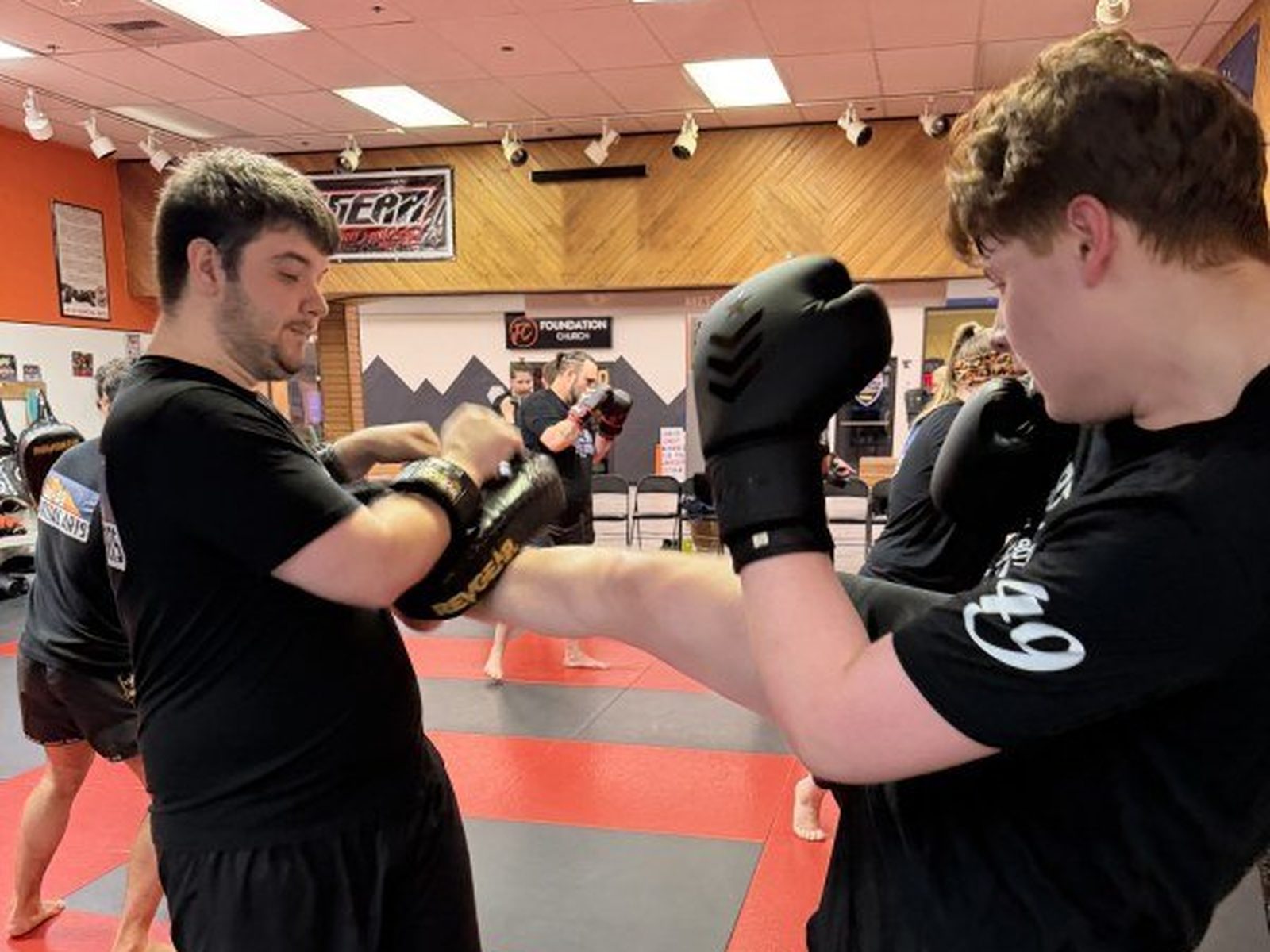
To get in range and back out. Footwork is how you get close enough to hit and then get back out. Step in with the front foot to land your jab or your one two, then step back with the back foot to get away. Because you land in your stance, you're ready to punch or kick the moment you arrive. Almost every combination you learn in class starts and ends with a step.
To move around without getting stuck. When you work the bag or a partner, you don't stand in one spot. Step to the side to get off the line and keep moving around them. Once that feels easy, add a small pivot on the front foot after a step to the side, so you end up at an angle facing them instead of straight in front of them. Good footwork means you can change direction any time without tripping over your own feet. It's also what keeps you balanced enough to lift a leg and block a kick.
Things to look out for
Moving the far foot first
You step with the foot that's farther from where you're going. Your feet cross or bunch up, and for a moment you're off balance and can't punch or block.
The fix: Say it in your head as you move: closest foot first. Practice slowly in every direction until it's automatic.
Crossing your feet
When moving to the side, one foot steps over or in front of the other. You're tangled up, you can't punch from there, and one kick to the leg can put you on the floor.
The fix: Lead with the foot closest to the direction you're going, and keep the feet from touching. Picture a line between your feet that neither foot can cross.
Heels in one line
Your feet end up one directly in front of the other, like standing on a tightrope. You get pushed over easily and lose power on your punches and kicks.
The fix: Keep a gap between your heels side to side. A ball should be able to roll between them.
Hopping or coming up tall
You bounce up on every step or stand up straight as you move. Your feet are off the floor, you can't strike or block, and you're easy to time.
The fix: Keep your knees relaxed and slide your feet close to the floor. Push off the back foot instead of jumping. You don't need to squat, just stay at the same height.
Steps too big
You take long steps to cover ground. Your stance gets stretched out and your weight goes too far one way, so you can't react to what comes back.
The fix: Take small steps, a few inches at a time, and take more of them if you need to go farther. Your stance should look the same after every step.
Leaning over your front knee
Your weight drifts forward onto the front leg. You can't lift that leg to block a kick, and your head is out in front where it's easy to hit.
The fix: Keep your weight in the middle and your head over your stance. Rock a little front to back after each step to check you're centered.
Dropping your hands
You focus so hard on your feet that your hands slide down to your chest. You'd be moving around with your face open.
The fix: Keep your fists on your cheeks and check them in a mirror every few steps. Footwork with your hands down doesn't count.
What to Practice at Home
Drill 01
Box step in every direction
3 rounds of 2 minutes with 1 minute rest, on a flat floor that isn't slippery, in bare feet on a mat or in clean flat shoes. Take 4 small steps forward, 4 back, 4 left and 4 right, closest foot first every time, and keep repeating the box. Round one, slow and checking your feet. Round two, a little faster. Round three, add a jab every few steps.
Drill 02
Line drill
3 rounds of 2 minutes. Use a line on the floor as a guide, with the line running between your feet so one foot stays on each side of it. Step forward along it, front foot then back foot, pushing off the back foot each time. Come back the other way, back foot first, and keep your stance the same size and width from start to finish.
Drill 03
Step and jab
4 rounds of 2 minutes, in the air or around a bag. Step in and jab, step back out, step to the side, and repeat. Every time you stop, check that you're in your stance with your hands on your face. Once it's smooth, use a one two instead of a jab.
Frequently Asked Questions
Which foot moves first in kickboxing footwork?+
The foot closest to where you're going. Forward is the front foot, back is the back foot, left is the left foot and right is the right foot. Then the other foot follows the same distance.
Should your feet cross when you move?+
Not as a beginner. Crossed feet leave you off balance, unable to punch and open to low kicks. Keep the feet apart and use a pivot if you need to turn. More advanced steps that move the feet past each other come later, once your basic stepping is automatic.
How far apart should your feet be?+
About shoulder width, not too close and not too wide, with the front foot about one natural step ahead. Keep a gap side to side too, so a ball could roll between your heels. Your stance should look the same before and after every step.
Should I bounce on my toes?+
Stay light on the balls of your feet, but don't hop. When both feet leave the floor, you can't punch, block or move until you land. Small steps that stay close to the floor are better for a beginner.
How is kickboxing footwork different from boxing footwork?+
The basic stepping is the same. The difference is that someone can kick your legs, so you keep your weight more centered and your front leg ready to lift. That usually means a slightly narrower, more upright stance than a boxer uses, so you can check a kick without shifting your weight first.
Are You Ready?