
The Rear Overhand
Kickboxing | Punches
How to Throw an Overhand in Kickboxing
The overhand is a rear hand punch that starts like a cross, then turns over in a small arc to come over the top of their jab or guard. You throw it from your cheekbone with your hands up and elbows in, land it with the thumb turned down so your shoulder covers your chin, and bring it right back to your face. Keep the arc small and skip the wind up, because a big looping overhand is easy to see and easy to counter.
- 01
Good athletic base
Feet about shoulder width apart, front foot ahead with the toes pointing forward, knees a little bent and your weight in the middle. Your back heel is a little off the floor, ready to turn. Stay low enough that you can bend your knees and drop a little into the punch.
- 02
Hands up, elbows in
Both fists sit up by your cheeks with your chin tucked a little, and your elbows stay in close to your ribs. The rear hand stays loaded right at your cheekbone. The lead hand stays on your face while the overhand goes, because that side of your head is open as you turn.
- 03
Punch from the face
Throw the overhand straight from your cheekbone. Don't pull the hand back, drop it, or cock it behind your head first. That wind up is the first thing a good opponent sees, and it gives them time to counter.
- 04
Start it like a straight
For the first part, keep the fist vertical and the elbow down, so it looks just like your cross. Then turn the punch over and bring it down over the top. The arc only has to be big enough to get over their jab, so it should feel short and tight.
- 05
Land thumb down, head off the line
As it lands, your thumb turns down, or at least partway down if that's easier on your shoulder, and your shoulder rises up beside your chin. Your head moves a little off the center line, toward the outside of their jab, by bending your knees and tilting your upper body slightly from the hips without folding at the waist, and it stays over or behind your front knee. Land on the first two knuckles with a firm wrist, not on the fingers or the flat of the fist.
- 06
Power from your feet
Like the cross, the power comes from the ground. Pivot the back foot with the heel up, let the back knee bend and turn with the foot, and let your body weight go with the punch. If the back foot stays flat, you lose most of the power, no matter how hard the arm swings.
- 07
Back to the face
Bring the hand right back to your cheekbone after it lands, and get both hands back on your face. Keep breathing steady, and let a breath out as it lands. Then step out or move your head so you're not standing right in front of them. The overhand commits your weight, so if they see it coming, a hook or a cross can come back over the top, and that's why your lead hand stays home.
When to use it
After your jab. The jab gets their attention and makes them look at your front hand or put their guard up. The overhand then comes over the top, where they aren't looking. Jab, then overhand, then hands back and step out. It's one of the simplest ways to land it, and it keeps you from throwing it with nothing in front of it.
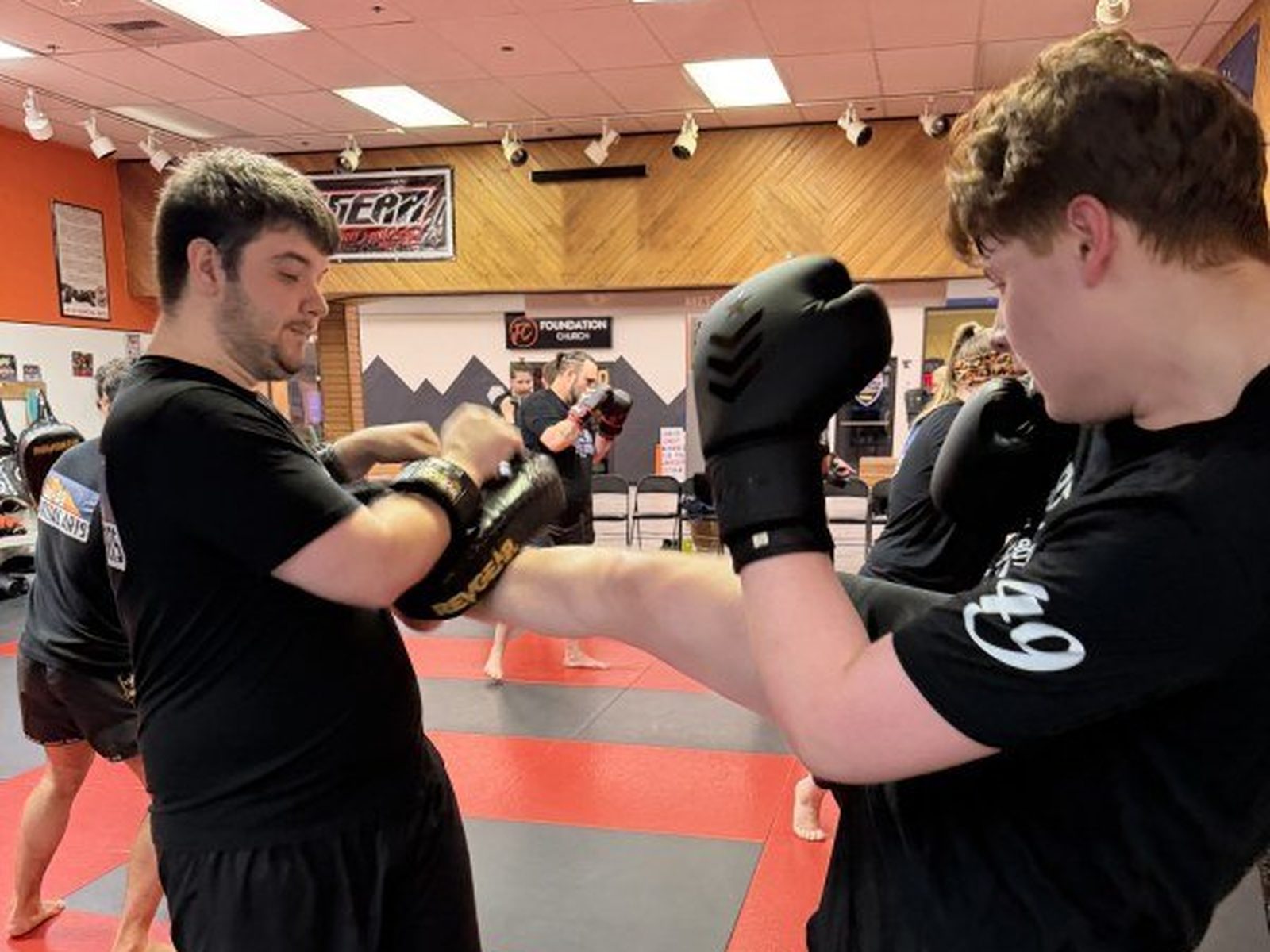
Over a jab coming at you. When they throw a jab, bend your knees and move your head slightly to the outside of it, then come back over the top with a short overhand. Your head is off the line and their arm is out, so the punch has a clear path. Keep your feet under you and don't lean to get there. It's a timing punch, so if you're late or too far away you walk into their next shot. You'll drill this slowly on pads before you ever use it in sparring.
Things to look out for
Winding it up
The hand pulls away from your head, drops or goes back behind you before it comes forward. It's easy to see coming, and your face is open while you load it.
The fix: Throw it straight from your cheekbone, the same place your cross starts. Practice it slowly in a mirror and check that the hand never leaves your cheek before it moves forward.
The arc is too big
The punch swings way out like a baseball throw. If it misses you fall off balance, your body is wide open, and you're easy to counter while you recover.
The fix: Make the arc just big enough to get over a jab. Start it straight and turn it over at the end. It should feel short and close to your body.
Raising the elbow early
The elbow lifts and leaks out to the side before the punch goes. It tells them what's coming and opens a gap under your arm.
The fix: Keep the elbow down and the fist vertical for the first part, just like a cross. Turn it over only once it's on its way.
Dropping the lead hand
The front hand falls as you turn into the overhand. Your chin is open on that side, right when you're closest to them.
The fix: Keep the lead fist on your cheek the whole time. Watch that hand in the mirror, not the one that's punching.
Landing on the fingers
A wide, loopy overhand lands with the fingers or the flat front of the fist. It's weak, and it's hard on your hand and wrist.
The fix: Keep the arc small so the first two knuckles hit first. Land with the thumb turned down and a straight, firm wrist.
Arm only
The back foot stays flat and the punch is all shoulder. It feels like you're swinging hard but nothing lands with weight, and your shoulder tires out fast.
The fix: Pivot the back foot, drop the knee and heel up on every rep. You should feel your legs and hips start the punch before the arm does.
Leaving your head in the middle
You throw it but your head stays right on the center line, chin up. If they punch back, you take it clean.
The fix: Land thumb down so the shoulder comes up beside the chin, and let your head move a little off the line. Then step out or move before you reset.
What to Practice at Home
Drill 01
Slow overhand in the mirror
3 rounds of 2 minutes with 1 minute rest. Round one, throw a cross, then an overhand, slowly, so you see that both start from the same spot at your cheekbone. Round two, overhands only, checking thumb down, shoulder up by your chin and the lead hand on your face. Round three, add the back foot pivot and keep your breathing steady.
Drill 02
Jab, overhand, out
4 rounds of 2 minutes, in the air or on a bag. On a bag, always wear hand wraps and gloves. Jab, throw the overhand over the top, bring both hands back, and step out to your stance. Count 10 clean reps, rest 20 seconds, and go again, keeping the arc small so you don't fall forward.
Drill 03
Slip and overhand
3 rounds of 2 minutes in the air. Picture a jab coming at your face, bend your knees and move your head slightly to the outside of it, then come back with a short overhand. Keep your feet in your stance and your head over your knees, not leaning past the front one. Finish each rep back in your stance with both hands up. With a partner, they throw slow, light jabs that stop short of your face, and your overhand goes into a mitt they hold instead of at their head.
Frequently Asked Questions
What is an overhand punch?+
It's a rear hand punch that starts like a cross and turns over at the end, so it comes over the top of their jab or guard. You land it thumb down with your shoulder covering your chin. It's one of the most powerful punches you can throw with your hands.
What's the difference between an overhand and a cross?+
The cross goes straight out and turns over flat. The overhand starts the same way, then turns thumb down and comes down over the top in a small arc. That arc is what gets it over a jab or a high guard.
What's the difference between an overhand and a hook?+
A hook comes around the side with the elbow bent and the arm level. The overhand comes over the top and down, thumb down. Some coaches call it a kind of hook, and if you picture a clock, the rear hook comes in around 3 o'clock and the overhand comes down from about 1 o'clock.
Why land the overhand thumb down?+
Turning the thumb down lifts your shoulder up beside your chin and moves your head off the center line. So if they punch back at the same time, your chin is covered. It also lines up the first two knuckles so you land on them.
When should a beginner learn the overhand?+
Once your jab and cross are solid. The overhand starts exactly like the cross, so if the cross is still sloppy, the overhand will be too. Go slow at first and keep the arc small.
Are You Ready?