What Is MMA
Mixed Martial Arts | Starting Out
What Is MMA? Mixed Martial Arts for Beginners
MMA (mixed martial arts) is a full contact combat sport that puts striking and grappling together, so you can punch, kick, clinch, take someone down and keep going on the ground in the same match. Nobody learns it as one style. You build it from a few base arts, usually a striking art, wrestling and Brazilian Jiu Jitsu, and then you learn to move between them.
What MMA is built from
- 01
Striking
Punches, kicks, knees and elbows from standing. Kickboxing gives you clean punches, kicks and footwork, and Muay Thai adds knees, elbows and a stronger clinch. Your hands stay up and your chin stays down, and your stance usually sits a little lower than a pure kickboxing stance, knees bent and hips ready, because the other person can shoot for your legs at any time.
- 02
The clinch
The clinch is the tied up range between striking and the ground, where you're chest to chest controlling the head, arms or body. From there people land knees and short elbows, break away, or go for a takedown. It's where a lot of exchanges end up, so you learn to hold your own there early.
- 03
Wrestling
Wrestling is taking someone down, stopping them from taking you down, and staying on top once you're there. It's often called the first floor of MMA, because whoever controls where the fight happens has a big edge. You also learn to fall and roll safely, chin tucked and slapping the mat with your forearm instead of posting on a wrist, and to sprawl, throwing your legs back and dropping your hips so a takedown attempt runs out of steam.
- 04
Brazilian Jiu Jitsu
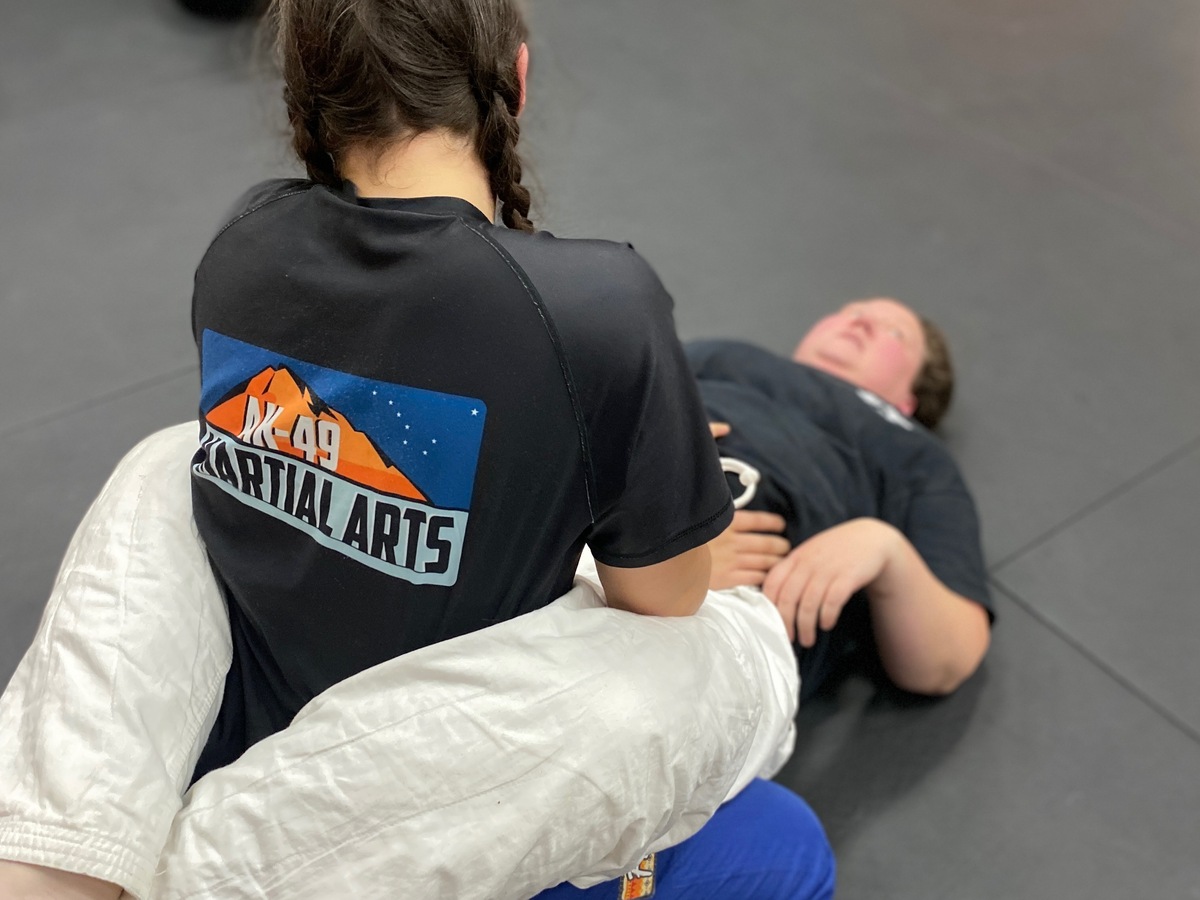
Brazilian Jiu Jitsu is the ground game: holding a good position, escaping a bad one, and finishing with a joint lock or a choke. In training, you tap early when you're caught and your partner lets go right away. In MMA the person on top can also punch, so ground work there includes covering up, controlling their arms and getting back to your feet.
- 05
No Gi
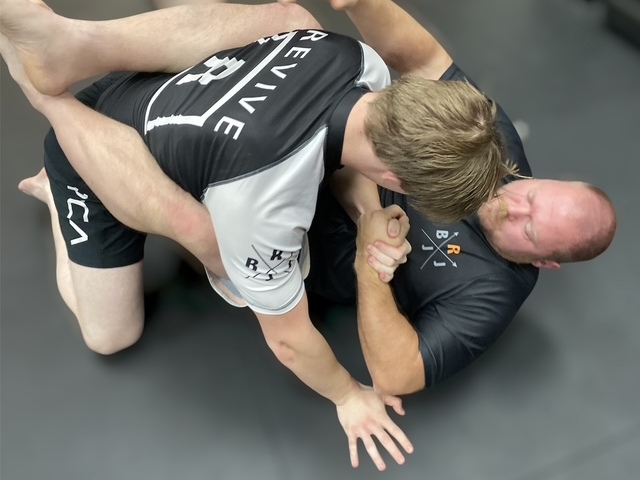
No Gi is grappling in shorts and a rash guard, with no jacket to grab. That makes it look a lot like the ground work you see in MMA, since you control wrists, the head and the body instead of cloth. Our No Gi classes are a hybrid of Brazilian Jiu Jitsu and wrestling, so this is where takedowns and ground work meet.
How the pieces fit together
Two floors. Coaches often describe MMA as two floors, the feet and the mat, and wrestling decides which floor you're on. If someone is worried about their legs, their hands drop and punches land. If they bring their hands up to cover, their legs open up for a takedown. Training both sides is what lets you make someone guess.
Moving between ranges. A real MMA exchange flows from one range to the next: a strike turns into a clinch, the clinch turns into a takedown, and the ground turns back into standing. The people who look smooth in MMA are the ones who can switch without stopping to think. You learn the pieces first, then you start drilling how they connect.
Common mix ups
Thinking MMA means the UFC
People use the two words like they mean the same thing. It makes MMA sound like something only pro fighters on TV do, so a lot of people never walk in.
The fix: MMA is the sport. The UFC is the biggest organization that runs MMA events. You can train the sport for fitness and skill without ever going near a cage.
Thinking it's a fight with no rules
From the outside it looks like anything goes. That picture scares beginners off and gives the wrong idea of what the sport is.
The fix: MMA has rules, rounds, a referee and a list of banned moves, like strikes to the back of the head, groin shots, eye gouges, biting and, under the most common rules in the US, kicking or kneeing the head of someone who's down. Rules vary a little by organization. Training is even more controlled than that, with drills, patient partners, a mouthguard for sparring and sparring only when you choose. Tap early to protect your joints and neck, and if you take a hard knock to the head, you stop for the day and tell the coach.
Thinking you can just add the other half
A striker figures they'll pick up some wrestling later, or a grappler figures a few punches will do. Then the first time someone threatens the other half, they don't know what to do.
The fix: Treat both sides as real arts that take time. A striker needs real takedown defense, and a wrestler needs real hands. Start with one side, then give the other side the same patience.
Trying to learn it all at once
You jump between striking, wrestling and jiu jitsu every day and chase every move you see online. Nothing sticks, and you feel lost in all of them.
The fix: Start with one piece, get comfortable, and build from there. Pick a striking class or a grappling class, show up a couple of times a week, and add the other side once you feel settled.
Skipping the basics for the flashy stuff
Spinning kicks and flying submissions look great on highlight reels. Chase them early and you skip the stance, footwork and positions that make everything else work.
The fix: Get good at the boring parts first: your stance, your jab, your guard, how to get up off the ground. The basics are what hold up when someone is actually pushing back.
Frequently Asked Questions
What martial arts are in MMA?+
Most MMA comes from a striking art like Kickboxing or Muay Thai, plus wrestling and Brazilian Jiu Jitsu. Some fighters bring in boxing, judo or other styles too. Putting striking and grappling together in one match is what makes it mixed martial arts. At AK-49 Martial Arts we teach it through Kickboxing, Muay Thai, Wrestling, Brazilian Jiu Jitsu and No Gi.
How do you win an MMA fight?+
A fight is split into rounds. It can end by knockout, by the referee stopping it when someone can't defend themselves, or by submission, when someone taps to a joint lock or choke. If it goes the distance, judges score each round and decide the winner. Pro fights are split by weight class, and most run three five minute rounds, or five for a title fight.
Does MMA have belts?+
There's no ranking belt system for MMA itself. Promotions hand a championship belt to whoever holds the title, and pro fighters are judged by their record. The arts inside MMA are different: Brazilian Jiu Jitsu has belts, and so do our kickboxing programs, so you have a clear next step to work toward while you train.
Can kids do MMA?+
The American Academy of Pediatrics generally discourages MMA for young kids. Kids can still learn the building blocks in their own classes. At AK-49 Martial Arts that's Kids BJJ for ages 6 and up and Kids Kickboxing for 7 and up, with technique taught first.
Do you have to compete to train MMA?+
No. Plenty of people train the arts behind MMA for years and never step into a fight. They come for fitness, to learn to handle themselves, or because an hour on the mat clears their head. Competing is a choice you can make later, or never, and sparring at AK-49 Martial Arts is optional too. Your first class here is a Kickboxing, Muay Thai, BJJ or No Gi class, not a full MMA session, so you learn one piece at a time.
Are You Ready?