
Is MMA Safe for Beginners
Mixed Martial Arts | Starting Out
Is MMA Safe for Beginners?
MMA (mixed martial arts) is a contact sport, so there's always some risk, but a beginner spends most of the time drilling technique at a controlled speed with a partner. Nobody spars on day one, sparring is optional, and contact gets added one step at a time. Most of the danger comes from skipping steps, and good coaching doesn't let you skip them.
What keeps beginners safe
- 01
Technique before live work
You learn how to stand, move, fall and hold a position before you ever use it against a partner who's resisting. Falling safely comes early: chin tucked to your chest so your head stays off the mat, and your palms slap the mat as your back lands to soak up the fall. Speed and power get added once the shape is right. Riskier things like slams, neck cranks, heel hooks and hard strikes to the head aren't part of beginner work, and you only see them later, if at all, under a coach's eye.
- 02
Drills at a controlled speed
Partner drills start slow while you learn the shape, then pick up to about 70 percent, which is a loose guide: quick, with no power behind them, and the faster partner always matches the slower one. Your partner holds pads or feeds you a movement, and then you switch. Hard hitting goes on the heavy bag, where nobody is on the other end. Wrap your hands and wear gloves for bag and pad work, and once you start partner work and sparring, add a mouthguard, a cup for men and shin guards for kicking.
- 03
Tap early
In grappling, when a hold gets uncomfortable, tap twice on your partner where they can feel it, or say "tap," and they let go right away. When your partner taps, you let go right away too. Tap before it hurts. Nobody wins anything in practice by waiting too long. In striking drills, if something goes wrong, put a hand up or say stop and your partner stops right away.
- 04
Speak up
Before class, tell the coach it's your first time and mention any old injuries, so they can show you another way to do a move. If you have a heart, joint or other health condition, or you haven't exercised in years, check with your doctor before you start. Warm up fully every class, since cold joints are easier to tweak. During drills you can say "lighter," slow down, or stop any time. If something hurts sharply, stop and tell your partner or a coach.
- 05
Stop after a knock to the head
If you take a hit or a fall and then get a headache, feel dizzy, foggy or sick to your stomach, stop for the day and tell the coach. Those signs can show up hours later, so keep an eye on how you feel that night too. Go to the emergency room right away if the headache keeps getting worse, you vomit more than once, you feel confused, very sleepy or weak, or one pupil looks bigger than the other. Get checked by a doctor and cleared before you go back to any contact, then ease back in with light drilling before sparring.
- 06
Patient partners and a coach watching
New students get paired with people who remember what their first week felt like. A good partner matches your pace and eases off the moment you ask. The coach keeps an eye on the whole room and steps in if anything gets too intense.
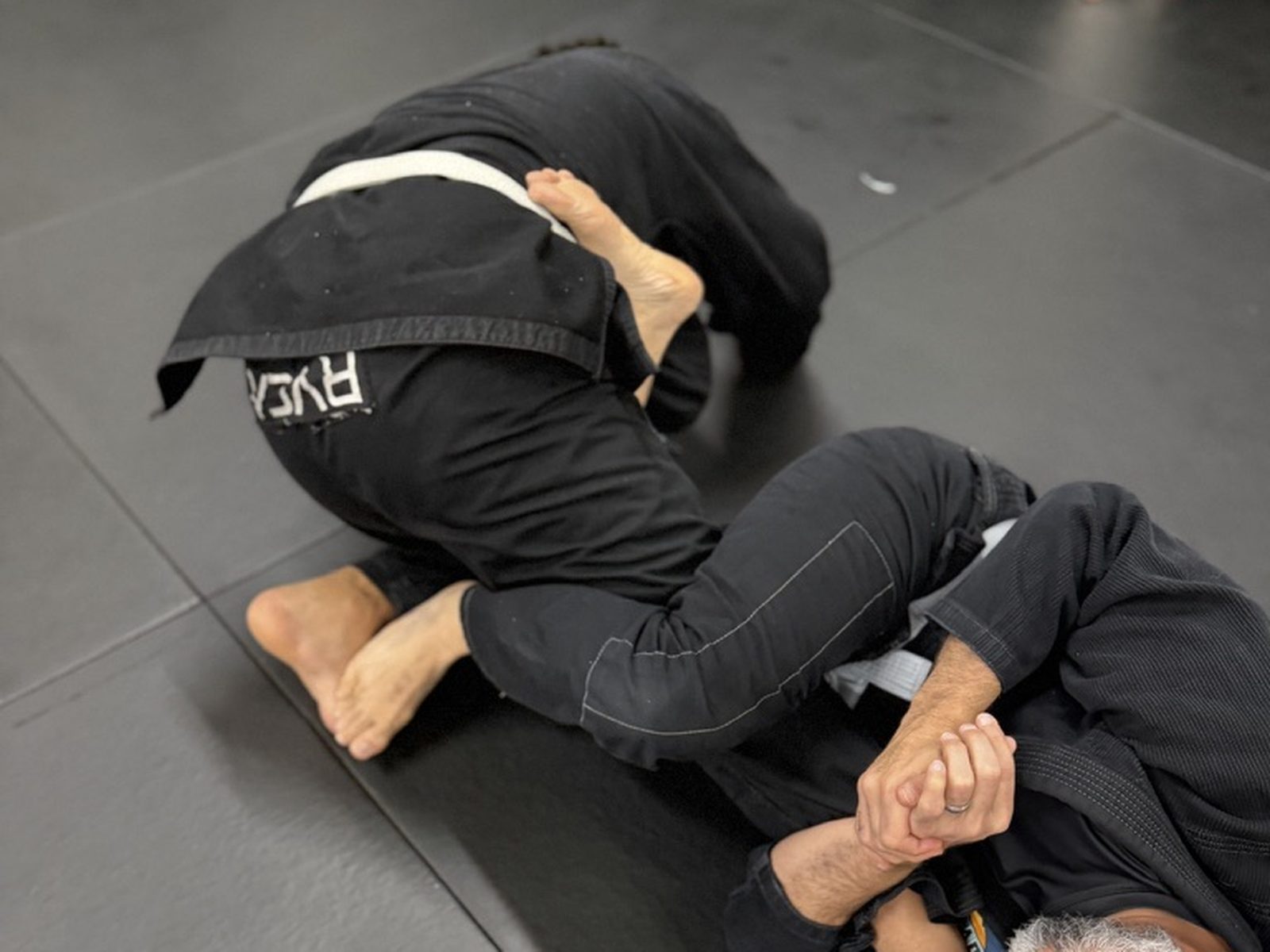
How good gyms drill
Never spar cold. Sparring comes after you've learned the basics and your coach thinks you're ready. Before a round, partners warm up and drill first so they settle the contact level together, and they decide ahead of time if it's a hard day or a technical day. Early sparring is light and technical, with the power turned way down and head contact kept light, because even small knocks add up over time. You can ask to keep it lighter or stop at any time.
How a good gym brings you in. Ask any gym how new people get started and when beginners spar. The answer should sound slow and patient: warm up, technique, drilling, pads, and light work later. A gym that throws beginners into hard sparring early is a red flag.
Things to look out for
Sparring hard before you can defend
You jump into hard rounds because it looks like the real thing. You haven't learned to keep your hands up or move your head yet, so you take shots you didn't need to take.
The fix: Learn the skill without contact first, then add contact a step at a time. Your coach will tell you when you're ready, and your first rounds should be light.
Trying to match the experienced people
You see people who've trained for years moving fast and hitting hard, and you try to keep up. You get tired, your technique falls apart, and that's when people get hurt.
The fix: Go at your own pace. Get the movement right first, then add speed. Take a breather or sit out a drill if you need one.
Holding on instead of tapping
Someone catches you in a hold and you fight it because tapping feels like losing. Holding on too long is how people end up sitting out the next few classes.
The fix: Tap early, on your partner, the mat or yourself, or say "tap." Your partner lets go right away. Nobody will think less of you for it.
Pushing through sharp pain
Something twinges in a drill and you keep going so you don't look soft. A small tweak turns into weeks off the mat.
The fix: Soreness is normal, and sharp pain is your cue to stop. Tell your partner or the coach and sit out the round. You'll get a lot more training in by missing one drill than by missing a month.
Training every day to catch up
You're excited and come in every day to catch up to everyone else. Your body hasn't adapted yet, so soreness turns into tweaks and you burn out before the habit sticks.
The fix: A couple of times a week is a good start. Let the soreness fade between classes, drink water and sleep. Add days once your body is used to the work.
Picturing a pro fight
You picture what you've seen on TV and decide MMA isn't for you, or you show up expecting a fight on day one. Either way you walk in with the wrong idea, and it either keeps you home or makes you go too hard.
The fix: A beginner class is mostly learning: a punch on the pads, an escape drilled slowly with a partner who wants you to get it right. Training and fighting are two different things.
Skipping the clean up
You train with long nails, an open scrape or gear you didn't wash. Skin infections like ringworm and staph spread through cuts, shared mats and dirty clothes, and they can keep you and your partners off the mat for weeks.
The fix: Trim your nails short, cover any cut before class, shower right after, and wash everything you trained in every time. If you have a rash or sore you can't explain, stay home and get it checked first.
Frequently Asked Questions
Is MMA dangerous for beginners?+
It doesn't have to be. Most of the danger comes from skipping steps, and good coaching doesn't let you skip them. You learn the technique first, drill it at a controlled speed, and only add contact when you're ready.
Does MMA training hurt?+
Some. Expect sore muscles a day or two after your first classes, tender shins from kicking pads, and maybe a mat burn. The soreness fades as your body gets used to the work. If something hurts sharply or doesn't feel right, stop and tell your partner or a coach.
Do you have to spar in MMA?+
No. At AK-49 Martial Arts sparring is optional, and you decide when that day comes, if ever. Most students eventually want to try it because it's where the skills come together. When you do, it starts light and technical.
What happens in a first class?+
A warm up, then the coach shows a technique, and you drill it slowly with a partner, taking turns. Striking classes usually add pad work. Nobody puts a brand new student in a sparring round.
Can kids train MMA safely?+
The American Academy of Pediatrics generally discourages MMA for young kids. Kids can still learn the building blocks in their own classes with technique taught first. At AK-49 Martial Arts that's Kids BJJ for ages 6 and up and Kids Kickboxing for 7 and up.
Are You Ready?