Am I Too Old for Muay Thai
Muay Thai | Questions
Am I Too Old to Start Muay Thai
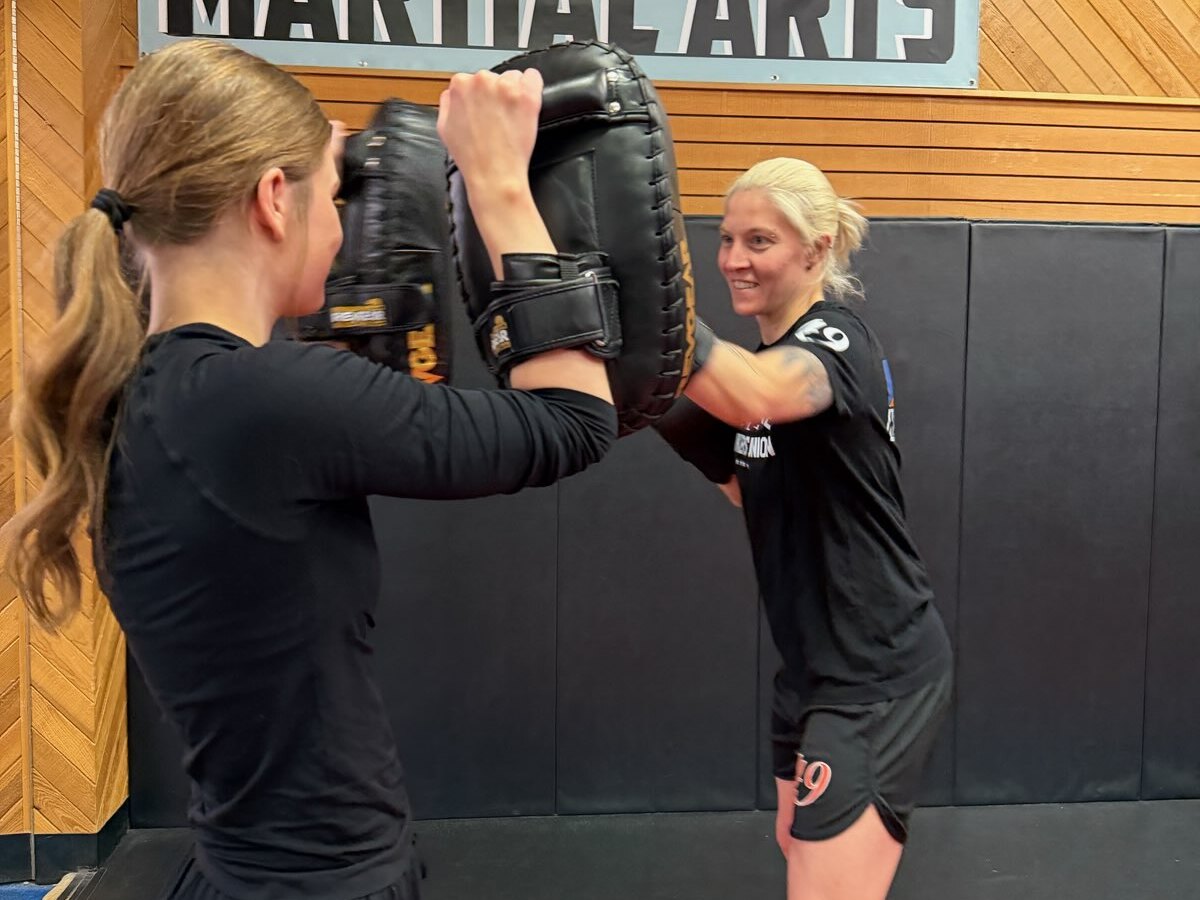
No. Plenty of adults start Muay Thai in their thirties and forties, and a lot of the people who stick with it are right in that range. Starting later just means training smart. Ease in, warm up longer, give yourself more recovery between classes, and tell your coach about any old injuries.
How to start later
- 01
Tell your coach before class
Let the coach know it's your first class, about how active you've been lately, and any old injuries or joint problems. They can show you how to adjust a drill so you work around a bad knee or shoulder instead of through it. If you have heart, blood pressure or long standing joint problems, check with your doctor before you start.
- 02
Warm up longer
Get there a few minutes early and move before class starts. Easy shadow boxing, arm circles, hip circles and leg swings raise your heart rate and loosen your hips and shoulders. Kicks and knees ask a lot of your hips, and a cold hip lets you know about it the next morning. After class, stretch while you're still warm.
- 03
Throw new strikes slow first
The teep asks for hamstring and hip flexibility and balance on one leg, and the round kick works your hips in ways they probably haven't moved in years. Throw a new strike at half speed until it feels smooth, then add speed and power over the next few weeks. On the round kick, turn on the ball of your standing foot so the knee isn't twisting against a stuck foot. Clean, controlled reps help protect your joints.
- 04
Two or three classes a week
Start with two or three classes a week and a rest day between them. If your whole body is still sore from the last class, take another day. Early soreness usually peaks a day or two after class and fades within a few days, and it gets milder after the first couple of weeks. Add a class once two a week feels easy.
- 05
Ease off your other workouts
If you already run or lift hard, back off for the first few weeks while your body gets used to Muay Thai. Keeping a full program and adding new training on top is how people get run down. Bring the other workouts back slowly once the early soreness settles.
- 06
Recover on purpose
Sleep, water and food matter more now than they did at 25. Muscle soreness and some shin tenderness or bruising in the first weeks are normal. Sharp joint pain, pain that gets worse, chest pain or dizziness are not; stop and get it checked. Drink water before, during and after class, because you sweat a lot more than you think. Eat enough protein to rebuild what you worked, and rest when your body asks for it.
- 07
Spar only if you want to
Sparring is completely optional at AK-49 Martial Arts. You can learn real Muay Thai and get in great shape on pads, the bag and partner drills without it. If you decide to try it later, it starts light and controlled. The clinch also puts load on your neck, so ease into it and tell the coach if your neck gets sore. If you ever take a hard knock to the head, stop for the day, tell the coach, and don't spar again until you're cleared. Get checked right away if you have a headache, vomiting, confusion or symptoms that get worse.
What to expect
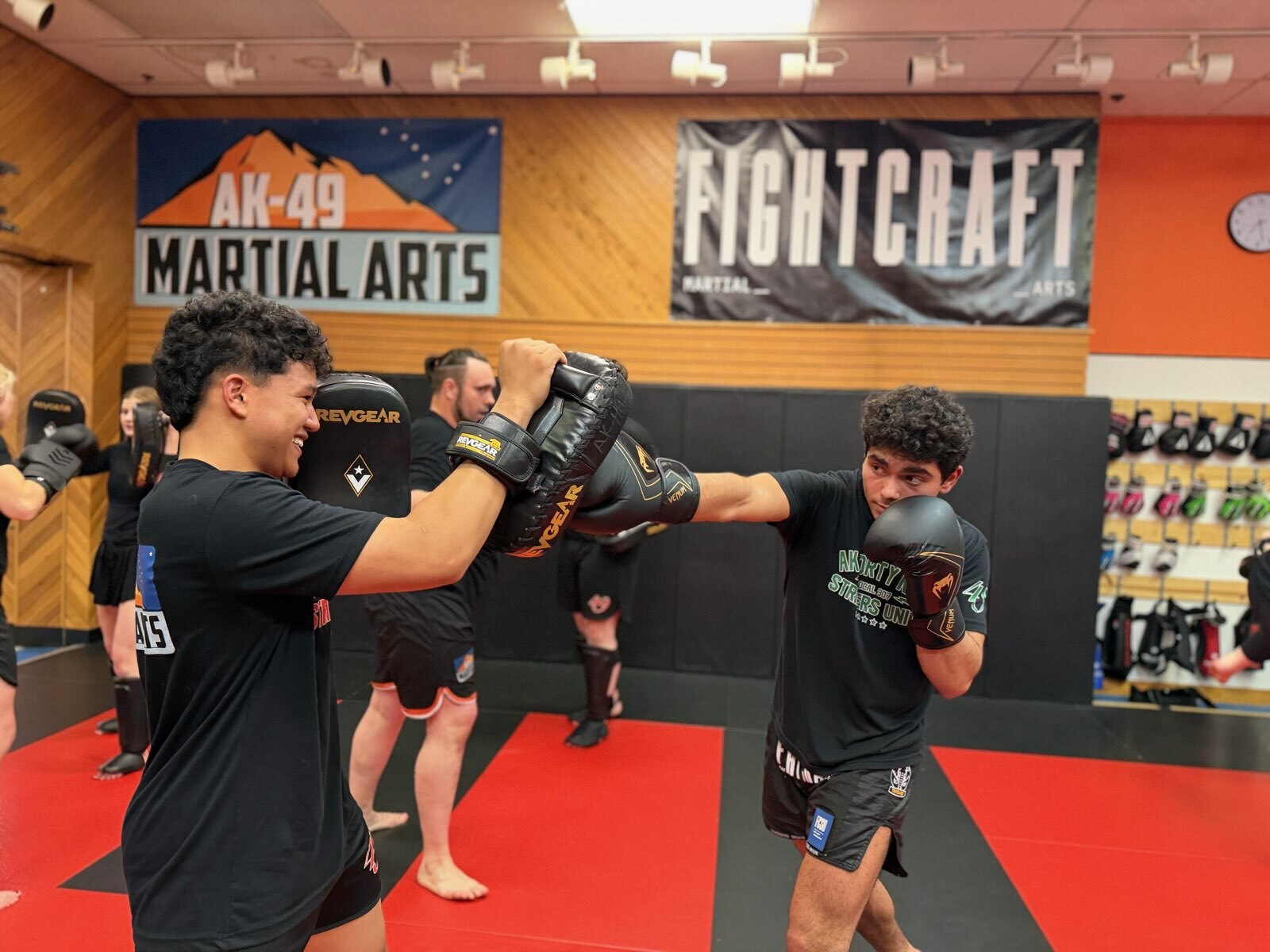
Slow at first, then it clicks. Your first classes will feel awkward and tiring at any age, and a new movement takes more reps to become automatic when you're older. Technique is learnable at any age, so the stance, the teep and the round kick still start to feel natural with steady practice. A lot of older students make up for speed with focus and patience. They listen, drill it right and don't rush.
Fitness and flexibility come with training. You don't need to be in shape or flexible to start, and you don't need a sports background. A first class usually means a warm up, stance and guard, a few basic punches and kicks, and some pad or bag work at your own pace. A lot of the first kicks go to the legs and the body, and your hips loosen up the more you train. A few weeks of steady classes is what gets you in better shape. Your goal is to get a little better each week.
Things to look out for
Training like a young pro fighter
You try to match the pace, the power and the high kicks of the 22 year old next to you. Your form falls apart, you're sore for days and you miss the next class.
The fix: Train at your own pace and measure yourself against where you were last week. Leave your ego at the door, since everyone in the room was a beginner once.
Doing too much the first week
You show up every day to make up for lost time. By the end of the week you're so sore you can't lift your arms, and a lot of people quit right there.
The fix: Two or three classes a week with a rest day between. Steady weeks add up faster than one big week and a month off.
Skipping the warm up
You walk in late and go straight into kicks with cold hips and hamstrings. The next day you're stiff, and a tight hamstring can nag you for weeks.
The fix: Come a few minutes early and move until you break a light sweat. Hips, shoulders and ankles first, then easy shadow boxing.
Kicking hard before it's smooth
You load up on a round kick you learned ten minutes ago. Your balance is off, you twist on the standing knee, and your hip or hamstring takes the strain.
The fix: Keep new kicks at half speed and pivot on the ball of your standing foot. Power comes after the movement feels easy.
Keeping quiet about an old injury
You don't want to be the person who needs special treatment, so you say nothing about the bad knee. Then you do a drill that aggravates it and miss a month.
The fix: Tell your coach before class. There's almost always a way to change the drill so you keep training.
Waiting until you feel ready
You tell yourself you'll start once you lose some weight or get a little fitter. Months go by and you never walk in.
The fix: Nobody feels ready before their first class. You get ready by starting, and the first classes are built for people who are new.
Frequently Asked Questions
Can I start Muay Thai at 40?+
Yes. Plenty of adults start in their thirties and forties, and a lot of the people who stick with it are in that range. Go two or three times a week, warm up well, and tell your coach about old injuries. You'll be slower to pick things up than you'd like, and that's true for every beginner.
Is 50 too old to start Muay Thai?+
Not by itself. Your own health matters more than the number, so check with your doctor first if you have heart, blood pressure or joint problems. Start slow, keep new strikes at half speed and give yourself extra recovery. Your starting point is the only standard you're held to.
How often should I train if I'm starting later?+
Two or three classes a week, with a rest day between them, is a good start. Don't train when your whole body is still sore from the last one. Add a class once two a week feels easy and you're recovering well.
Do I have to spar?+
No. At AK-49 Martial Arts sparring is completely optional. Your own gear, like wraps, shin guards, a mouthguard and a cup for men, comes after you sign up, and the coach will help you with it. You can learn real Muay Thai on pads, the bag and partner drills and never spar at all. If you want to try it later, it starts light and controlled.
Do I need to be flexible to start Muay Thai?+
No. A lot of the first kicks go to the legs and the body, and the power comes from turning your hip and swinging through with your shin. Your hips loosen up the more you train. A clean, low kick you can control is worth more than a high one you can't.
Are You Ready?