
How Long to Learn Muay Thai
Muay Thai | Questions
How Long Does It Take to Learn Muay Thai
You'll pick up the basics of your stance, punches and kicks in your first few weeks, and with steady training they usually feel solid somewhere around three to six months. Getting really good takes years. How often you show up matters more than how hard you go, and showing up steady beats going hard for two weeks and quitting.
What the first weeks look like
- 01
Week one: everything is new
Your first week is stance, guard, a few strikes, how to hold pads and how a class runs. It's a lot at once, and feeling lost is normal. The goal that week is just learning where to stand and what the words mean, and by the end of it walking in already feels easier. You'll also learn to wrap your hands, and a mouthguard is worth getting early for any partner work.
- 02
Weeks two and three: you can follow along
You start keeping up with the warm up, the combinations and the pad rounds without guessing what comes next. Your breathing and coordination start to get better. Sore legs and shoulders are normal at this point, and training goes from overwhelming to hard but doable.
- 03
The first two months: the basics start to stick
Around the end of the first month, you can throw jab cross, a teep and a round kick without thinking through every step. You move more naturally in your stance and you can work with different partners. If you're training two or three times a week, your fitness picks up a lot in the first six to eight weeks.
- 04
Three to six months: a solid base
With steady training, the basics of your strikes usually feel solid somewhere in this range. Defense, the clinch and sparring take longer, so expect those to keep developing well past six months. Your hands stay up without reminders, your kicks turn over, and you start layering knees, elbows and the clinch on top. A fair check at this stage: you can shadow box a clean three minute round with your hands up, check a kick without stumbling, and land back in your stance after every kick. This is about when people start asking their coach about light sparring, if they want it.
- 05
A year and beyond: timing and depth
After a year of steady training, your combinations start to flow and you begin to see openings instead of only following the pads. Getting really good takes years, and even high level fighters keep coming back to the basics. There's always something new to work on.
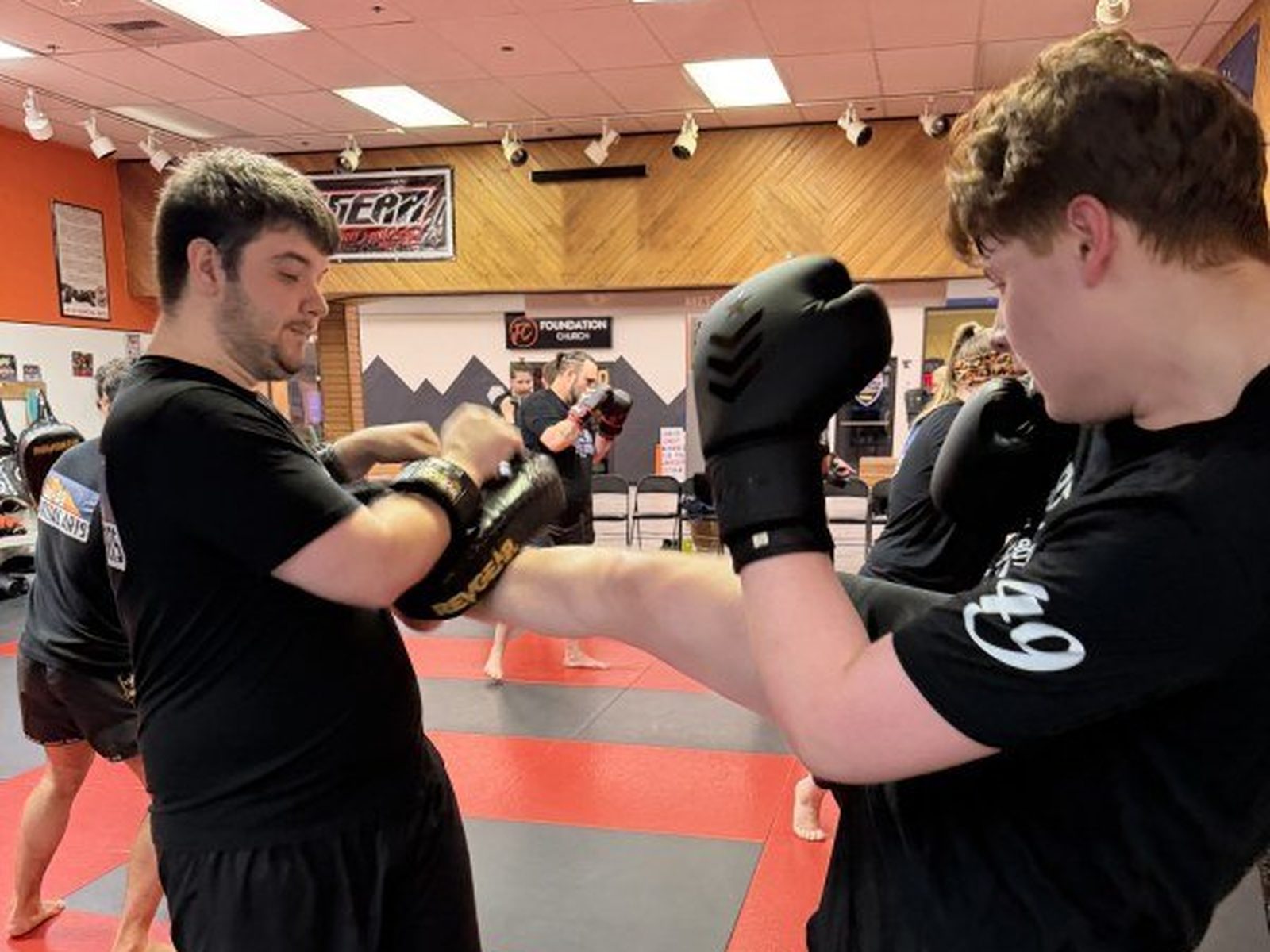
What helps you get better
Show up steady. How often you train matters more than how hard you go on any one night. Two or three classes a week, every week, beats five classes one week and none the next. The person who goes hard for two weeks and quits never gets to the part where it clicks. Pick a schedule you can keep for months.
Keep sharpening the basics. Progress comes from perfecting the basics, and even high level people keep touching back on them. Stance, guard, the jab, the teep and the round kick show up in everything you'll learn later, so every clean rep pays off. Take one or two things home from each class and drill them until they're automatic. Your coach will tell you what to fix next.
Things to look out for
Chasing new moves
You want the spinning elbows and flashy combinations before your stance is solid. Everything you add sits on a shaky base, so none of it lands clean.
The fix: Get the stance, guard, jab, teep and round kick sharp first. New moves come faster once those are automatic.
Going hard for two weeks and quitting
You train every day at the start, get sore and worn out, and then life gets busy. A month later you're starting over from zero.
The fix: Pick two or three classes a week and protect them. Steady weeks add up, and burning out in the first one slows you down. If something hurts sharply or swells, rest it and tell your coach instead of training through it.
Thinking awkward means you're behind
Your feet get tangled and your kicks feel off, so you decide you're not made for this. Feeling awkward is a sign you're learning, and everyone in the room went through it.
The fix: Give it a few weeks of steady classes before you judge yourself. Compare yourself to where you were last month.
Comparing yourself to someone else's timeline
The person who started the same week picks things up faster, maybe because they played sports or train more often. You get discouraged and start skipping class.
The fix: Everyone's pace is different, and your own steady progress is what counts. Ask your coach how you're doing, since they've watched you train.
Treating pad holding like a break
When it's your turn to hold, you check out and wait for your turn to hit. You miss half the learning in every class.
The fix: Holding pads is part of learning. Watch every strike come in, check your partner's guard and feet, and you'll start seeing your own mistakes.
Only training in class
You go two or three times a week and do nothing in between. It works, but the basics take longer to become automatic.
The fix: Shadow box for a few rounds on your off days, slow, in front of a mirror. Drill the one or two things from your last class until they feel natural.
Frequently Asked Questions
How long does it take to learn Muay Thai?+
You'll get the basics of your stance, punches and kicks in your first few weeks, and they usually feel solid somewhere around three to six months of steady training. Getting really good takes years. How often you train and how steady you are make the biggest difference.
How long until I can spar?+
Most people train for at least a few months first, until their guard, stance and footwork are automatic and they can control their power. Ready usually means you can stay calm when someone is moving in front of you, defend the basic strikes and hold back your power. First rounds are light and technical. Ask your coach, since they've watched you train. At AK-49 Martial Arts sparring is completely optional, so you never have to.
How many times a week should I train Muay Thai?+
Two or three times a week is a good start for most beginners, with a rest day between. That's enough for the basics to stick and your fitness to climb. Add a class once that feels easy and you're recovering well. Full time fighters in Thailand train twice a day most days of the week, which is why their timeline looks so much shorter than a hobby schedule.
Is Muay Thai hard to learn?+
Some of it is, because there are a lot of tools: fists, elbows, knees, shins and the clinch. You don't learn them all at once. You start with your stance, guard and footwork, then add a punch, a kick and a knee, and each piece builds on the last.
Can I learn Muay Thai faster by practicing at home?+
Home practice helps a lot. Shadow boxing on your off days gives the basics more reps, so they become automatic sooner. You still need a coach watching you, though, because it's easy to drill a mistake over and over without knowing it.
Are You Ready?