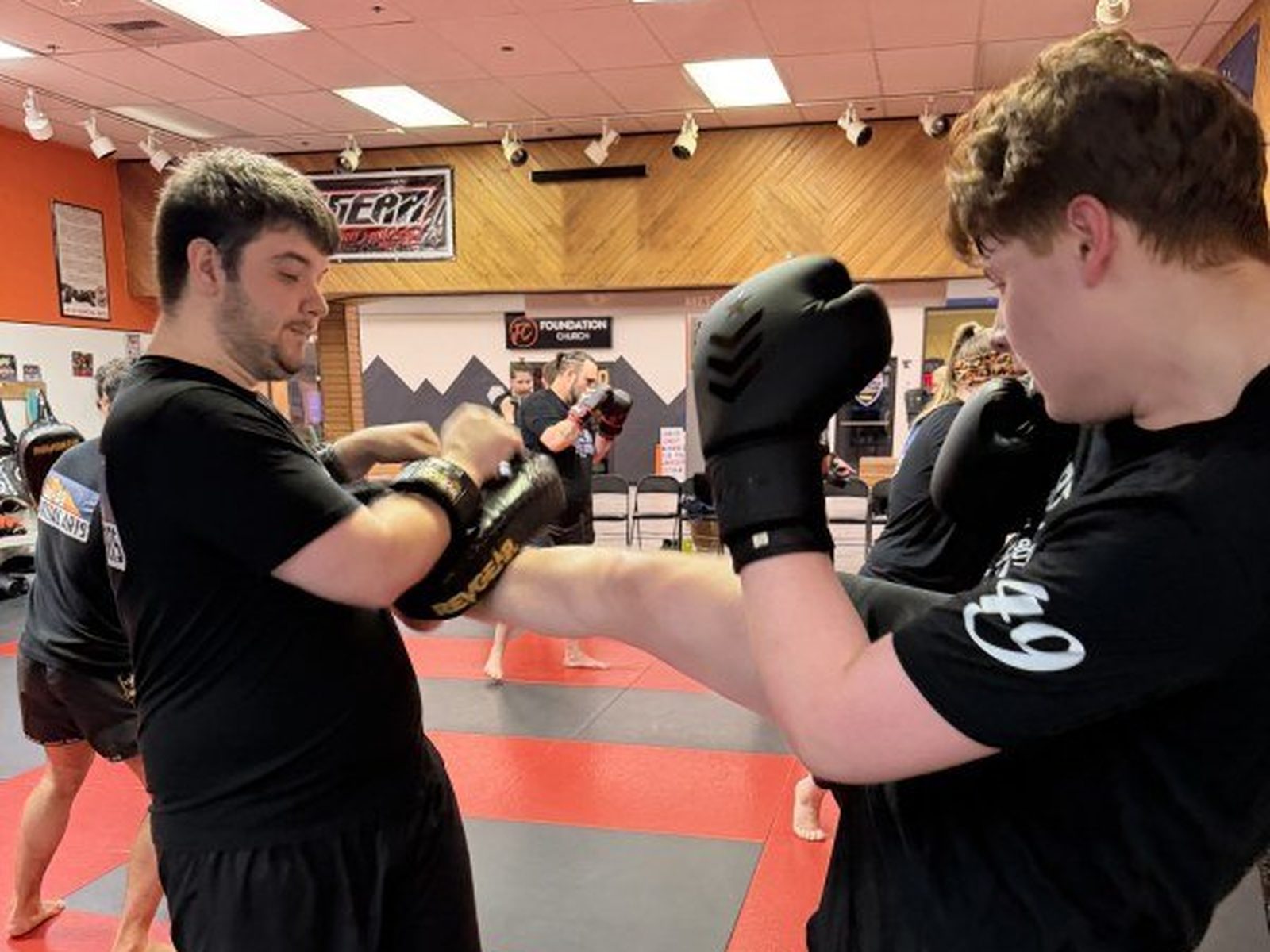
Blocking Punches and Elbows
Muay Thai | Defense
How to Block Punches and Elbows in Muay Thai
In Muay Thai you block punches with your forearms and gloves instead of slipping a lot, because knees and kicks come up fast and big head movement can walk you into them. Stand in a good athletic base with your hands up, elbows in and gloves touching your head, block each punch all the way, and get back to your stance right away. Against elbows up close, keep your hands on top of theirs, control their biceps and keep your head away from a free arm.
- 01
Good athletic base
Feet about shoulder width apart, knees a little bent, weight in the middle and your body fairly upright. Muay Thai defense stays taller than boxing defense, because ducking low or leaning way back puts your head where knees and kicks are coming. Balanced feet are what let you take a punch on your arms without getting knocked off your spot.
- 02
Hands up, elbows in
Both gloves up touching the sides of your head, chin tucked, elbows in close to your ribs. Keep the gloves on your head, not floating in front of it, or the punch drives your own glove into your face. For a punch to the body, drop the elbow on that side down over your ribs. An uppercut coming up the middle gets covered by keeping both forearms tight together in front of your face and chin. Stay relaxed until the punch arrives, because tense arms tire you out fast.
- 03
Eyes open
Look at their chest, between and over your gloves. Don't close your eyes or turn your head away when a punch comes, and don't cover your eyes with your forearms. You can't block what you can't see, and you can't see the next punch or kick either.
- 04
Block straight punches all the way
Bring your forearm and glove across, close to your head, to cover the punch's path, with your arm slightly bent so it absorbs the hit. The other glove stays glued to your head. A full block covers the next punch too, where a small parry out wide leaves it open. Meet the right hand early by turning your body into it, so you're already covered for the hook behind it.
- 05
Block hooks with the arm
For a hook, bring the glove up to the side of your head like you're answering a phone, with your forearm tight along your head, your elbow pointing forward and your chin tucked. Let the hook land on your arm and shoulder, not your head. Turn a little with it so your body takes some of the force.
- 06
Elbows: hands on top, control the biceps
Up close, keep your hands on top of theirs and grab or push on their biceps, so they can't bring the elbow around. If they have an arm free, tuck your head in tight against their chest or shoulder, on the side away from that elbow. If you can't control the arm, cover with a tight high guard, both forearms up along your head, and get out of close range. In class, beginners don't take hard elbows: partners drill them slow and controlled, and only when the coach says so.
- 07
Back to your stance
After you block, your gloves go straight back to your head and your feet stay set under you. Then throw something back or step out to the side. Don't stay shelled up waiting for more.

When to use it
When they throw punches at you. When someone throws a jab or a one two, your forearms take it and you stay covered. A block keeps you in range and on balance, so you can hit right back. Block the jab, then throw your own hook or a low kick. Every block should end with you throwing something or moving.
When you're up close. When you end up chest to chest, elbows come into play. Keep your hands on top of theirs, hold their biceps and keep your head tight to them, away from their free arm. That shuts the elbow down while you work to get out or get your own grip. If you'd rather not be there, hit and step back out to the middle.
Things to look out for
Closing your eyes
Your eyes shut or your head turns away as the punch comes. It's a normal reaction at first, but you can't see the next punch or the kick behind it.
The fix: Keep your eyes on their chest. Shadow box in front of a mirror with your guard up and practice blocking with your eyes open, slowly, until it feels normal.
Parrying out wide
You reach out and slap the punch away from your face. Your hand ends up far from your head, and the next punch or a kick comes right through the gap.
The fix: Block it all the way and stay covered. The glove moves across to cover your face, it doesn't reach out to meet the punch.
Gloves off your head
Your gloves float a few inches in front of your face or sit right under your chin. The punch drives your own glove into your face.
The fix: Keep the gloves touching the sides of your head. Feel the glove on your head every time you reset.
Elbows flaring out
Your elbows lift away from your ribs as you cover. Your body is open to punches and kicks to the ribs, and your forearms don't line up to block.
The fix: Keep your elbows in close to your ribs. Think elbows down and in, gloves up.
Stiff arms
You hold the guard tense the whole round. Your shoulders burn out fast, your blocks get slow, and your arms lock out and take the shock.
The fix: Stay loose with a slight bend in the arms, and tighten up only as the punch lands. Keep breathing steady the whole time.
Dropping your hands after the block
You block, then the gloves fall down to your chest. The very next punch lands clean.
The fix: Bring the gloves straight back to your head after every block. Block, back to the guard, every time.
Staying shelled up
You cover up and stay there while they keep throwing. They can walk around your guard, kick you, or knee you.
The fix: Block, then throw something back or step out to the side. Don't back straight up in a line.
What to Practice at Home
Drill 01
Mirror guard check
3 rounds of 1 minute with 30 seconds rest, in front of a mirror. Stand in your stance with your guard up and just hold it, breathing normally. Check that your gloves touch your head, your elbows are in, your chin is tucked and your eyes are open and up. Relax the shoulders and keep the shape.
Drill 02
Shadow block and counter
3 rounds of 2 minutes with 1 minute rest. Picture a partner and block slowly. Round one, block an imaginary jab and cross with full forearm blocks, back to the guard each time. Round two, block a hook on each side, glove to the ear, then throw a hook back. Round three, block a one two, then throw a low kick and get back to your stance.
Drill 03
Cover and move
3 sets of 10 reps, 30 seconds rest between sets. One rep is covering for a jab, a cross, a lead hook and a rear hook in a row, then step off to the side and reset your stance. Go slowly enough that every cover is clean. Keep breathing normally the whole set. In class you'll do the same thing with a partner throwing slow, light punches, which is where the timing really comes from.
Frequently Asked Questions
Why block punches instead of slipping them?+
Knees and kicks come up fast in Muay Thai. If you slip and duck a lot, you can lean right into a knee or a kick. Blocking with your forearms keeps you upright, covered and ready to hit back. Slipping is still fine as a variation. Kicks are a different job: you check them with your shin, which has its own page.
Should you parry or block punches in Muay Thai?+
Block all the way. A small parry out wide leaves the next punch or a kick open. Keep the glove close and cover your face with the forearm.
Which arm blocks which punch?+
When you're both in the same stance, their jab comes toward your back hand side, so that glove and forearm cover it. Their cross comes toward your front side, so your lead forearm takes it. If they stand the other way, those sides flip, which is why you watch the punch and not a rule. Hooks land on the arm on the side they're coming from, with that glove up by your ear.
How do you defend elbows in Muay Thai?+
Up close, keep your hands on top of theirs and control their biceps, so they can't swing the elbow. Keep your head off to the side of any free arm. Or stay out of close range and work from the middle.
Does blocking hurt?+
Your arms will feel it at first, especially on hard punches and kicks. Keep your arms slightly bent, your gloves on your head and your body relaxed until the punch lands, and the block spreads the force out. In class, partners go light and controlled while you learn it, you wear a mouthguard and gloves, and the partner usually calls the punch first before you move on to reacting to it unannounced.
Are You Ready?