Elbows and Safety in Training
Muay Thai | Elbows
How Elbows Are Trained Safely in Muay Thai
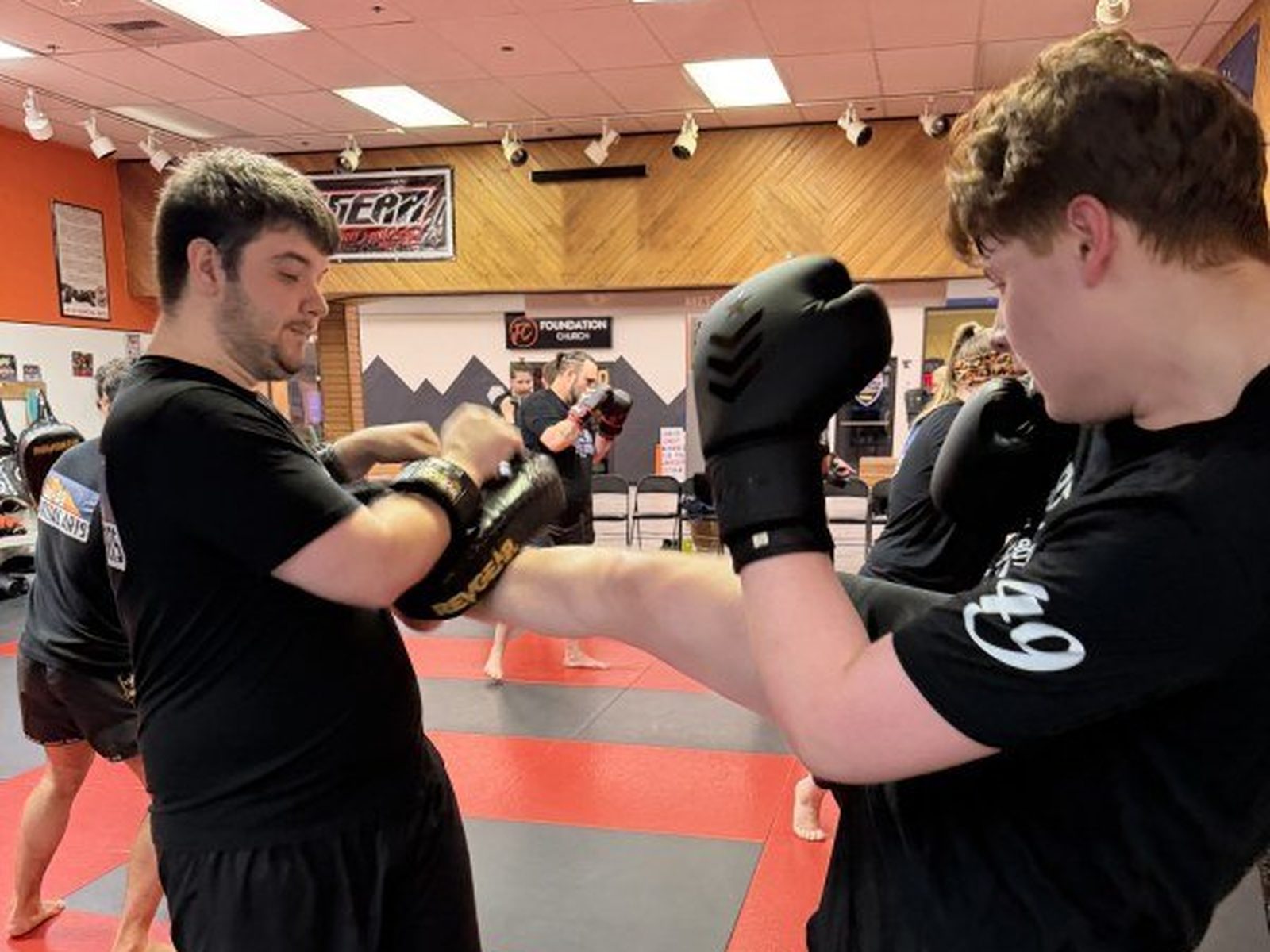
Elbows are trained with control from the first day. You learn them in shadow boxing, then on the bag and pads, and only later with a partner you trust, touching them into a tight forearm guard with elbow pads on. An elbow is sharp and easy to misjudge at speed, so it's practiced more safely in drills than in wild sparring.
How elbows are trained
- 01
Shadow box them first
Practice elbows in the air before you hit anything. From a good athletic base with your hands up and elbows in, throw a punch, step in and turn the same arm into an elbow, then come back to your guard. The first ones most people learn are the horizontal elbow that swings across, the downward elbow that chops down and the upward elbow that comes up the middle, and each has its own page. Turn your shoulder and hip into it with your chin tucked and your feet set, and go slow enough to feel your other hand staying at your face the whole time.
- 02
Then the bag
Once the combinations feel smooth in the air, take them to the bag. Aim to land with the point of the elbow, not your forearm or hand, and build up speed and power slowly. The bag shows you whether you're close enough, because an elbow only lands up close.
- 03
Pads with a long guard
With a pad holder, reach your hands out long and rest them on top of the pads. Push one pad down, step in and throw the elbow on that side, so your holder can feel which one is coming. Aim for the middle of the pad and never the holder's head or body.
- 04
A partner you trust
Partner drills come later, with someone you trust. Your partner shells up with a tight forearm guard, and you step in and touch the elbow into their forearms at about a quarter of your speed, very controlled. Mouthguards go in for all of it, and pick a partner close to your size and experience. Pads and a mouthguard don't make a hard elbow safe, so if control slips or your partner flinches, stop and reset at a slower speed. Wear elbow pads, and remember they can slide, so your control protects your partner more than the pad does.
- 05
Learn the defense too
Elbows are close range strikes, so the simplest defense is to strike and move back out instead of standing in that range. If you do end up close and an elbow is coming, cover with a tight high guard, forearms up along your head, or tuck your head in tight to your partner's chest or shoulder, away from their free elbow. Your coach will show you how to control the arms in the clinch.

Before sparring
Drills set the contact level. Drills come before any sparring, and they set how hard the day goes. In drills, elbows are touched in with control, and that's where most people learn them. Many gyms keep elbows out of regular sparring, or save them for experienced students wearing elbow pads. Your coach makes that call.
Sparring is optional. At AK-49 Martial Arts, sparring is completely optional, so you can learn elbows without ever sparring. Kids Kickboxing is for ages 7 and up, and kids don't throw elbows in sparring. If you spar as an adult, don't add elbows on your own. Ask before the round and stick to what your coach and partner agree on.
Things to look out for
Getting carried away
A drill speeds up, it starts to feel like a fight, and the elbows start going in harder than you agreed. An elbow thrown even a little too hard can cut your partner, and they won't want to drill with you again.
The fix: Take your time and stay very controlled. Touch the elbow in and bring it back, and slow down any time you feel the pace climbing.
Hitting with the forearm or hand
The arm swings out wide and the forearm or the side of the hand lands instead of the point of the elbow. It's weaker, and the wide swing leaves your head open.
The fix: Keep the arm folded tight so your hand stays close to your head, and turn your shoulder and hip into it. Feel the point of the elbow make the contact.
Dropping your other hand
All your focus goes into the elbow and the other hand slides down off your face. Elbow range is close range, so your partner's elbows and punches are right there too.
The fix: Keep the other hand at your cheek on every elbow. Shadow box slowly in a mirror and watch that hand, not the one that's striking.
Throwing it from too far away
You throw the elbow from punching range and miss, falling forward off balance into your partner.
The fix: Use a punch or a step to get close first, then throw the elbow. If you have to reach for it, you're too far away.
Trusting the elbow pad
You figure the pad makes it safe to go harder. Pads slide on the arm, and a hard elbow can still hurt your partner even with one on.
The fix: Wear the pads and keep your control anyway. Check that they fit snug before every round.
Aiming at your partner instead of the target
In pad rounds the elbow drifts off the pad toward the holder's head, or in partner drills you aim at the face. One small miss and your partner takes an elbow they never signed up for.
The fix: On pads, aim for the middle of the pad. In partner drills, put the elbow into the forearm shell your partner is holding.
Frequently Asked Questions
Are elbows allowed in Muay Thai sparring?+
It depends on the gym and the day. Many gyms keep elbows out of regular sparring, or allow them only for experienced students wearing elbow pads. Your coach decides, and both partners should agree before the round. Most elbow work happens in drills.
Do I need elbow pads?+
For partner work, yes, a padded elbow sleeve that covers the point of the elbow. It softens the elbow, but they can slide on your arm, so control still matters most. Make sure they fit snug before you start.
How can I practice elbows at home?+
Shadow box them. Throw a punch, step in and turn the same arm into an elbow, then come back to your guard, slow at first. If you have a bag, take the same combinations there and hit with the point of the elbow.
Do kids learn elbows?+
Kids train in Kids Kickboxing, for ages 7 and up. Kids don't throw elbows in sparring at AK-49 Martial Arts. They start with stance, footwork, punches and kicks.
Why are elbows trained so carefully?+
The point of the elbow is hard and sharp, and it's thrown from very close, so it cuts easily. It's also easy to misjudge at speed. That's why elbows are drilled slowly, into pads and forearm guards, with a partner you trust. If someone gets cut, stop the drill, have them press a clean towel on it and get the coach. If anyone takes an elbow to the head, they stop for the day, tell the coach and stay out of contact until cleared, and see a doctor if a headache won't quit or they feel sick, confused or worse over time.
Are You Ready?