
Clinch Basics
Muay Thai | Clinch
Muay Thai Clinch Basics
The clinch is Muay Thai's standing grappling, where you hold your partner's head, neck or arms up close to land knees and elbows and break their balance. The basics come first: a good athletic base on the balls of your feet, hands up, hips in, shoulders up and your head beside theirs, then swimming your hands inside one at a time. There's a training version you drill in class and a fighting version under the rules, where the referee breaks it with the command "yaek".
- 01
Good athletic base
As you come chest to chest, bring your feet a little more under you, about shoulder width and fairly square to your partner, with your weight on the balls of your feet. A long fighting stance in the clinch is easy to pull and turn. Light on your feet, you can pivot, step and stay upright when they pull on you.
- 02
Hands up, elbows in
Your hands stay up by your face as you close in, with your elbows and forearms in front of you instead of out wide. That keeps your face covered from elbows and punches on the way in. It also keeps your arms between theirs, which is where you want them.
- 03
Hips in, shoulders up
Push your hips in close to theirs, stand tall with a straight back, lift your shoulders and keep your chin down. With your hips close there's no room for them to knee you hard, and with your shoulders up they can't pull your head down. It should feel like you're standing tall and leaning a little into them, never bent over.
- 04
Head beside theirs
Keep your head to the side of their head, ear to ear, not right in front of their face. From there it's hard for them to hit your face or pull your head down. Your eyes stay looking forward, not at the floor.
- 05
Swim to the inside, one hand at a time
Fight to get your arms inside theirs. Swim one hand in under their arm and up, then the other, never both at once. Take both hands off together and you get pushed, kneed or elbowed in the gap.
- 06
Hold two points of control
Once you're inside, hold on to two things. Common grips are one hand behind the neck with the other on their bicep or inside the elbow, or both hands stacked behind the head, which many coaches call the plum. Controlling the arm or bicep keeps their elbow from swinging at you. Holding position calmly is the first goal. Turning comes next: pull down on one side of their neck as you step back and pivot, so they spin off balance.
- 07
Back to your stance
When the clinch breaks, or you push off after getting inside, step back out to your fighting stance with your hands up. Don't drop your hands as you separate, because that's when a punch or elbow comes. Clinch, break, hands up, stance.
Training and fighting versions
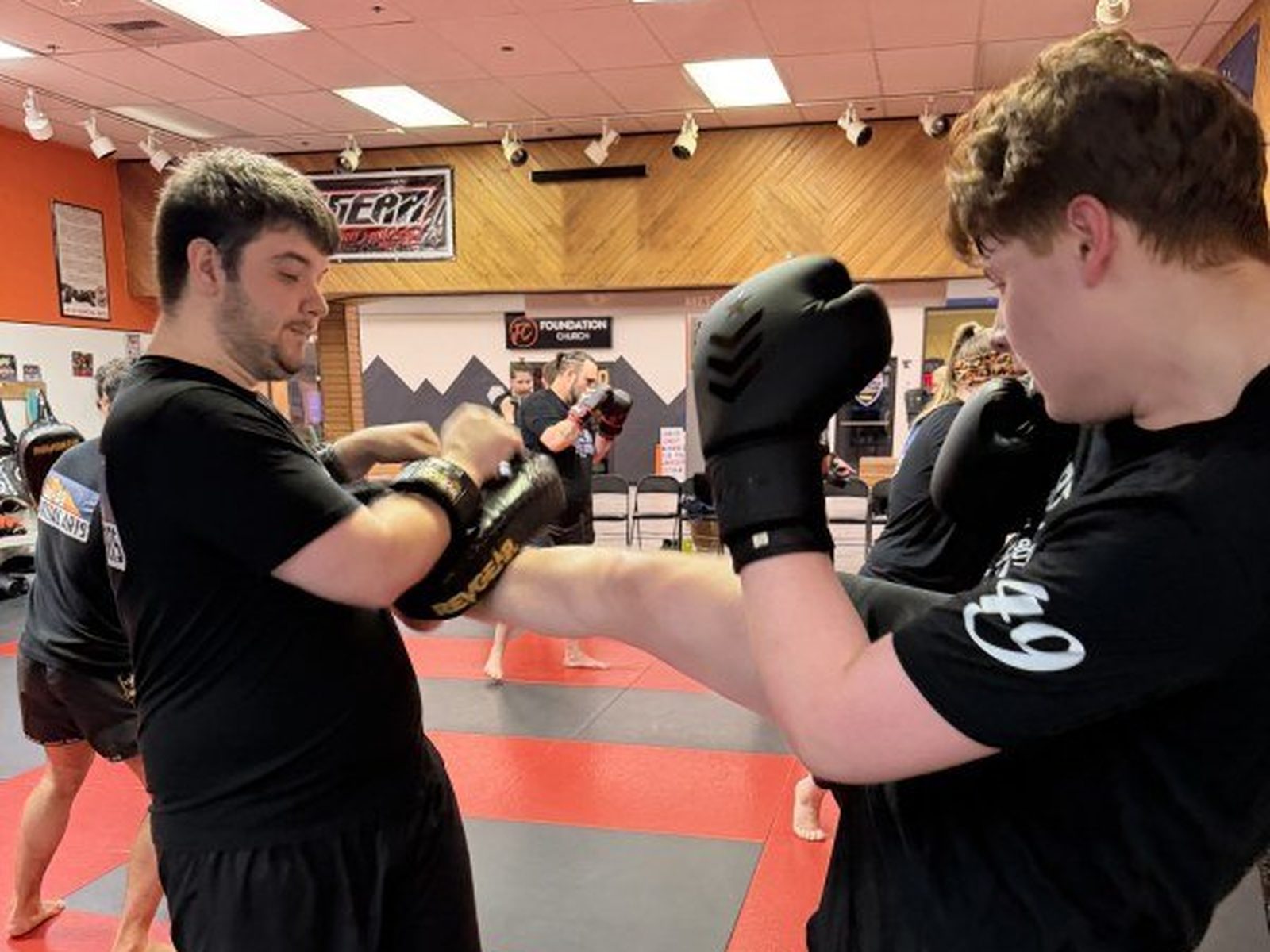
The training version. In class you drill the clinch with a partner at a contact level your coach sets. You start with posture, then swim for inside position one hand at a time and hold your spot calmly. Control comes from steady pressure, so never jerk or crank your partner's neck, and let go as soon as the drill ends or your partner taps or says stop. Mouthguards go in, and in training knees go to the body only, never the head. A common first drill is a slow swimming round with no knees, where both of you just fight for inside position. This is where you build the feel, long before anything goes live.
The fighting version. Under Muay Thai rules the clinch is live fighting. Knees and elbows land there, and you hold position until the referee says "yaek" and both fighters step back. Under many rules, sweeps, trips and turning someone off balance out of the clinch are allowed, while hip throws, judo throws and wrestling style takedowns are fouls. The details change from one event to the next. Even here, the beginner job is the same: posture, inside position and taking no damage.
Things to look out for
Hips back, bent over
Your hips stay back and your upper body leans in to grab. They pull your head down easily and your face and body are right in line for knees.
The fix: Hips in and stand tall. Picture your belt buckle touching theirs and your shoulders lifted up toward your ears.
Looking at the floor
Your chin drops and your eyes go down, often while you're trying to see their legs. Your neck is easy to pull, and you can't see what's coming.
The fix: Head up beside theirs, chin down, eyes looking forward. Feel their movement through your arms and chest instead of looking for it.
Both hands off at once
You pull both arms out to swim back in. For a moment you have no control and nothing covering your face, and that's when they knee or elbow you.
The fix: Swim one hand at a time. Always keep one hand on them while the other one moves.
Blocking knees with your hands
You reach down with your hands to stop their knees. That leaves your head open to knees and elbows, and you lose your grip.
The fix: Fix your posture instead. Hips in close, so the knees have no room to build up speed.
Muscling everything
You squeeze and push as hard as you can from the first second. You get tired fast, and pushing hard in one direction gives them something to turn you with.
The fix: Stay firm but relaxed and only tighten when you need to. Use small steps and turns, not pure strength.
Holding your breath
Being grabbed up close makes a lot of beginners tense up and stop breathing. You gas out in seconds and start making panicky moves.
The fix: Breathe steadily through your nose and mouth while you hold position. If you notice you're holding it, breathe out and relax your shoulders.
Staying in a long stance
You keep your normal fighting stance with one foot far behind. It's easy for them to pull you off balance and turn you around.
The fix: Bring your feet more under you and get up on the balls of your feet. You should be able to pivot either way.
Drills you can practice
Drill 01
Posture check
3 sets of 30 seconds, with 30 seconds rest, in front of a mirror if you have one. Stand in clinch posture: feet under you on the balls of your feet, hips forward, shoulders up, chin down, arms up like you're holding a partner. Check from the side that you're tall and not bent at the waist. Breathe steadily the whole time.
Drill 02
Shadow swimming
3 rounds of 1 minute with 30 seconds rest. Standing in clinch posture, swim one arm in and up as if you're going under a partner's arm, then the other, never both at once. Take small steps and pivots while you do it. Focus on smooth, slow hands and keeping your hips in.
Drill 03
Bag clinch knees
If you have a heavy bag, 3 rounds of 2 minutes with 1 minute rest. Hold the bag in a clinch with your hips in and your head beside it, and throw light, slow knees to the middle of the bag, about 30 on each side over the three rounds. Every few knees, take a small diagonal step and turn the bag. Focus on posture first and the knee second.
Frequently Asked Questions
What is the clinch in Muay Thai?+
It's standing grappling up close, where you control the head, neck or arms. From there you can land knees and elbows and pull or turn your partner off balance. In Muay Thai it's a normal part of the fight, not something the referee breaks right away.
Is the clinch allowed in kickboxing?+
Most kickboxing rules limit it. Muay Thai fighters who clinch a lot get warnings under kickboxing rules. That's one of the big differences between the two.
How do I keep from getting pulled down?+
Hips in, shoulders up, chin down and a strong, straight back. Keep your feet under you on the balls of your feet. When your hips are back and you're bent over, your head is easy to pull.
What should I do if someone grabs my neck?+
Fight their hands early, before they lock the grip. Bring your hips in, lift your shoulders and keep your head up instead of letting it fold down to your chest. If they're already locked on, slide a forearm across their collarbone or neck to make a little space, then work your hands inside one at a time, and don't let go of everything at once.
What's the difference between the training and fighting clinch?+
In training you drill posture and hand position with a partner, at the contact level your coach sets. In a fight, knees and elbows land and you hold until the referee breaks it. The basics are the same in both.
Are You Ready?