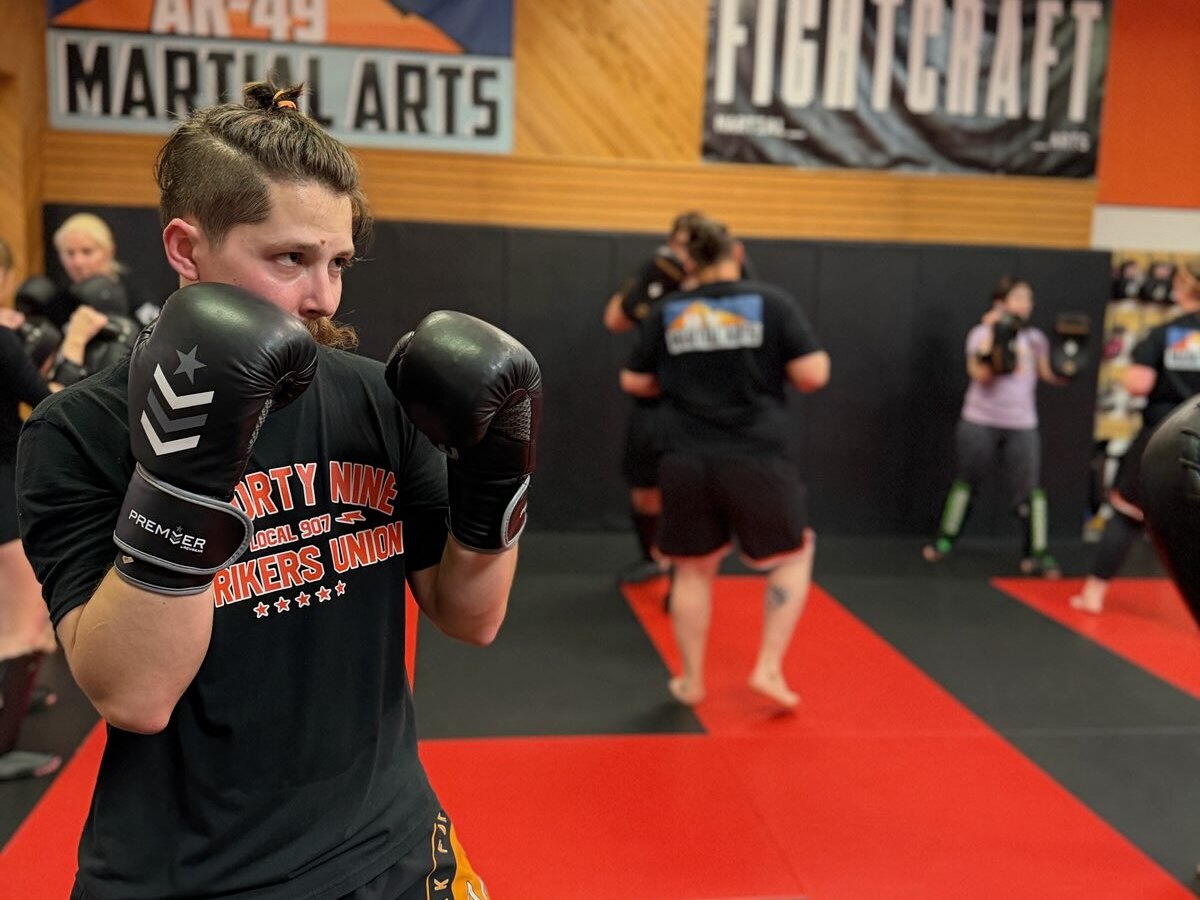
Hand Position in the Clinch
Muay Thai | Clinch
Hand Position in the Muay Thai Clinch
In the full Thai clinch both of your hands go behind the other person's head, one hand on the back of the other, with your forearms inside their arms and snug along the sides of their neck. Get there from a good athletic base with your hands up and elbows in, keep your hips close and your posture tall, and control the head before you do anything else. Other grips hold the neck and one arm, their arms from the outside, or their waist.
The four grips
- 01
Good athletic base
In the clinch you square your hips up instead of standing in your long fighting stance. Feet about shoulder width, knees bent, up on the balls of your feet. A long stance lets them swing you around by the neck, and a square, light base lets you stay balanced when they pull.
- 02
Hands up, elbows in
Your hands come into the clinch straight up the middle from your guard, with your elbows tucked in and your chin down, so you don't walk your head into a knee or elbow on the way in. That puts your arms on the inside of theirs, which is the spot you want, and keeps your body covered on the way in. If your arms end up outside theirs, they have the control and you're working to get back in.
- 03
Posture first
Bring your hips in close to theirs, keep your chest up and your shoulders up, and tuck your chin with your head beside theirs. With your hips close and your shoulders up, they can't fold you over by the neck. Get your posture set first, then work on the grip.
- 04
The full Thai clinch
Put both hands behind the back of their head, high on the skull rather than low on the neck, one palm over the back of the other hand. Your forearms press along both sides of their neck, inside their arms, with your elbows squeezed in toward each other in front of their chest. From there you pull their head down toward your chest, and their posture breaks.
- 05
Neck and arm
One hand goes behind their neck and the other holds their arm at the inside of the elbow or the bicep. Holding that arm stops them throwing an elbow on that side, and it opens room for your knees. Many people find it easier to get than the full clinch, so it's a common first grip.
- 06
Other grips
When someone covers up with a tight frame, you can grab both of their arms from the outside to control their hands. A shorter person can wrap the arms around the waist in a low clinch when the taller one has a strong hold on the neck. You'll learn when each one fits as you drill with partners.
- 07
Back to your stance
When your coach calls a break, or the referee does in a fight, let go, step back and get your hands straight back to your face. Don't drop your hands as you leave the clinch, because that's when a punch or kick catches people. Breathe and reset.
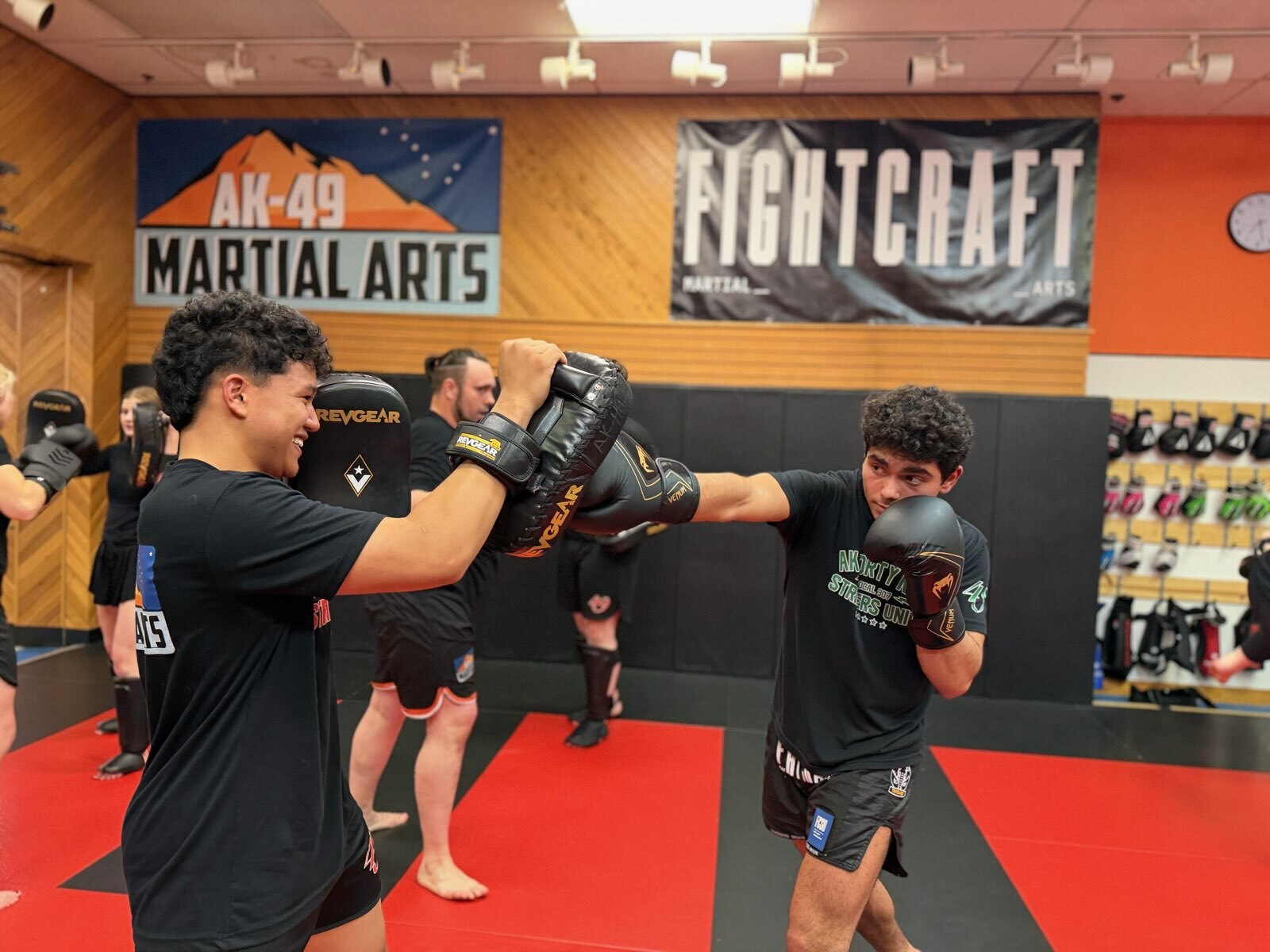
Training and fighting versions
When they get close and start swinging. When someone rushes in throwing punches, tying them up is a safe place to be. Get your hands inside, grab the head or the neck and an arm, and their big punches stop. In training you practice getting the grip, holding your posture and keeping it until your coach calls the break.
Before you throw a knee. Knees from the clinch need control first. Get the head or an arm, pull them slightly off balance, then knee the body. Turning them comes from your feet: step one foot back and pivot while you pull their head the same way. If you knee with no grip, they can step away or hit you while you're on one leg.
Things to look out for
Hips back, bent over
Your hips drift back and they pull your head down toward their knees. You're folded over, you can't see, and it's the worst spot in the clinch.
The fix: Hips in, chest up, shoulders up. If they grab your neck, step your hips closer to them, not farther away.
Blocking knees with your hands
You reach down with your hands to stop their knees. Your head is left with nothing covering it, open to knees and elbows that come up.
The fix: Keep your hands up controlling the head or arms, and use posture and grips to stop knees. Hips close takes the room away for a big knee.
Arms outside theirs
Your hands are on their head, but your arms are outside of their arms. They can swim in underneath, break your grip and take the control from you.
The fix: Bring your hands up the middle with your elbows tucked so your forearms are on the inside. If you're outside, swim back in one hand at a time.
Grabbing low on the neck
Your hands grab low on the back of the neck. It's harder to pull their head down from there, and a strong neck just stands up in it.
The fix: Put your hands high on the back of the head, one over the other. Feel your forearms tight along the sides of their neck.
Letting go completely
They get a strong clinch on you and you let go of everything, hoping to slip out. Now you have no control at all, and they can knee and pull you around freely.
The fix: Hold on to something, like their bicep, their arm or the back of their neck. Stay connected while you work your way back inside.
Standing in your fighting stance
You stay in your long fight stance with one foot far back. They can swing you around by the neck, and your inside leg is open to knees.
The fix: Square your hips and get on the balls of your feet. Small steps, and keep your feet under you.
Squeezing and holding your breath
You hold on as hard as you can and stop breathing. After a few seconds you're exhausted, and you can't feel what they're doing.
The fix: Hold firm but keep your shoulders relaxed until you need to pull or knee. Breathe in short, steady breaths.
Drills you can practice
Drill 01
Mirror grips
3 rounds of 2 minutes with 1 minute rest, in front of a mirror if you have one. From your guard, step in and bring your hands up the middle into the full Thai clinch on an imaginary partner, hold 3 seconds while you check hips in, chest up and elbows in, then step back to your stance with your hands up. Round one, full clinch. Round two, neck and arm on each side. Round three, mix them.
Drill 02
Shadow swims
3 rounds of 1 minute with 30 seconds rest, standing square on the balls of your feet. Swim one hand in and up as if going inside someone's arm, then the other, tucking each elbow as it comes through. Don't move both hands at once. Keep your chin tucked and breathe steady the whole round.
Drill 03
Bag clinch
If you have a heavy bag, do 3 rounds of 1 minute with 1 minute rest. Put both hands high around the top of the bag like a full Thai clinch, hips in close, and throw slow knees into the middle of the bag. Let go and step back to your stance with your hands up every 5 knees, then clinch again.
Frequently Asked Questions
What is the full Thai clinch?+
It's both of your hands behind the other person's head, with your forearms inside their arms and along the sides of their neck. From there you can pull their head down and break their posture. Some people call it the double collar tie.
Where exactly do my hands go?+
High on the back of the head, one palm on the back of the other hand. Higher on the head makes it easier to pull them down than holding low on the neck. Your forearms squeeze in along the sides of their neck.
Why does inside position matter so much?+
When your arms are inside theirs, you control their head and they can't control yours. It also cuts down the elbows they can throw at you. That's why so much clinch work is about getting your hands inside. If they get inside on you, bring your hips in, lift your shoulders and swim one hand back inside at a time.
What's the low clinch?+
Arms wrapped around the other person's waist. It suits a shorter person when the taller one has a strong grip on the neck. From there you can lift their arms and make room for your own knees.
Do beginners learn the clinch?+
Yes, but posture and grips come first. You learn to keep your hips in and your shoulders up, get your hands inside and hold position before any hard knees. How much contact you use is set by your coach. Start light, never yank on a partner's neck, and let go the moment they tap or say stop.
Are You Ready?