
How to Hold Thai Pads
Muay Thai | Pad Work
How to Hold Thai Pads for a Partner
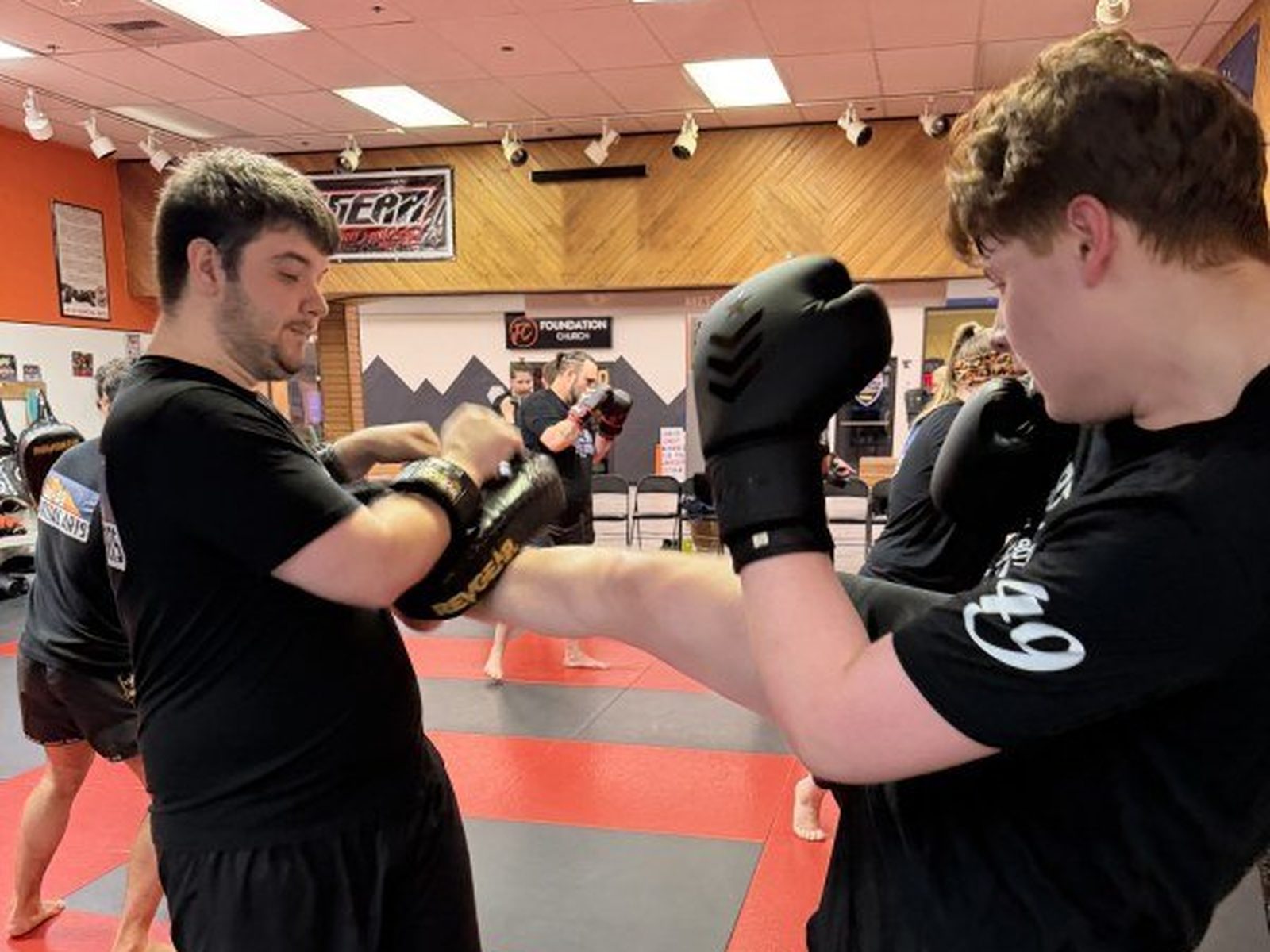
Holding Thai pads means giving your partner a steady target in the right spot, at the right angle, with a small firm push back on each strike instead of jamming it or letting it fly off. Stand in a good athletic base with the pads up and your elbows in, brace as the strike lands and keep breathing steady, and keep moving so your partner has to step in and out. For kicks you turn into the kick with your arms tight, and for knees you stack the pads on your stomach and squeeze.
How to hold
- 01
Good athletic base
Stand in your own fighting stance, one foot back, knees a little bent and your weight in the middle. Kicks and knees hit hard, and a solid base is what lets you take them without getting knocked back. Holding pads from a lazy, flat footed stance also gives your partner the wrong angles to hit.
- 02
Hands up, elbows in
Keep the pads up near your face and chest with your elbows bent and in close to your body. For punches, the pads sit about at your own head height, a little out in front of your face. Your arms should take the strike into your body, not hang out straight where a hard kick can bend them back. Keep your chin down and your face a little away from the back of the pad, so a hard strike can't drive it into you.
- 03
Grip it right
Slide your forearm into the pad and hold the handle with your thumb on top, not tucked under the grip. A tucked thumb is easy to jam when a kick lands. Hold firm, but don't squeeze so hard that your forearms burn out halfway through the round.
- 04
Meet the punch, don't jam it
As each punch lands, give a small, firm push back, like a short parry. Slamming the pad into every punch jams their arm, makes their technique sloppy and can hurt a beginner's wrist. Pulling the pad away is just as bad, because they overreach chasing it. Hold it where the punch is supposed to land and let them reach full extension.
- 05
Angle the pad
Show the pad only when you want it hit: call the strike or combination, then bring the pad up into place a beat before the strike, and drop it back to your chest between combinations. For straight punches, tip the pad slightly forward and down instead of holding it straight up and down, so the knuckles land flat. For hooks, turn the pad in toward the punch. Everybody likes it a little different, so ask your partner if it feels right on their wrist and adjust.
- 06
Kicks: turn into it and brace
Hold the pads together upright on the side the kick is coming from, at about rib height for a body kick, angled a little toward the kick so the shin lands flat across them, with your forearms and elbows tucked behind them so nothing sticks out past the edges. Brace on your back foot, turn your body toward the kick and lean into it a little as it lands, tightening your stomach and breathing out. If you lean away or hold the pads out loose, the kick knocks your arms into your body or your head.
- 07
Knees: stack and squeeze
Stack one pad on top of the other in front of your stomach with the backs of your hands against your body, and squeeze them together. Breathe out as the knee lands and give a little with it while you keep your feet under you. If your hands are loose, the knee can split them and land in your stomach, so wear a belly pad if your gym has one, and a cup is worth wearing for knee and teep rounds. For a teep, hold one or both pads flat in front of your stomach.
- 08
Keep moving, back to your stance
Move before and after each combination: step forward, step back or circle, so your partner has to find their range again. After every combo, come back to your stance with the pads up. A light, slow tap toward their head after a combo reminds them to bring their hands back up.
Tips from the coaches
When your partner is learning something new. Hold for simple combinations first, like a jab cross or a jab cross and a kick, and keep it slow. Your partner is trying to learn the shape of the move, so give them a steady target in the same spot every time. Once it looks clean, start moving around and changing the pace. Speed up for experienced partners and slow down for new ones. Before you start, check that your partner's hands are wrapped and their gloves are on, and if a strike misses the pad, stop, reset and show the target again.
In pad rounds in class. Pad rounds are where your partner practices their striking against a moving target, and the holder sets the pace. Between combinations, keep them working with simple strikes like a jab or a one two, then call the next combination. Hold the pads where the strike should land, and tell them when their hands drop or they stop coming back to their stance. Keep breathing steady the whole round.
Things to look out for
Jamming every strike
You slam the pad forward into every punch. Their arm never gets to straighten, their technique gets messy, and a beginner can hurt their wrist or knuckles.
The fix: Give a short, firm push back as the strike lands, then stop. Think of a small parry.
Holding with loose, straight arms
Your arms hang out in front of you, straight and relaxed. A hard kick or knee knocks the pads right back into your body or your face.
The fix: Bend your elbows and keep them in so your arms and body take the hit together. Tighten up just as the strike lands, and keep breathing steady.
Holding the pad straight up and down
You hold the pad flat and vertical for every punch. The knuckles don't land square, it feels bad on their wrist, and they can't hit it hard.
The fix: Tip the pad slightly forward and down for straight punches and turn it in for hooks. Ask your partner how it feels and adjust.
Pulling the pad away
You flinch or pull the pad back as the strike comes. Your partner overreaches chasing it, which builds bad habits and pulls them off balance.
The fix: Hold the pad still where the strike should land and give a small push back. If you're nervous, ask them to slow down until you're comfortable.
Standing still
You plant your feet and hold in the same spot for the whole round. Your partner never has to step in, step out or find an angle, so their footwork doesn't get better.
The fix: Move a step or two before and after each combination. Walk forward to push them back, step back so they have to follow, and circle a little.
Holding at the wrong height
You hold the kick pads too high or too low for where the kick should land. Your partner learns to kick at the wrong spot, and a pad held too low can put your knees at risk.
The fix: Hold the pads right where the strike should land on a real person: head height for punches, ribs for body kicks, stomach for knees.
Looking away or holding your breath
You turn your head or close your eyes as the strike comes, and hold your breath. You lose track of what they're throwing and you get the wind knocked out of you on knees and kicks.
The fix: Watch your partner's chest the whole time and keep breathing normally the whole round. Stay focused, and take a break if you lose it. If your wrists, shoulders or ribs start to hurt from the hits, tell your partner and your coach and stop holding for that round.
Drills you can practice
Drill 01
Mirror pad shapes
3 rounds of 2 minutes with 1 minute rest, in front of a mirror, with pads if you have them or empty hands if you don't. Call a strike out loud and set the pad shape for it: jab, cross, hook, body kick, knee. Round one, slow, checking elbows in, chin down and the pad angle. Rounds two and three, call faster and snap into each shape.
Drill 02
Holder footwork
3 rounds of 2 minutes with 1 minute rest. Move around the room like you're holding for someone: two steps forward, stop and set the pads, two steps back, stop and set, then circle left and right. Keep your stance the same size and your hands up the whole time. Round three, hold a kick shape on each stop and turn your body toward the side the kick would come from.
Drill 03
Brace and breathe
3 sets of 10 reps, with 30 seconds rest. Stack your hands, or the pads, in front of your stomach with the backs of your hands against your body, then squeeze, tighten your stomach and breathe out hard, like a knee just landed. Hold it for 2 seconds and relax. This builds the habit of bracing and breathing so the first real knee doesn't knock the wind out of you.
Frequently Asked Questions
How do you hold Thai pads for knees?+
Stack one pad on top of the other in front of your stomach with the backs of your hands against your body, and squeeze them together. Breathe out as the knee lands and give a little with it. A belly pad helps if your gym has one.
How do you hold Thai pads for kicks?+
Hold the pads together on the side the kick is coming from, at the height of the target, with your elbows tight. Turn your body toward the kick, lean into it a little and tighten your stomach as it lands. Don't hold them out loose with straight arms.
Should the pad holder move?+
Yes. Pad work is there to make your partner better at fighting, and fighting isn't stationary. Move before and after each combination so they have to step in, step out and find an angle. Keep it simple and slow when they're learning something new.
Should I push the pad into the punch?+
Only a little. Give a short, firm push back as the punch lands, like a small parry, so they feel resistance. Slamming the pad forward jams their arm and can hurt their wrist, and pulling it away makes them overreach.
What are base strikes?+
Simple strikes like the jab or the one two that keep your partner working between combinations. Instead of standing around waiting for the next big combo, they keep throwing and moving. Then you call the combination you're working on.
Are You Ready?