
What a Pad Round Looks Like
Muay Thai | Pad Work
What a Muay Thai Pad Round Looks Like
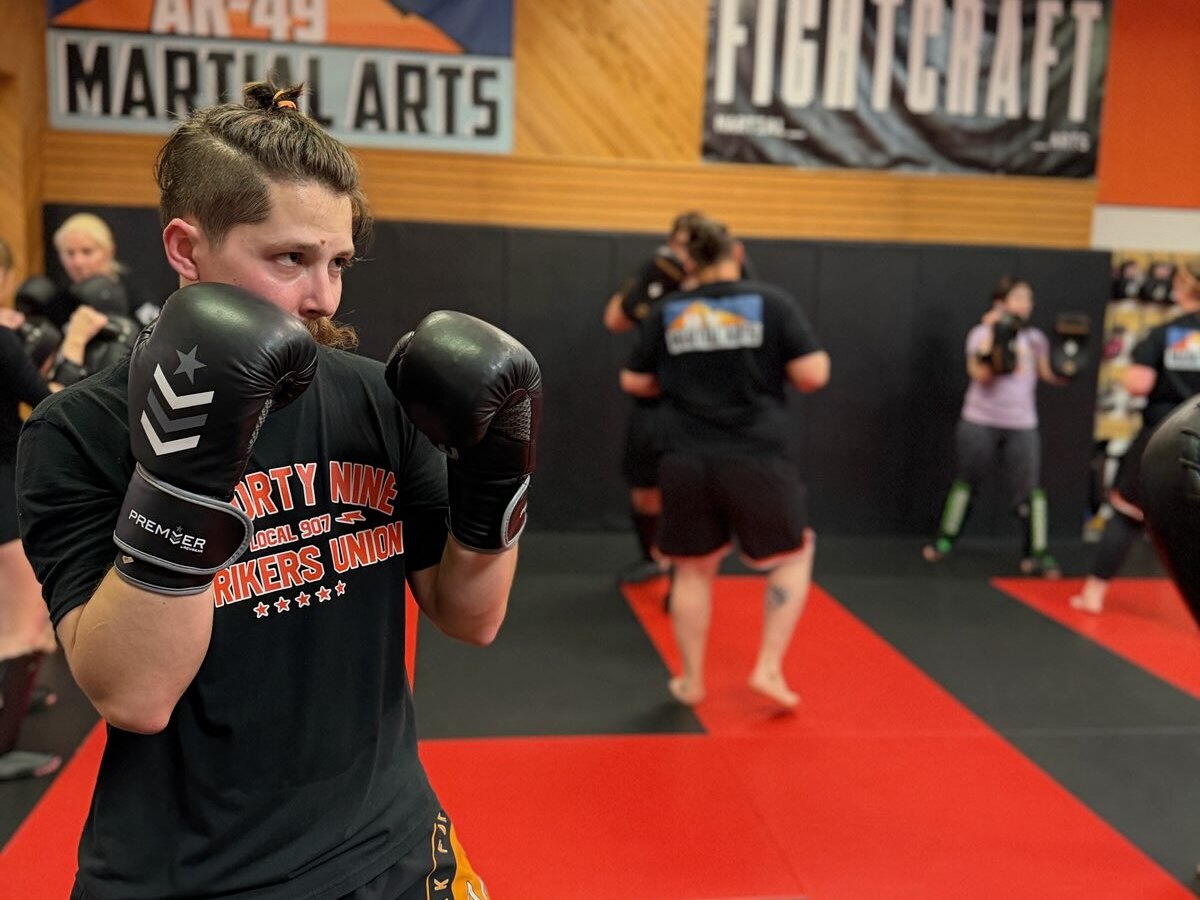
A pad round is a timed round where your partner or coach holds Thai pads, calls the strikes and combinations, moves you around and throws back at you so you have to defend. Between combinations, the holder keeps you busy with simple base strikes like the jab. Through the whole round you stay in your stance with your hands up, and you land back in it after every combination.
What happens in a pad round
- 01
Start in your stance, out of range
Wrap your hands and put your gloves on before the round, plus shin guards if your coach uses them, and warm up first. Get in a good athletic base with your hands up and elbows in before the first strike. Stand just out of reach, so you have to step in to land. That step is part of the strike, and it teaches you the distance you'd really be at with a person.
- 02
The holder calls it or shows it
Early on, the holder calls out the strike or combination and you throw it. As you get better, they just show you a pad in a certain spot and you react with the right strike. Watching the pads instead of guessing ahead is what builds your reflexes.
- 03
Base strikes in between
Between the bigger combinations, the holder keeps you working with simple strikes like a jab, a one two, or a jab and round kick. These keep you busy and moving instead of standing around waiting. In Muay Thai the holder also calls teeps, knees and elbows, and may tap a low kick at your lead leg so you practice checking it with your shin, toes up. A round with only combinations is usually too slow to feel like a fight.
- 04
Combo time
When the holder calls the combination, you let it go with good form, then land back in your stance with your hands at your face. Beginners usually work two and three strike combinations, because form tends to fall apart past four. On a round kick, step out a little, turn on the ball of your standing foot, swing the hip through and land with your shin on the middle of the pad, not your foot. Breathe normally and keep it steady the whole round. Let a breath out on your power shots.
- 05
You move
The holder walks forward, steps back and circles, so you have to follow, step out to an angle and come back in. Move with small steps and never cross your feet. That's how you learn to get in, land and get out the way you would against a person.
- 06
The holder fires back
A good holder throws strikes back at you, like a light hook after your combination. If your hands came back to your face, you block it without thinking. If they didn't, the tap on the head reminds you. For beginners these stay slow and light, usually taps to the arms or body before anything comes near the head, only at the level your coach sets, and you can always ask your holder to ease off.
- 07
The bell, then switch
Pro fighters do three to five pad rounds of about three minutes. A beginner might do three to five rounds of two minutes with a minute of rest, and build up from there. When the bell goes, you switch and hold for your partner. Holding is part of learning, because you watch every strike come at the pad.
Why pad rounds matter
It's practice for sparring. The whole point of pad work is to get better at sparring and fighting. The holder moves you, makes you find angles and throws back, so you practice offense and defense together. It's a good bridge toward sparring, though it can't fully copy the timing, reactions and pressure of a live partner.
It builds the basics. Pad rounds build your range, speed, power and timing. You learn exactly how far away you need to be for a punch or a kick to land with a sharp crack. Doing it while you're tired is also what gets you in fighting shape.
Things to look out for
Standing still
You plant your feet and throw from the same spot every time. Fighting doesn't stand still, so you're practicing a fight that never happens.
The fix: Step in to strike and step out after. Follow the holder's angles with small steps, without crossing your feet.
Dropping your hands after the combo
You finish the combination and your hands fall to your chest, your hips or your knees while you catch your breath. That habit carries straight into sparring, where it's exactly when you get hit.
The fix: Finish every combination back in your stance with your hands up and elbows in. Rest with your guard up, still facing your partner.
Turning away to rest
Between combinations you turn your back, walk off or put your hands on your hips. It builds a habit of switching off the moment things get hard.
The fix: Stay facing your partner in your stance the whole round. If you need air, walk in your stance with your hands up.
Too close or too far
Too close, your punches land with a bent arm and your kicks hit with the knee. Too far, you lunge, lose your balance and lose your power at the end of the strike.
The fix: Find the spot where the pad cracks sharp and your punch lands with the arm nearly straight and a soft elbow. Adjust with your feet, not by leaning.
Going all out on every strike
You swing as hard as you can from the first kick. Your form breaks down, you gas out halfway through the round and your partner has to brace against every shot.
The fix: Hit sharp and clean first and let the power come from your legs and hips. Save full power for when the holder or coach calls a power round.
Holding your breath
You tense up and hold your breath through the whole combination. You're out of air halfway through the round and your strikes slow down.
The fix: Keep breathing in and out without stopping, the whole round. Stay loose between combinations and only tighten as the strike lands.
Pad drills to try
Drill 01
Kick, knee, hook, kick
4 rounds of 1 minute with 1 minute rest, on a heavy bag or in the air. Rear round kick, put the foot back down and drive a rear knee, hips forward and standing tall with your hands up like they're holding a head, then a lead hook and another rear round kick. Round one, slow and in your stance after every strike. Build the rhythm round by round, and work up to 2 minute rounds over a few weeks.
Drill 02
Kick ladder
One round, on a bag or in the air. Throw one round kick and a fast jab, cross, then two kicks and the jab, cross, all the way up to five kicks, then back down to one. Rest 30 seconds after five if you need it. Keep your hands at your face on every kick, even when you're tired on the way back down.
Drill 03
Finish and reset
3 rounds of 2 minutes with 1 minute rest, shadowboxing. Throw a two or three strike combination, land in your stance, then raise your guard like the holder is throwing a hook back. Then take a small step to an angle and go again. Round three, add a jab every few seconds between combinations as your base strike.
Frequently Asked Questions
What happens in a Muay Thai pad round?+
The holder calls strikes and combinations, keeps you busy with base strikes in between, moves you around and throws back so you defend. You stay in your stance with your hands up the whole time. When the bell goes, you switch and hold for your partner.
How long is a pad round?+
Pro fighters often do three minute rounds, three to five of them in a session. Beginners usually start shorter and build up as their conditioning comes. The coach sets the time and the pace for the class.
Do you hold pads for your partner too?+
Yes. Your partner holds for you, then you switch. Holding is a skill, and watching each strike come at the pad helps you see what clean technique looks like. Keep the pads firm and close to your body with your elbows bent, meet each kick with a little push instead of letting the pad flop, and keep your face out from behind the pads. For a round kick, hold both pads stacked on the side being kicked, about rib height, and for a knee hold them together in front of your stomach. Leave out kicks and knees you haven't been shown how to hold for. Tell your partner or the coach if anything hurts.
What if I can't keep up with the calls?+
That's normal at first. Slow down, throw what you heard cleanly and get back to your stance. Your holder will match the pace to you, and the calls get easier to follow the more rounds you do.
How hard should I hit the pads?+
Sharp and clean, with control. The holder is taking your strikes on their arms, so form matters more than power early on. Your coach will tell you when it's time to go hard.
Are You Ready?