Muay Thai for Beginners
Muay Thai | Starting Out
Muay Thai for Beginners: Where to Start
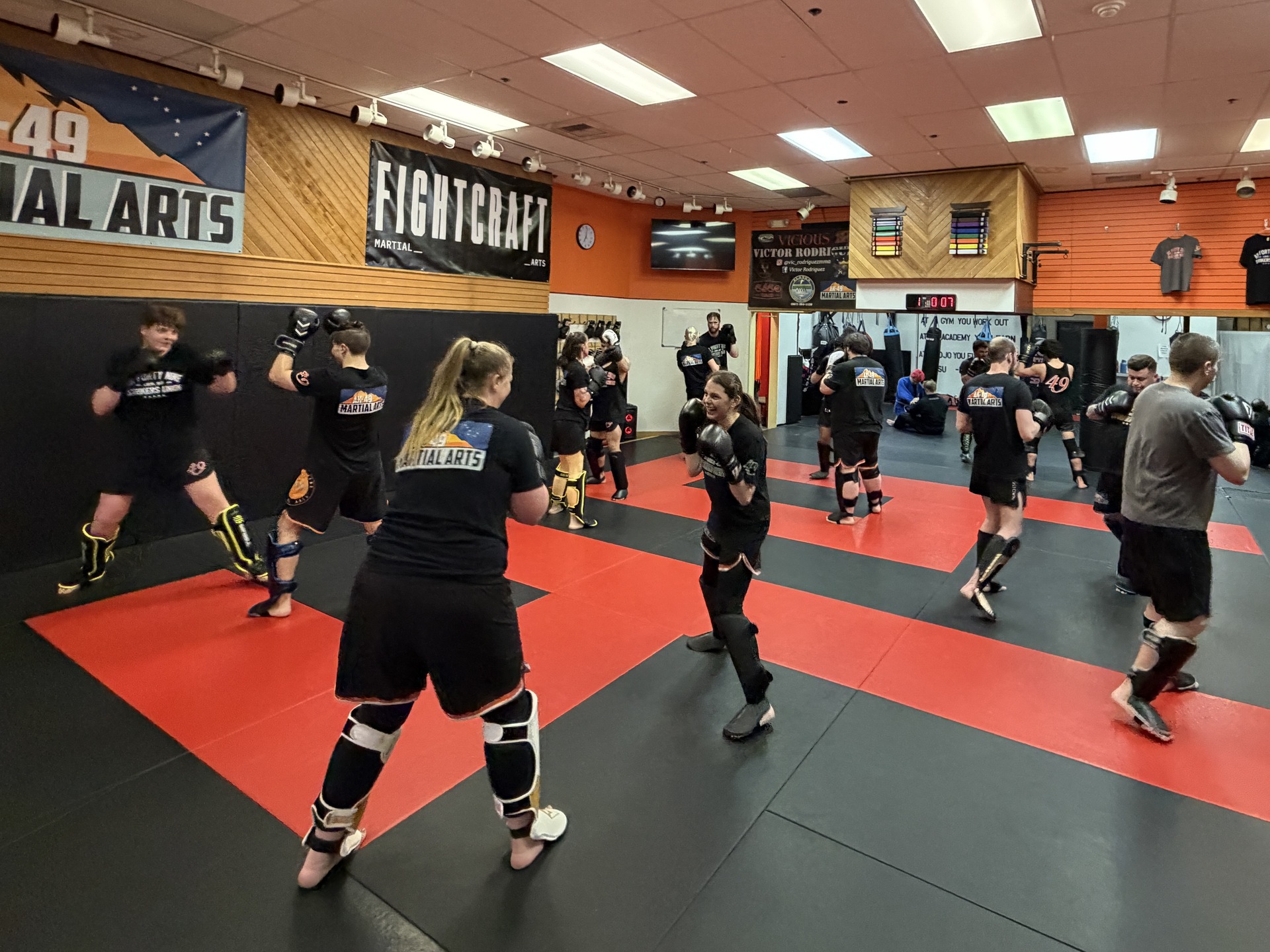
You don't need to be fit or flexible to start Muay Thai, because the training is what gets you there. Beginners learn a good stance, a guard with the hands up and elbows in, and how to move their feet, then add one weapon at a time: punches, then kicks, then knees, with elbows and the clinch after that. Go slow, keep breathing steady, and come back to your stance after everything you throw.
What you learn first
- 01
A good athletic base
Feet about shoulder width apart, one foot back about a natural walking step, knees a little bent and your weight in the middle, a touch light on the front foot so it can come up fast. A Muay Thai stance is a little more square than a boxing stance, with your hips facing the other person, so you can lift either leg to teep or block a kick. It should feel like the ready position from any sport, steady enough that a push wouldn't knock you over.
- 02
Hands up, elbows in
Both fists come up to touch your head, chin down a little, eyes looking through your gloves, and your elbows point down in front of your ribs. That one shape covers your head and your body at the same time. The rule coaches repeat most in class is that whatever one hand is doing, the other one stays on your face.
- 03
Moving your feet
To go forward, step with the front foot and let the back foot follow the same distance. To go back, the back foot moves first. Try not to cross your feet, and keep your stance the same size after every step, because a stance that gets narrow or tangled is easy to knock over.
- 04
Punches from the face
The jab and the cross come first. Every punch starts at your face, goes straight out until the arm is nearly straight with a soft elbow, and comes straight back to your face. Turn your knuckles over at the end and keep breathing steady.
- 05
Kicks with the shin
A Muay Thai round kick lands with your shin, not your foot, and it swings through the target like a bat instead of snapping back. Your first kicks usually go to the legs and the body, and if your hips are tight it's fine to kick low on the pad while they loosen up. Come up on the ball of your standing foot so the heel turns toward the target, turn your hip over, keep one hand on your face, and put the foot back down in your stance.
- 06
Knees, elbows and the clinch
Muay Thai strikes with your fists, elbows, knees and shins, and it lets you fight up close in the clinch. You don't learn all of that at once. Once your stance, punches and kicks feel steady, knees, elbows and clinch work get added in, and each new piece builds on the last. Defense comes along with every strike: blocking punches with your guard, checking a low kick by lifting your shin with the toes up, and using the teep to keep people from walking in.
What helps you get better
Slow first, then speed. Learn every move slow and controlled first. Speed comes once the move feels natural, and the power follows on its own. On day one you just need to get comfortable and coordinated with your body, and clean technique comes with time and reps.
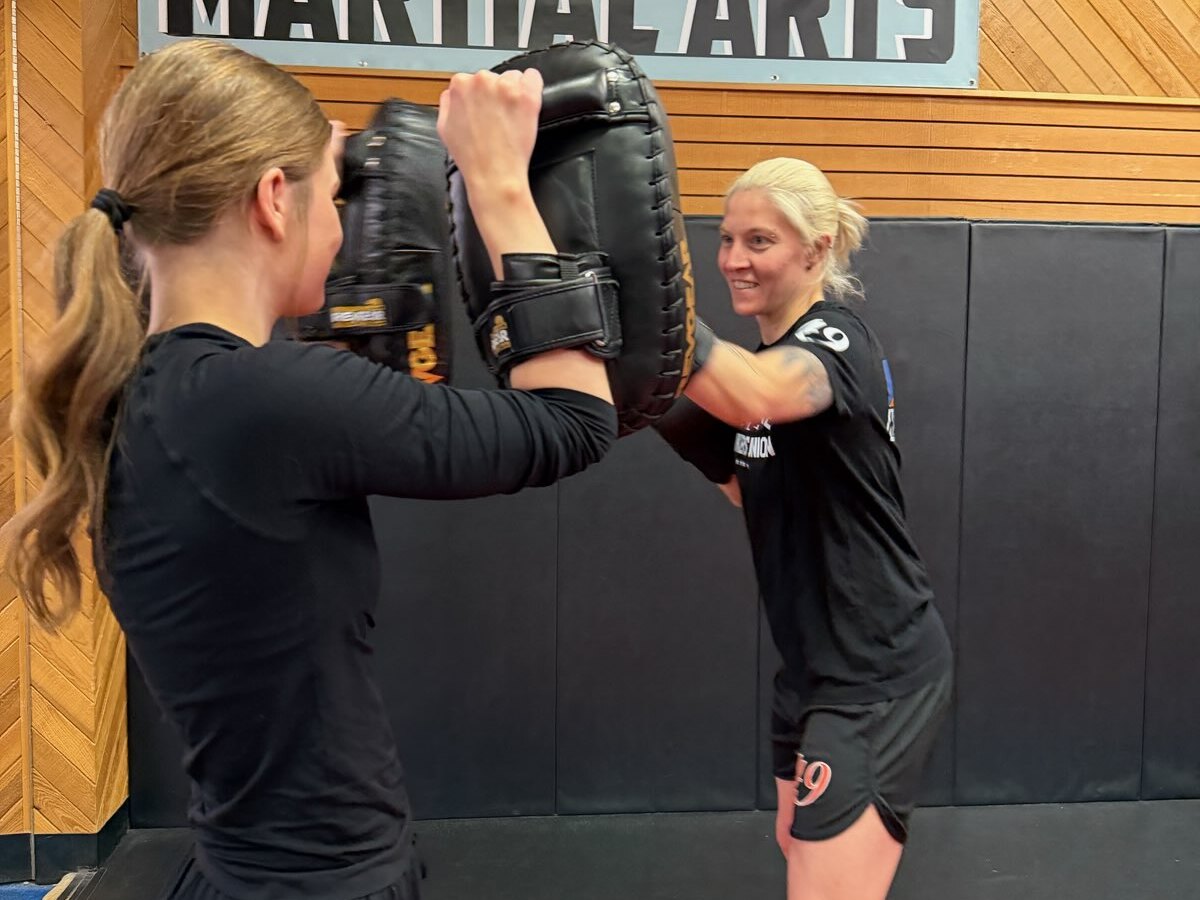
Show up steady. Two or three classes a week, week after week, will take you further than going all out for two weeks and burning out. Your legs and shoulders will be sore early on, and that's normal. Drink water, and if a pain is sharp or doesn't fade in a few days, tell your coach. Take one or two things home from each class and work on them. Holding pads for your partner counts too, because you see the move up close and feel what a good one looks like.
Things to look out for
Waiting to get in shape first
A lot of people put off their first class until they feel fit enough, and that day never seems to come. Months go by and they still haven't started.
The fix: Start now and let the training get you in shape. Your first classes will be tiring, so take a break when you need one and jump back in. A few weeks of steady training is what changes your fitness.
Going too hard too soon
Beginners get excited, race through drills and try to keep up with people who've trained for years. You end up sloppy, gassed halfway through class and too sore to come back that week.
The fix: Work at the coach's count and keep your reps clean before you make them fast. Ask the coach to watch a rep or two, and fix one thing at a time.
Dropping your hands
Your hands slide down when you kick, when you get tired, or right after a combination. The pads and the bag don't punish it, so the habit sticks until somebody punches back.
The fix: Every strike starts and ends with your hands on your face. When you kick, one arm can swing for balance, but the other hand stays on your head. If you catch your hands at your chest, put them back up before you throw the next thing.
Holding your breath
Nerves and effort make new students hold their breath without noticing. You tense up, your strikes go stiff and slow, and you're out of air halfway through the round.
The fix: Breathe normally the whole time, and let a breath out with your power shots. Stay loose between combinations and only tighten up as the strike lands. Practice it until you do it without thinking.
Kicking with your foot
People who've done other martial arts, or never kicked anything, snap the kick out and land on the top of the foot. The kick has no weight behind it, and the small bones of your foot take the hit.
The fix: Land with the shin, the hard part of your lower leg. Turn your hip over, swing the leg through the target like a bat, and let it come back down to your stance. Start slow and low on the pad until you can feel the shin land.
Treating partner drills like a fight
Some beginners hit their partner as hard as they can in drills or light sparring. Partners stop wanting to work with you, and nobody learns much when everybody is flinching.
The fix: Drills are for learning, so match your partner and stay in control. Talk before you start and agree on how hard you're going. If something hurts or doesn't feel right, stop and tell your partner or the coach. If you ever take a knock to the head and feel dizzy or foggy, stop for the day and tell the coach.
Frequently Asked Questions
Do you need to be fit to start Muay Thai?+
No. You start Muay Thai, and a few weeks of training gets you in better shape. Your first classes will be tiring, your legs will burn and holding your hands up will feel harder than it should. That happens to people who already run or lift too.
Do you need to be flexible for Muay Thai?+
No. Muay Thai isn't about high, fancy kicks, and a lot of the first kicks you learn go to the legs and the body. A clean low kick you control is worth more than a high one you can't. Your hips loosen up the more you train.
Is Muay Thai hard to learn?+
It's easy to begin and it takes years to get really good. There are a lot of tools, but you learn them one at a time, starting with your stance, guard and footwork. Most people pick up the basic stance, punches and kicks in their first few weeks.
What should I wear to my first Muay Thai class?+
A shirt and shorts, whatever is comfortable to kick in. Any gear you need for class is provided, so you don't need to buy anything first. Once you're training regularly, most people get their own wraps, gloves, shin guards and a mouthguard, plus a groin guard for men.
Do I have to spar to do Muay Thai?+
No. Lots of people train for years and never spar or step into a ring. Sparring is controlled practice with a partner, and at AK-49 Martial Arts it's completely optional. You can learn a lot from pads, bag work and drills before you ever decide.
Are You Ready?