
What Muay Thai Training Looks Like
Muay Thai | Starting Out
What Muay Thai Training Looks Like
A Muay Thai session usually runs from a warm up and shadowboxing into technique, then pad work, bag work and partner drills, with knees, elbows and the clinch mixed in. Every piece is built on the same basics: a good athletic base, hands up and elbows in, and landing back in your stance after every strike. Pro fighters train twice a day, but a beginner class is built so a brand new person can keep up.
What a session is made of
- 01
Warm up
Class starts by getting your heart rate up and your body loose, with things like jump rope, light shadowboxing and moving stretches. Nobody expects you to have it down on day one. It gets your hips and shoulders ready for kicks and punches. Tell the coach about any injury before class starts, and wrap your hands before pads and bag work. If you don't know how yet, the coach will show you.
- 02
Shadowboxing
You throw strikes in the air at a slow, deliberate pace, checking your stance and guard. Every punch comes from the face and goes back to the face, and every kick lands you back in your stance. Your guard shifts a little with range, and up close in the clinch your hands and elbows do different jobs, but early on the hands stay up. It's where you build good habits before there's a pad or a partner in front of you.
- 03
Technique
The coach shows one technique or combination and breaks it down step by step. Early on that means the basic tools: the jab and cross, the teep, the round kick, checking a kick with your shin, and simple knees and elbows. You drill it slowly with a partner, taking turns, then add speed and only then power. Getting it right slow is what lets it hold up when you're tired.
- 04
Pad work
A partner holds Thai pads and you throw combinations, then you switch and hold for them. The holder calls strikes, moves you around and throws back so you have to defend. It's where the technique you just learned starts to feel real.
- 05
Bag work
Rounds on the heavy bag, working your strikes with power and pace. Rounds are often two or three minutes with about a minute of rest. You work hard for a round, catch your breath, then go again. The bag lets you hit as many times as you want without wearing out a partner.
- 06
Partner drills
Partner drills are kept live: move your head, move your feet and use fakes, not just stand and trade turns. One partner might throw a strike while the other blocks, checks or counters. It's how defense gets built before any sparring.
- 07
Knees, elbows and the clinch
These set Muay Thai apart from most kickboxing. In the clinch you control your partner up close, fight for head and arm position and throw knees, using leverage more than muscle. Clinch work often comes toward the end of a session. For beginners it stays controlled: knees go light to the body, nobody cranks on the neck, and you let go the moment your partner taps or says stop.
- 08
Conditioning and cool down
Many classes finish with bodyweight work, core work or a few hard bag rounds, then some easy stretching. Your legs, hips and shoulders will feel it. That's normal, and it gets easier the more you come. Sharp pain or dizziness is different: stop and tell the coach. If you take a hard knock to the head, you're done for the day, tell the coach, and no contact until you're cleared. Get checked right away for a headache, vomiting, confusion or symptoms that get worse.
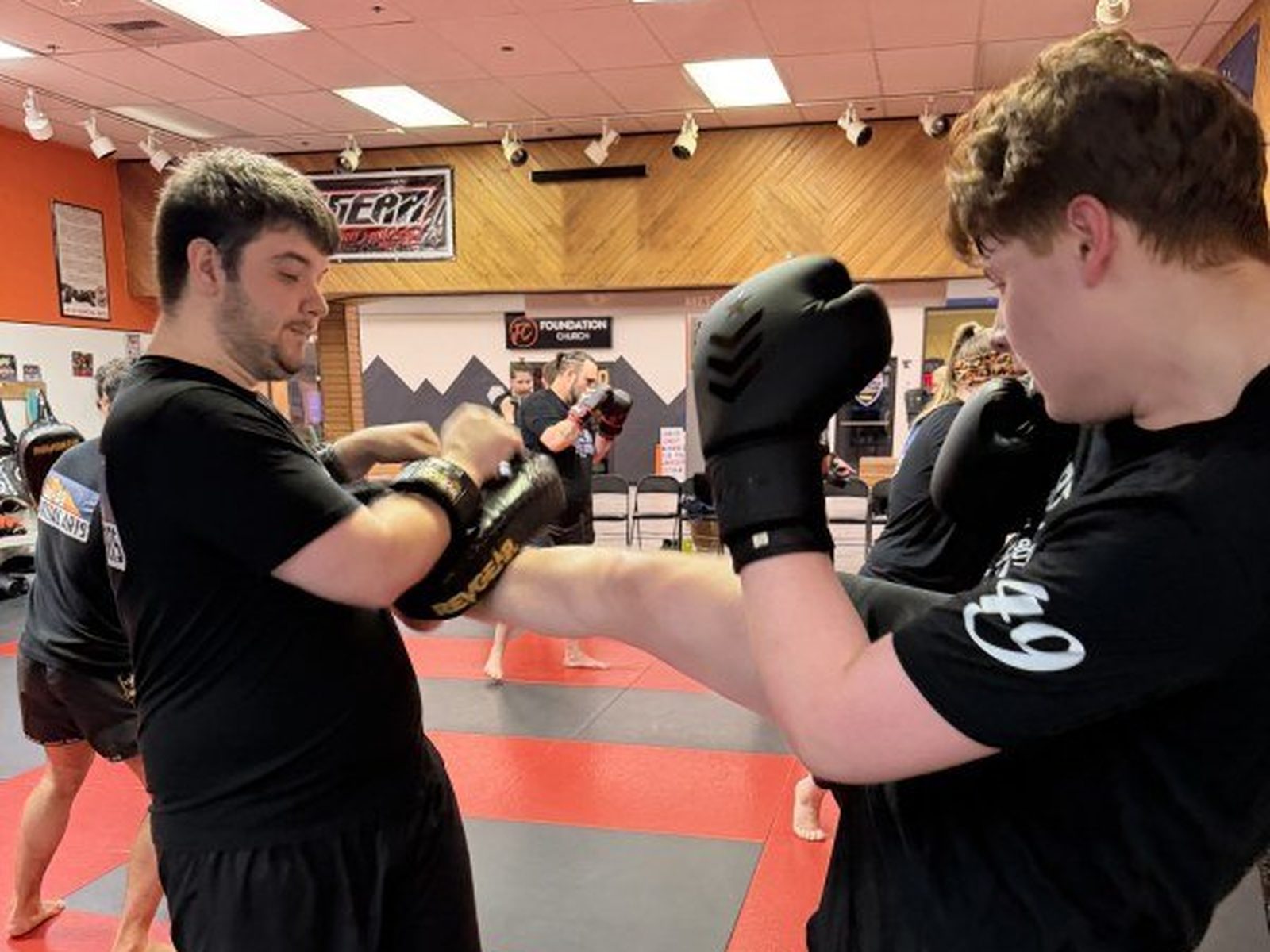
How fighters train
How the pros train. Many professional fighters in Thailand train two sessions a day of about two hours each, up to six days a week before a fight. The day starts with a run of three to five miles, then shadowboxing, pads, bag work, clinch and sparring. They usually hit Thai pads for three to five rounds, with clinch work toward the end. The exact volume varies a lot by camp, by fighter and by how close the fight is. You don't need any of that to start or to get better.
Drill before you spar. Fighters don't spar cold. They drill first, then do sparring drills with a set goal, then free sparring. For a beginner, sparring comes much later, if ever, and it's your choice. You can learn a lot from pads, bag work and drills first.
Things to look out for
Rushing the technique
You want to go fast and hard right away. The technique gets sloppy, and the bad version is the one your body learns.
The fix: Go slow and controlled first, then add speed, then power. If it doesn't look right slow, it won't be right fast.
Standing still on the pads
You plant your feet and throw from one spot all round. A fight moves, so you're practicing something that never happens.
The fix: Let the holder move before and after each combination, and follow with small steps. Step in to strike, then step out or off to an angle depending on what the holder does.
Lazy reps between turns
Partner drills turn into an assembly line: same strike, same rhythm, half effort. You stop thinking and nothing gets better.
The fix: Keep a rhythm, then break it so you don't get predictable. Treat every rep like there's a person in front of you, because there is.
Going too hard on your partner
You hit your partner's pads or arms harder than you need to, or tense up and throw stiff shots. Partners get hurt and stop wanting to work with you.
The fix: Control your power, especially early on. Match your partner, and remember everyone in the room was a beginner once.
Skipping the warm up
You show up late or rush through it and go straight into kicks. Cold hips and hamstrings don't like round kicks, and the first rounds feel rough.
The fix: Get there in time for the warm up and take it seriously. Start light and let the intensity build through the class.
Measuring yourself against a pro schedule
You read about fighters training twice a day and feel like two or three classes a week isn't enough. It's easy to burn out or quit trying to match that.
The fix: The goal is to get a little better each week. Two or three classes a week is plenty for most beginners. Showing up steady beats going hard for two weeks and quitting.
Drills you can practice
Drill 01
Stance and step
3 rounds of 2 minutes with 1 minute rest. Stand in your stance, feet about shoulder width, one foot a step back, hands up by your face and elbows in. Round one, small steps forward and back. Round two, add steps left and right. Round three, step in, throw a slow jab and cross, and step back or off to an angle. Your feet never cross and your hands stay up.
Drill 02
Slow shadowboxing
3 rounds of 2 minutes with 1 minute rest. Throw the jab, cross, teep and round kick in the air at half speed, landing back in your stance after every strike. Round one, punches only. Round two, add the teep. Round three, mix in the round kick. Breathe normally the whole round.
Drill 03
Balance holds
3 sets of 8 on each leg with 30 seconds rest. Lift one knee up toward your chest with your hands at your face, hold for a slow count of three, then set it down in your stance. This builds the one leg balance you need for teeps, knees and checks.
Frequently Asked Questions
What do you do in a Muay Thai class?+
A warm up, shadowboxing and technique, then pad work, bag work and partner drills. Knees, elbows and the clinch are mixed in, and a lot of classes end with conditioning. You take turns holding pads for a partner, too.
How do professional Muay Thai fighters train?+
Usually twice a day, about two hours a session, starting with a morning run. Their sessions include shadowboxing, three to five rounds of pads, bag work, clinch and sparring. That's for full time fighters, not beginners.
Do you have to spar in Muay Thai training?+
No. At AK-49 Martial Arts sparring is optional, and nobody is pushed. If you do spar later, a mouthguard is a must, men wear a cup, and your coach will tell you what other gear to wear, like shin guards. You can learn a lot from pads, bag work and drills first.
Is Muay Thai training hard for beginners?+
It's tiring. Your legs burn, your breathing gets heavy and holding your hands up feels harder than it should. You don't need to be fit to start, and take a break when you need one.
Will I be sore after Muay Thai training?+
Probably, especially your legs and shoulders in the first few weeks. That's normal, even for people who already run or lift. It eases up as you keep training.
Are You Ready?