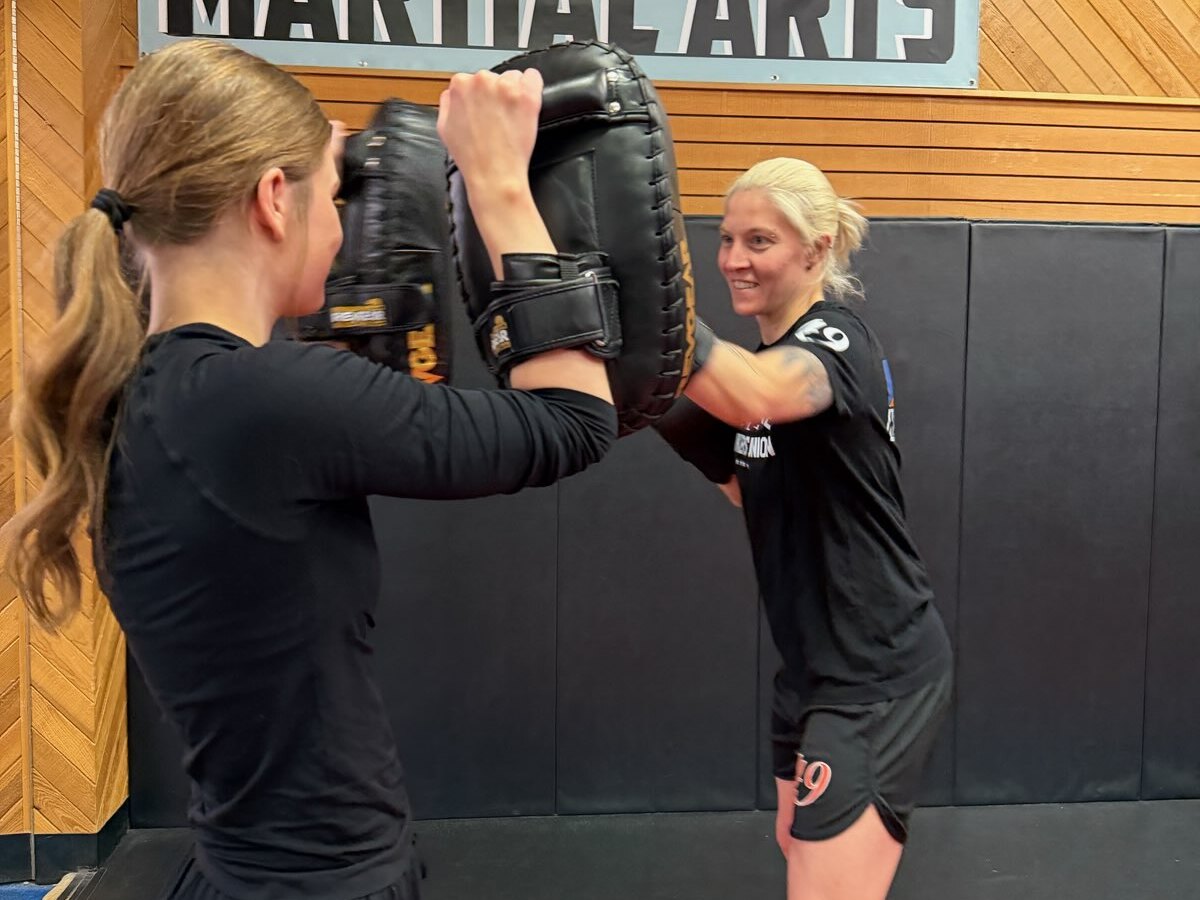
The Eight Limbs Explained
Muay Thai | The Eight Limbs
Why Muay Thai Is Called the Art of Eight Limbs
Muay Thai is called the art of eight limbs because you strike with eight points of contact: two fists, two elbows, two knees and two shins. Add the teep (push kick) and the clinch, where you control your partner up close and throw knees and elbows, and you have more tools than most kickboxing rules allow. You don't learn them all at once. You start with your stance and guard, then add one weapon at a time.
The eight weapons
- 01
Two fists
Your punches: the jab, the cross, hooks and uppercuts, thrown to the head and the body. The jab is king in Muay Thai, the same as in boxing and kickboxing. Punches also set up the other weapons, because a punch makes them raise their guard and opens the ribs and legs for a kick or knee.
- 02
Two shins, plus the feet
The round kick lands with the shin, with your standing foot turning on its ball and your hip turning over so the whole leg swings through like a bat. It goes to the legs, the body and the head. The feet count too: the teep, a push kick with the ball of the foot, is used like a long jab to keep people out of range and knock them off balance.
- 03
Two knees
Knees work at range, as a straight knee when someone walks in, and up close in the clinch. In the clinch, you control their head or arms and drive knees to the body. They're short, strong strikes that come from driving the hips forward, up on the ball of the standing foot with your posture tall.
- 04
Two elbows
Elbows are the shortest range weapon you have. They come in several directions, like across, upward and downward, and usually land after you've closed the distance with footwork or from the clinch. They're easy to misjudge at speed, so you drill them on pads with your coach watching.
- 05
The clinch ties it together
The clinch is standing grappling: chest to chest, fighting for control of the head, neck and arms. From there you throw knees and elbows and knock your partner off balance. Control comes first, and the strikes come from good position. Clinch work in class starts slow and light, with no yanking on a partner's neck.
- 06
One stance for all of them
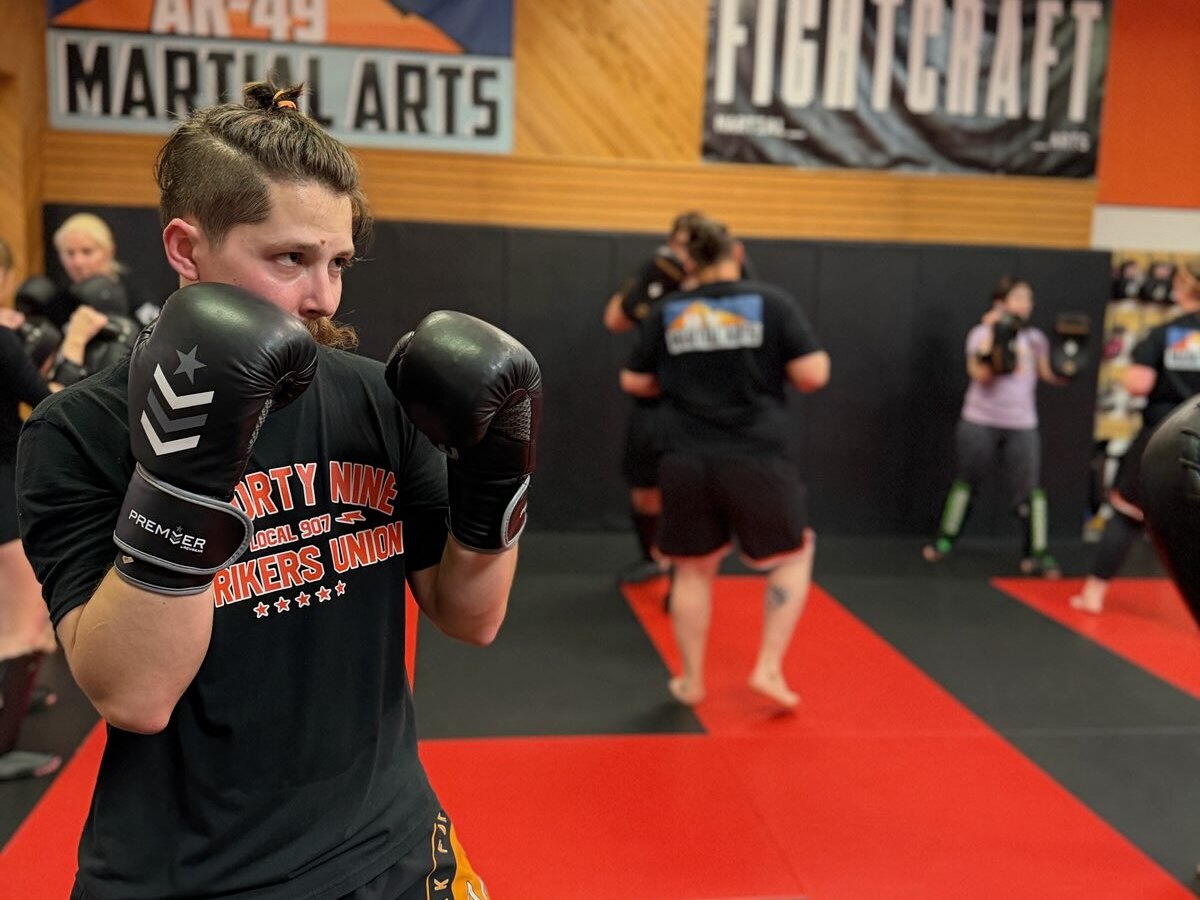
All eight weapons come from the same stance: a good athletic base, hands up and elbows in, chin down. The Muay Thai guard sits a little higher and the elbows stay tighter, because kicks, knees and elbows can come back at you. After every strike, you land back in that stance. Defense comes from it too: you block punches with your guard, check a round kick by lifting your shin with the toes up, and use the teep to keep people out. Gloves, wraps, shin guards and a mouthguard come in as contact does.
What sets it apart
Compared to kickboxing. Most kickboxing rules ban elbows, and many limit knees and the clinch, so the fight stays mostly on punches and kicks. Muay Thai scores fists, feet, knees and elbows, and lets you fight in the clinch. That's why Muay Thai has more to learn, and why a lot of the action happens up close.
Compared to boxing. Boxing only uses the fists, so a boxer can stand more side on. In Muay Thai, kicks are coming at your legs and body, so the stance is a little more square and upright. That lets you lift either leg to check a kick or throw a teep. The trade off is that a square stance is a little more open to straight punches, which is why the guard stays tight.
Things to look out for
Trying to learn all eight at once
You watch fights and want to throw spinning elbows and clinch knees in your first week. Nothing gets solid, and your stance and guard fall apart while you chase the flashy stuff.
The fix: Build one weapon at a time. Stance, guard and footwork first, then a punch, then a kick, then a knee. Each one builds on the last.
Kicking with the toes
Your round kick lands with the toes or the side of the foot because you're reaching for the target instead of turning through it. It hurts, it has very little power, and the kick feels like a slap.
The fix: Turn your hip over and swing through so the lower part of the shin lands. The instep is okay when you're at a longer distance, but the lower shin is what you want. Start low and slow on the bag until it lands right every time.
Forgetting the teep
You only think about punches and round kicks, so every time someone walks in you're stuck. You end up trading at close range when you didn't want to.
The fix: Treat the teep like your jab with the leg. Use it to measure distance and push people back out when they come in. Throw it, then land right back in your stance.
Getting wild with elbows
Elbows feel powerful, so beginners swing them hard at partners. They cut easily, and a training partner who gets clipped won't want to work with you.
The fix: Drill elbows on pads or into a partner's tight forearm guard, with control. Your coach decides when and how hard elbows are used.
Dropping your hands to kick or knee
Your arms swing down or fly out to the side every time you kick or throw a knee. It feels like it helps your balance, but it leaves your head open to the counter.
The fix: Keep at least one hand up by your face on every kick and knee, and bring both back to your cheeks as soon as you land. Hands up, elbows in, back to your stance.
Treating the clinch like a hug
You grab on and hang there, breathing hard, waiting for the coach to break it up. You get pulled around and kneed, because holding on isn't the same as controlling.
The fix: Learn where your hands go and keep your posture tall. In the clinch, you're always working for better position so you can strike or get out.
Frequently Asked Questions
Why is Muay Thai called the art of eight limbs?+
Because you strike with eight points of contact: two fists, two elbows, two knees and two shins. Kicks with the foot, like the teep, are part of it too, even though the name only counts eight. The name is about the weapons you're allowed to use.
Is Muay Thai the same as kickboxing?+
In a loose sense they're both standing styles built on punches and kicks. Muay Thai has its own rules, and it adds elbows, knees and the clinch. Some amateur and youth rules limit elbows or clinch time, so what's allowed depends on the event. The stance is also a little more square so you can check kicks and teep.
Does Muay Thai have grappling?+
Not on the ground. The clinch is a standing kind of grappling where you control your partner's head and arms, throw knees and elbows and knock them off balance. If the fight goes to the ground, that's a different skill set, like Brazilian Jiu Jitsu.
Which of the eight limbs do beginners learn first?+
Your stance, guard and footwork come before any of them. Then you add a punch, usually the jab, then kicks like the round kick and the teep, then knees. Elbows and clinch work build on those basics.
Are elbows used in training?+
Yes, but with control. You drill them on pads or into a partner's forearm guard, with your coach watching. They cut easily, so nobody should be throwing them hard at a training partner.
Are You Ready?