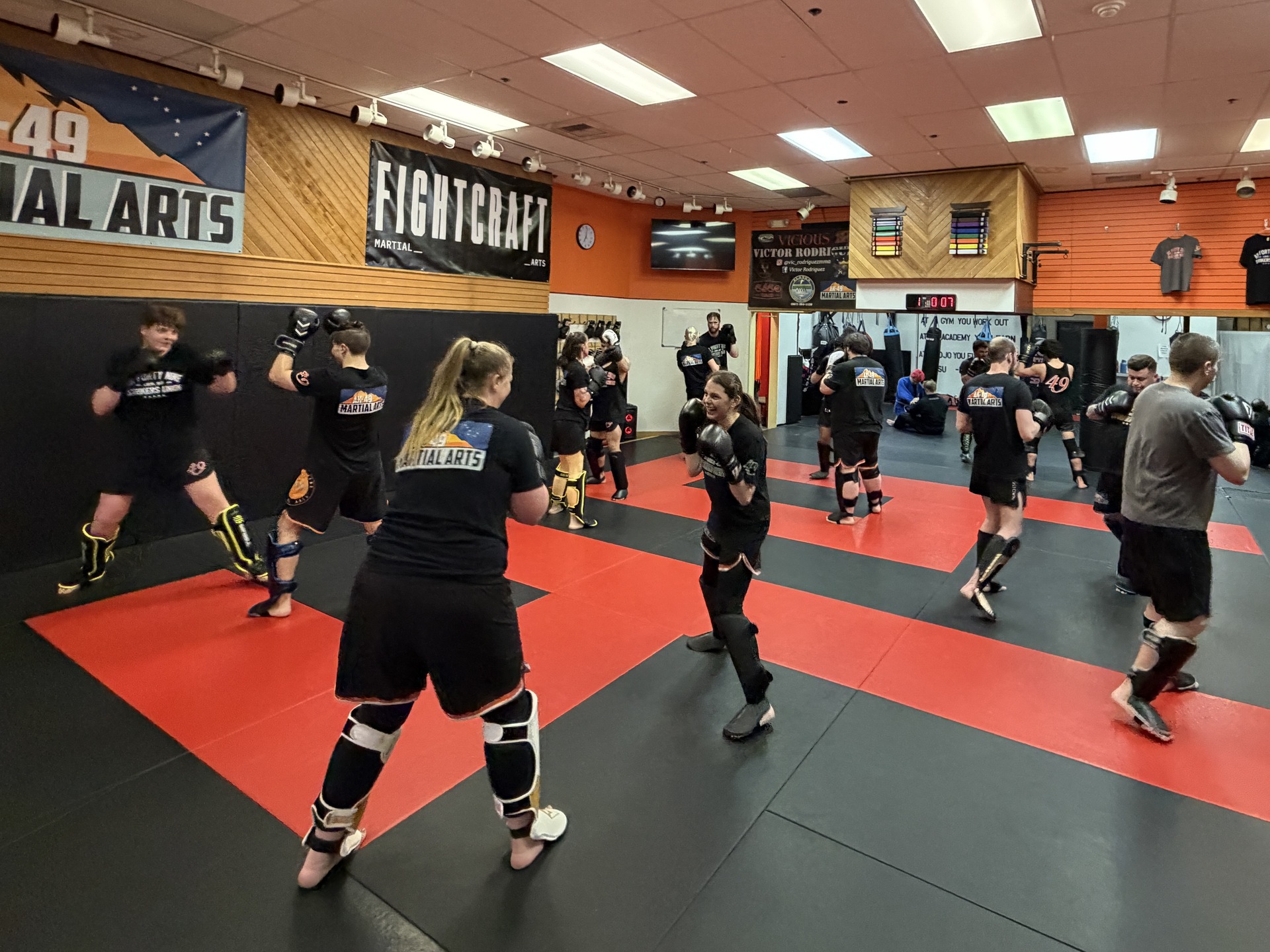
Footwork and Rhythm
Muay Thai | Stance and Guard
Muay Thai Footwork: How to Move
Muay Thai footwork keeps your stance under you while you move. From a good athletic base with your hands up and elbows in, you step first with the foot closest to where you're going, bring the other foot the same distance, and never cross your feet. You move at a steady, relaxed rhythm and land back in your stance after every punch, kick, knee and elbow.
- 01
Good athletic base
Feet about shoulder width apart, knees soft with a slight bend, weight in the middle or a touch on the back leg so the front leg stays light, on the balls of your feet, with the back heel just off the floor. Your Muay Thai stance is a bit squarer than a boxing stance so either leg can lift to check a kick or throw a teep. You should feel springy, ready to move any direction without leaning first.
- 02
Hands up, elbows in
Your fists stay at your face, your chin stays tucked a little and your elbows stay close to your ribs while your feet move. Beginners often drop their hands the moment they start thinking about their feet. Moving is when you most need your guard, because that's when people try to catch you.
- 03
Step with the foot closest to where you're going
Going forward, the front foot steps first. Going back, the back foot steps first. Going left or right, the foot on that side moves first. Then the other foot follows.
- 04
Same distance with both feet
Whatever distance the first foot moves, the second foot moves the same, so your stance ends up the same size it started. Push off the foot that isn't stepping, and take small steps instead of big ones. If your stance gets wider or narrower every time you move, you're off balance.
- 05
Never cross your feet
When you move sideways, keep your feet from passing each other or crossing over. With crossed feet you can't attack, you can't defend, and a kick to the legs can knock you over. Think of a crab moving across the beach in small sideways steps. Switch steps, where your feet trade places on purpose, come later once your basic footwork is solid.
- 06
Keep a steady rhythm
Move at a relaxed, steady pace instead of rushing around the mat. Step, settle, then step again, so your weight is always under you and you're ready to strike. Breathe normally and steadily as you go and stay loose, because tense legs get tired fast.
- 07
Back to your stance
After every strike, put the foot down in control and land back in your stance before you move again. Don't let a kick or punch drag you into a lunge or a spin. If you feel off balance, take a small step to reset your feet.
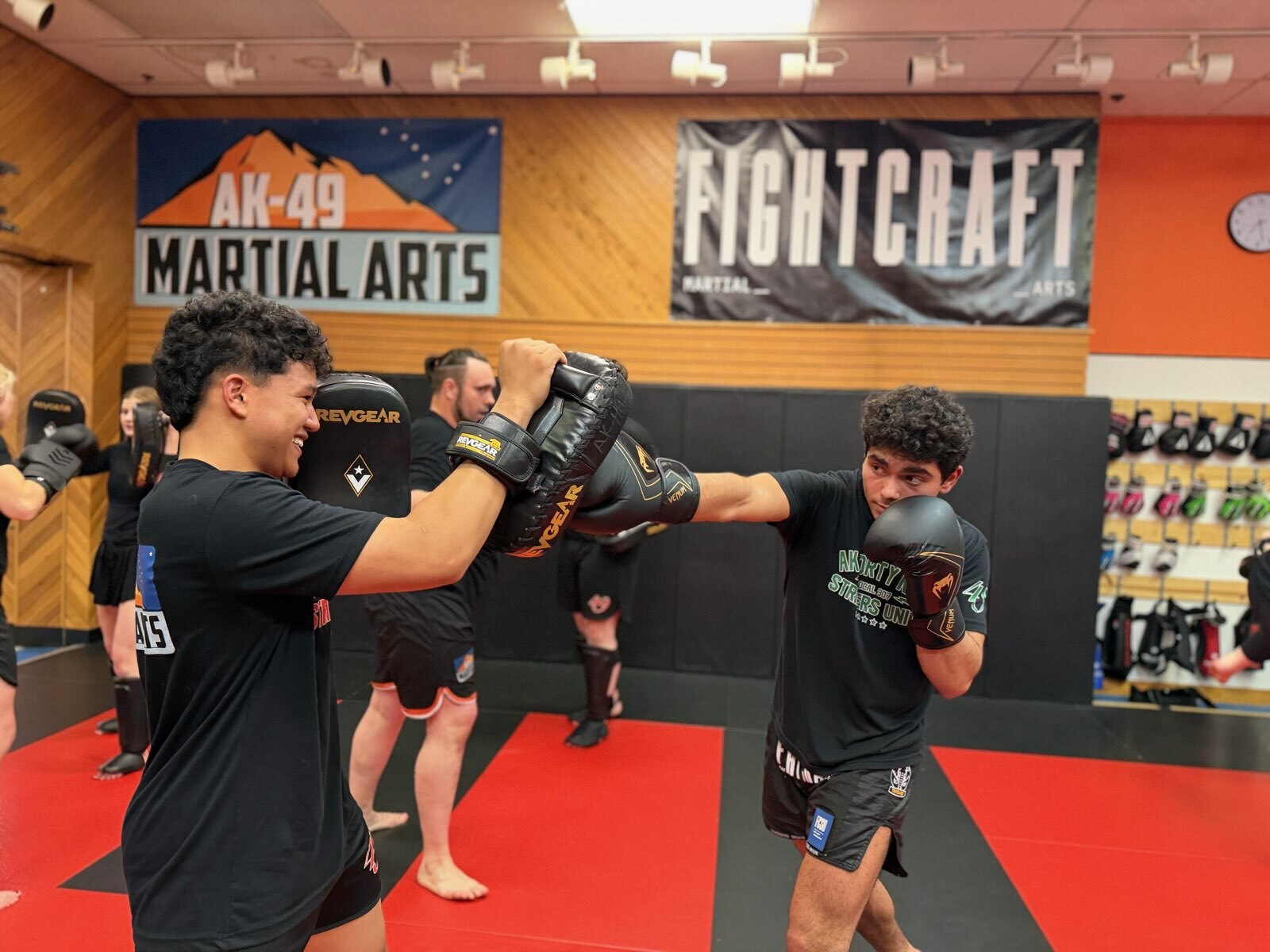
When to use it
Everywhere. You use footwork in every part of Muay Thai. You step in to punch, set your feet to kick and knee, close the distance for elbows, and move your feet in the clinch. After every strike and every block, your feet bring you back to your stance.
To control the distance. Footwork decides how close you are, which decides what can hit you. Step in when you want to strike, and step back or off to the side when they come at you, instead of standing still and taking it. Pair it with your teep to keep someone at the end of your leg. A pivot also helps: turn on the ball of your front foot and swing your back foot around, and you're at a new angle without backing up in a line. If you're too close or too far, a small step fixes it.
Things to look out for
Crossing your feet
You step sideways with the wrong foot first or take a second step that's too long, and your feet cross. You can't attack or defend from there, and one kick to the legs can tip you over.
The fix: Move the foot on the side you're going first, then the other. Take several small steps instead of one big one.
Feet too wide
You stand with your feet way apart to feel stable. Your weight takes too long to shift, kicks reach your ribs before you can lift a leg, and your legs are easy to kick.
The fix: Keep your feet about shoulder width apart. Check it in the mirror at the start of every round.
Heels on one line
Your feet end up one in front of the other, like you're on a tightrope. You lose balance, your punches lose power, and your rear kick gets slow.
The fix: Leave space between the two heels from side to side, enough that a ball could roll between your feet.
Legs straight and stiff
You stand up tall with your knees locked. You can't push off quickly, your kicks are slow, and more of your body is open.
The fix: Keep a slight bend in your knees and stay on the balls of your feet. Think of your legs as springs.
Dropping your hands to move
Your hands drift down as you focus on your feet. You end up moving around with your face open, which is exactly when people punch.
The fix: Shadow box the footwork with your fists touching your face. If your hands drop, stop and reset before you keep moving.
Leaning instead of stepping
You lean your head forward to reach someone, or lean back to avoid them, instead of moving your feet. Your weight is off center and you get knocked or swept off balance.
The fix: Keep your head over your hips and let your feet carry you in and out. If you need more distance, take another step.
Lunging after strikes
You throw a kick or a punch and fall into a big step forward, or spin around after the kick. You end up off balance and in front of them.
The fix: Land in control after every strike, then reset your weight before moving again. Slow it down until landing in your stance is automatic.
What to Practice at Home
Drill 01
Box stepping
3 rounds of 2 minutes with 1 minute rest. Move forward, back, left and right in small steps, always moving the foot closest to the direction first, keeping your feet from crossing and your hands at your face. Round one, call the directions out loud to yourself. Round two, go faster but stay in your stance. Round three, do it in the other stance.
Drill 02
Step and strike
3 rounds of 2 minutes with 1 minute rest. Take two or three steps in any direction, then throw a jab and cross, or a rear kick, and land back in your stance before you move again. Don't strike on every step. Focus on a steady rhythm: move, settle, strike, reset.
Drill 03
Circle and angle
3 rounds of 2 minutes with 1 minute rest, around a heavy bag if you have one, or around a spot on the floor. Step back first to make space, then circle around in small steps without crossing your feet. Every few steps, step forward and out at an angle and throw a jab. Change directions often.
Frequently Asked Questions
What is good footwork in Muay Thai?+
Your feet don't cross, both feet move the same distance, and you land back in your stance after every strike. You move at a steady pace with your hands up and your weight under you.
Which foot moves first?+
The foot closest to where you're going. Forward, the front foot. Back, the back foot. Left or right, the foot on that side, then the other foot follows the same distance.
Is Muay Thai footwork different from boxing footwork?+
The basic rules are the same. The Muay Thai stance is a little squarer, and you stand so you can lift either leg to check a kick or throw a teep. Traditional Muay Thai fights also tend to have a slower, steadier pace than kickboxing.
Should I bounce on my toes?+
Stay light and on the balls of your feet. How much people bounce varies from fighter to fighter, and your coach will help you find a rhythm that keeps you relaxed and balanced. Start with small, steady steps and add the bounce later.
How can I practice footwork at home?+
Shadow boxing is the best way, and you don't need anything but a little space. Box step around the room, then add a few punches and kicks and land back in your stance. Jumping rope also helps you get light on your feet. Clear the floor first, and go barefoot or in shoes with grip, since socks on a smooth floor slip and twist knees and ankles.
Are You Ready?