The Long Guard
Muay Thai | Stance and Guard
The Long Guard in Muay Thai
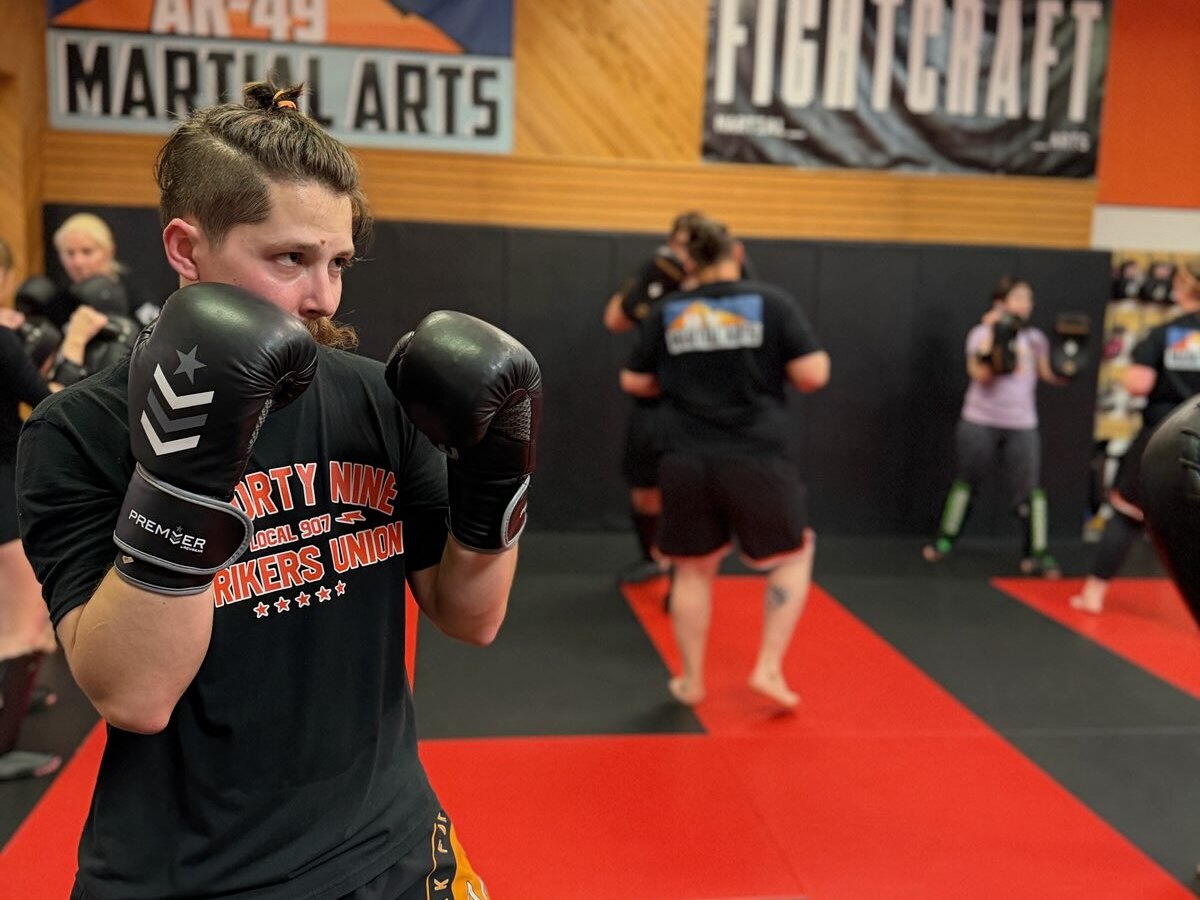
The long guard reaches your lead arm out toward your opponent, with your rear hand closer to your chin, so their punches meet your arm before they reach your face. Start from a good athletic base with your hands up and elbows in, reach out when they come forward, fight to get your hands on top of theirs, and come back to your high guard when it's done its job. It's a tool you move into and out of, and you learn it after your high guard is solid.
- 01
Good athletic base
Stand in your Muay Thai stance, feet about shoulder width apart, knees a little bent and your weight in the middle. Stay light on your feet, because you still need to check a kick or throw a teep while your arm is out. If they kick, lift your shin to check it, toes up, or bring the lead arm back in to cover. If you're flat and heavy, a push or a kick moves you.
- 02
Hands up, elbows in
Start in your high guard, fists at your face, elbows in close to your ribs, chin tucked a little. The long guard comes out of this position and goes back into it. You don't stand around in the long guard waiting.
- 03
Reach the lead arm out
As they come forward, reach your lead arm out toward their gloves and face, with your hand at about eye level, either open with the palm toward them or a loose fist, whichever your coach teaches. The arm is a frame to control distance, not a punch. Your arm is now in the path of their punches, so a one two hits your arm instead of your head. Keep your head back over your hips while your arm reaches, so your chin doesn't follow the hand forward.
- 04
Rear hand by your chin
The rear hand also comes off your face a little, but it stays much closer, guarding your chin and your body. It catches anything that gets past the lead arm. If it drifts away, your chin is open.
- 05
Get your hands on top
When your arms meet theirs, work to get your hands on top of their hands and wrists, pressing down for a moment rather than grabbing and holding on, which most rules don't allow. Hands on top lets you control their arms and stops them from bringing an elbow over your guard. If their hands are on top of yours, fight back to the top before you do anything else.
- 06
Back to your stance
Once they stop coming forward, or once you've hit them back, bring both hands back to your face and settle into your stance. You only stay in the long guard for a moment. Breathe and reset before the next exchange.
When to use it
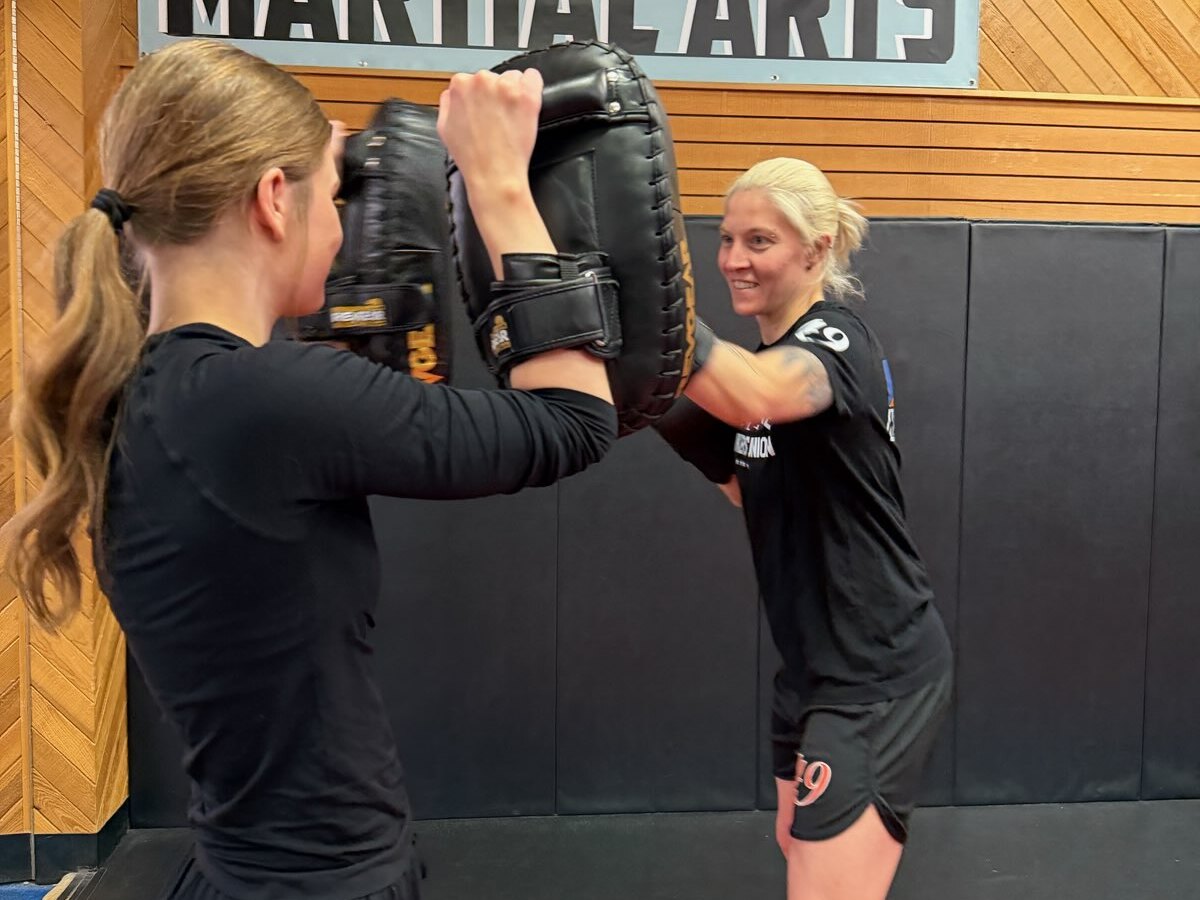
When someone rushes you with punches. When a partner walks forward throwing big punches, reach the lead arm out to meet them. Their punches land on your arm instead of your face, and they have to slow down to get around it. From there you can teep them back, step off to the side, or tie up their hands and work into the clinch. Then get your hands back home. In partner drills, your partner feeds slow, light punches into your arm until the timing feels natural.
To get close for knees and elbows. Knees and elbows only land from close up, and you have to get past their hands to get there. Reach out, put your hands on top of theirs, and pull one of their hands down a little to open a path. You'll learn the elbow and knee follow ups in class, slowly and with control, once the long guard itself is clean.
Things to look out for
Using it against heavy punches
You reach out and try to walk in on someone already swinging hard. Big punches come around the outside of your arm, and you get hit walking in.
The fix: Against heavy punches, use your high guard, blocks, head movement and footwork too. Save the long guard for when you can reach their hands first.
Their hands end up on top
You reach out and let their hands sit on top of yours. They control your arms and can bring an elbow or punch over your guard.
The fix: Fight for the top position the moment your arms touch. Feel your glove pressing down on their wrist.
Rear hand drifting away
Your focus goes to the reaching arm, and the rear hand floats down or out to the side. Anything that gets past the lead arm lands clean on your chin.
The fix: Keep the rear hand near your chin while the lead arm works. Check it in the mirror every rep.
Leaning in with your head
Your head and shoulders follow your hand forward. You're off balance, closer than you wanted, and easy to knee or pull into the clinch.
The fix: Reach with the arm and keep your head back over your hips. Let your feet decide how close you get.
Standing still in it
You hold the long guard and stop moving your feet. Your arm gets tired, they learn the position, and they work around it.
The fix: Use it only when they come forward, and keep your feet moving while you do. When they stop, bring your hands back to your face.
Forgetting to come back
The exchange ends and your arms stay out in front of you. Your face is open the next time they punch.
The fix: Finish every long guard by bringing both hands back to your face and resetting your stance. Make it a habit in shadow boxing so it shows up in class.
What to Practice at Home
Drill 01
Shadow box in and out of it
3 rounds of 2 minutes with 1 minute rest, in front of a mirror if you have one. Start in your high guard and move around. Every few seconds, picture someone rushing you, reach the lead arm out with the rear hand at your chin, take a step back or to the side, then bring both hands home. Watch that your head stays back and the rear hand stays at your chin.
Drill 02
Bag push and stop
If you have a heavy bag, do 3 rounds of 1 minute with 1 minute rest. Push the bag away, then stop it with your lead arm as it swings back, keeping your feet planted and your head back. It trains your arm to meet something coming at you on time, the way you'd meet a partner walking in. Bring your hands to your face, then do it again. Switch to the other stance for the last round.
Drill 03
Long guard holds
4 rounds of 45 seconds with 45 seconds rest. Hold the long guard in your stance while you step forward, back and to the sides, keeping the lead hand at eye level and the rear hand by your chin. It builds the shoulder endurance to hold your arms up when you're tired. Finish each round by snapping both hands back to your face.
Frequently Asked Questions
What is the long guard in Muay Thai?+
It's a guard where you reach your lead arm out toward your opponent and keep your rear hand closer to your chin. Their punches meet your arm before they reach your face. You move into it when they come forward and back out to your high guard after.
Should beginners use the long guard?+
Learn your high guard first. The long guard builds on it, and you need to be able to get back to the high guard fast. Once your guard and stance are solid, your coach will show you the long guard on pads and in partner drills.
Why do you want your hands on top?+
Hands on top of theirs lets you control their arms and pull a hand down to open them up. It also stops them from bringing an elbow over the top of your guard. If their hands are on top, fight back to the top first.
When shouldn't you use the long guard?+
When someone is already swinging big hooks and overhands. Those punches come around the outside of your arm. Use your high guard, blocks and footwork there instead.
Why do my arms get so tired?+
Holding your arms out takes shoulder endurance, and it's normal to feel it early on. Don't hold the long guard the whole time, only when they come forward. Shadow boxing rounds and long guard holds at home build it up.
Are You Ready?