Kids, Bullying and Self Defense
Self Defense | For Who
Kids, Bullying and Self Defense: A Guide for Parents
Teach your child to stop, walk and talk: tell the bully to stop in a firm voice, walk away calmly toward other people, and tell a trusted adult. Kids only use it under pressure if they've practiced it out loud, so rehearse it with them at home until it feels natural. Martial arts can help with confidence, friendships and a strong voice, and the plan stays the same: refuse the fight and get help.
Stop, walk, talk
- 01
Listen first
When your child tells you, stay calm, listen, and ask what happened and when. Praise them for telling you and remind them it's not their fault. You don't have to fix it in that moment. Let them know you'll work out the next steps together.
- 02
Stop
Your child stands tall, looks the other kid in the eye and says "Stop" in a firm, clear voice. Their hands can come up in front of them, open with palms out, like a fence. A loud, strong voice draws attention, and many kids who bully back off when an adult might notice. If the other kid is already getting physical, is much bigger, is with a group or has a weapon, your child skips the talking and goes straight to getting away and finding an adult.
- 03
Walk
Then they walk away calmly with their head up, toward other kids or an adult. Skip the comeback, since a put down usually keeps it going. Teach them to keep as neutral a face as they can until they're clear, because a big reaction often keeps it going. It's fine if they feel scared; their job is just to get to an adult, and if the other kid follows or blocks them, they get loud and go to the nearest adult or group.
- 04
Talk
They tell a trusted adult, like a teacher, the principal, a counselor, lunchroom staff or you. Make sure they know that getting help when someone is being hurt isn't tattling. If the first adult is busy, they keep asking: "Excuse me, I have a safety problem."
- 05
Practice it at home
Kids won't use words they've never said out loud. Play the other kid in a mild way, never touching them, and have your child practice stop, walk and talk until it feels natural. Start easy and praise the effort, even when it isn't smooth yet. Keep it simple for younger kids, and with older kids add what to do online and how to report it.

More ways to help
Build their circle. Kids with good friends are harder for a bully to pick on. Help your child find a buddy for the bus, the hallway and recess, and get them into activities they enjoy, like sports, clubs or martial arts, where they can make friends outside their class. Playdates and time with positive friends help a lot if they don't have many at school.
Bring in the school. If it keeps happening, write down what happened and when, then talk to the teacher or counselor and ask how the school handles bullying, including online. If the school doesn't act, follow up in writing and go to the principal, then the district. Hold off on calling the bully's parents yourself, and if you do want to talk with them, do it with a school counselor in the room. Online, help your child save screenshots first, then block and report the person, and not forward or like the posts. If there's a threat, an injury, a weapon, sexual harassment or someone following your child, contact the school right away, and call the police when it's an emergency or a crime.
Common parent mistakes
Telling them to fight back
It can feel like the strong answer. Fighting can turn name calling into real injuries, and at many schools everyone involved in a fight gets in trouble, including the kid who was picked on.
The fix: Teach them to refuse the fight: "I'll talk to you, but I'm not going to fight." Physical self defense is only for when they're about to get hurt and can't get away or get help, and then it's just enough to make space, like pushing away or breaking a grab, get away and go straight to an adult.
Explaining it away
"Kids will be kids" or "just ignore it" tells your child it's not a big deal and they're on their own. They stop telling you, and you lose track of what's happening.
The fix: Take it seriously every time. Listen, believe them, and make a plan together. Bullying should never be tolerated or explained away.
Calling the bully's parents first
It's a natural first move, and it can turn into an argument between grown ups while your kid still has to ride the same bus tomorrow.
The fix: Start by helping your child feel more powerful, and practice stop, walk and talk together. Then go to the teacher or counselor, and if you talk to the other parents, do it with someone from the school there.
Never practicing out loud
You tell your child what to do once in the car and figure they've got it. Under pressure with other kids watching, words they've never said out loud don't come out.
The fix: Rehearse it a few times a week. Play the other kid, keep it realistic but mild, and keep going until they can say it in a strong voice without thinking.
Missing the signs
Some kids won't say it out loud. The clues show up in other ways: headaches or stomachaches, not wanting to go to school, lower grades, lost or broken things, trouble sleeping, or friends who suddenly disappear.
The fix: If you notice a few of these, ask gently and without judgment. Asking about a scene in a show, or sharing something from when you were their age, can make it easier for them to open up. Some signs have other causes too, so listen before you decide.
Expecting one class to fix it
You sign them up for martial arts hoping they'll handle the bully next week. A few classes won't change much, and a kid who thinks they're ready may go looking for the fight.
The fix: Think of training as something that builds over months: fitness, friends, confidence and a stronger voice. Keep the plan the same while it builds, which is stop, walk and talk.
Drills you can practice
Drill 01
Stop, walk, talk role play
Take 5 minutes, 3 times a week. You play the other kid and say something mild, like "You can't sit here." Your child stands tall, says "Stop" in a strong voice, walks away calmly, then comes to you and tells. Do it 5 times, then switch roles so they hear how it sounds from the other side.
Drill 02
Strong voice
A lot of kids say "stop" so softly it sounds like a question. Have them stand tall with their hands up in front, palms open, and say "Stop! I don't like that!" loud enough to be heard across a room. For a shy kid, start at a normal volume and get a little louder each rep. Do 10 reps, then have them walk over to you and practice "Excuse me, I have a safety problem."
Drill 03
Trash can for mean words
Say a mean line, like "You're stupid." Your child pretends to catch it, throws it into an imaginary trash can, and says something true about themselves, like "I'm smart." Do 5 to 10 rounds with different lines. It gives them something to do with hurtful words besides carrying them around.
Frequently Asked Questions
My child is being bullied at school. What can I do?+
Listen first and let them know it's not their fault. Teach stop, walk and talk, and practice it at home until it feels natural. Help them build friendships with a buddy at school and activities they enjoy. If it keeps happening, talk to the teacher or counselor.
Should I teach my kid to fight back?+
No. Teach them to refuse the fight and get help: say stop, walk away calmly and tell a trusted adult. Fighting can make it worse and get everyone in trouble. Physical self defense is a last resort, only when they're about to get hurt and can't get away or get help.
What if my child is bullied on the bus?+
The same plan works there. Help them find a buddy to sit with, practice stop, walk and talk, and make sure they tell the driver and you. If it keeps happening, let the school know so staff can keep an eye on it.
Can martial arts help a kid who's being bullied?+
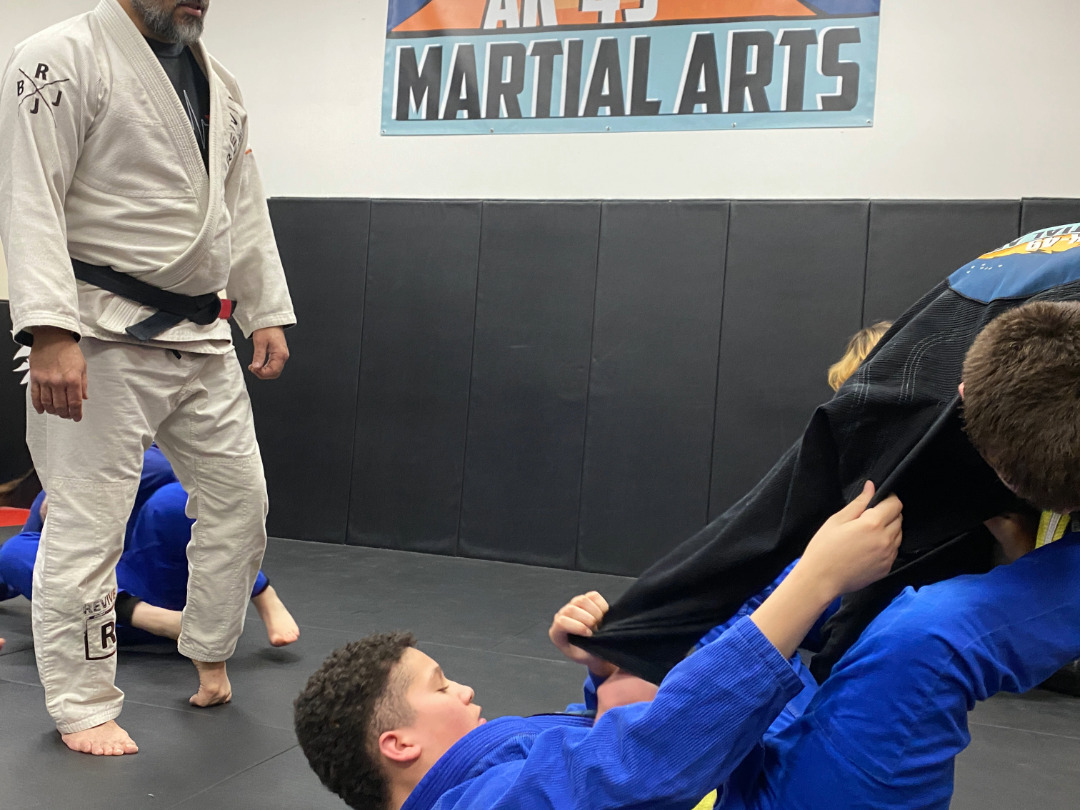
It can. Kids get fitter, make friends outside their class, and practice standing tall and using a strong voice every week. Pediatricians list lower stress, better fitness and better school performance among the benefits. In Kids BJJ they also practice falling safely, getting back up and breaking free from grabs, slowly and with coaches watching. It takes months of regular training, and the plan at school stays stop, walk and talk.
What age can kids start at AK-49 Martial Arts?+
Kids BJJ starts at 6 and Kids Kickboxing at 7. Your child's first class is free, and they can wear a shirt and shorts. Coaches teach the basics before anything speeds up, and sparring is optional.
Are You Ready?