Self Defense for Women
Self Defense | For Who
Self Defense for Women
Self defense for women starts with awareness: noticing what's around you, trusting the feeling that something is off with anyone, strangers or people you know, and leaving or getting help early. Saying no out loud and holding it handles a lot before anything gets physical. Physical skills come from training regularly over time, never from one night.
Where it starts
- 01
Awareness
Keep your head up and your eyes moving when you're out, especially in parking lots and anywhere quiet. Notice who's around you, where the open businesses are, and where you'd go for help. It should feel like the calm attention you use when you drive, and it buys you time to leave before anything gets close.
- 02
Trust your gut
If a person or a place feels wrong, act on it, even if you can't explain why and even if leaving seems rude. Your safety matters more than anyone's feelings in that moment. That goes for people you know as much as strangers.
- 03
Say no out loud
A boundary works best short and clear, like "Please stop" or "No, I'm leaving," in a calm, firm voice with your face and body saying the same thing. Expect pushback like "You're overreacting" or "I was only joking," and say it again without arguing. Practice the words out loud ahead of time so they come out when you're nervous.
- 04
Leave early
When something feels off, leaving is almost always the safest choice, and the earlier you go the easier it is. Head toward people and light, into an open business, or back the way you came. Walk with your head up at a steady pace, and glance back to see what's happening behind you.
- 05
Get help
Asking for help is part of self defense. Ask a cashier to call security, tell a manager someone is bothering you, or call 911 and tell them where you are. If you need people to notice, be loud and specific, like "Help! This man is following me!" If someone is following you, go into an open business and find someone who works there.

The physical part
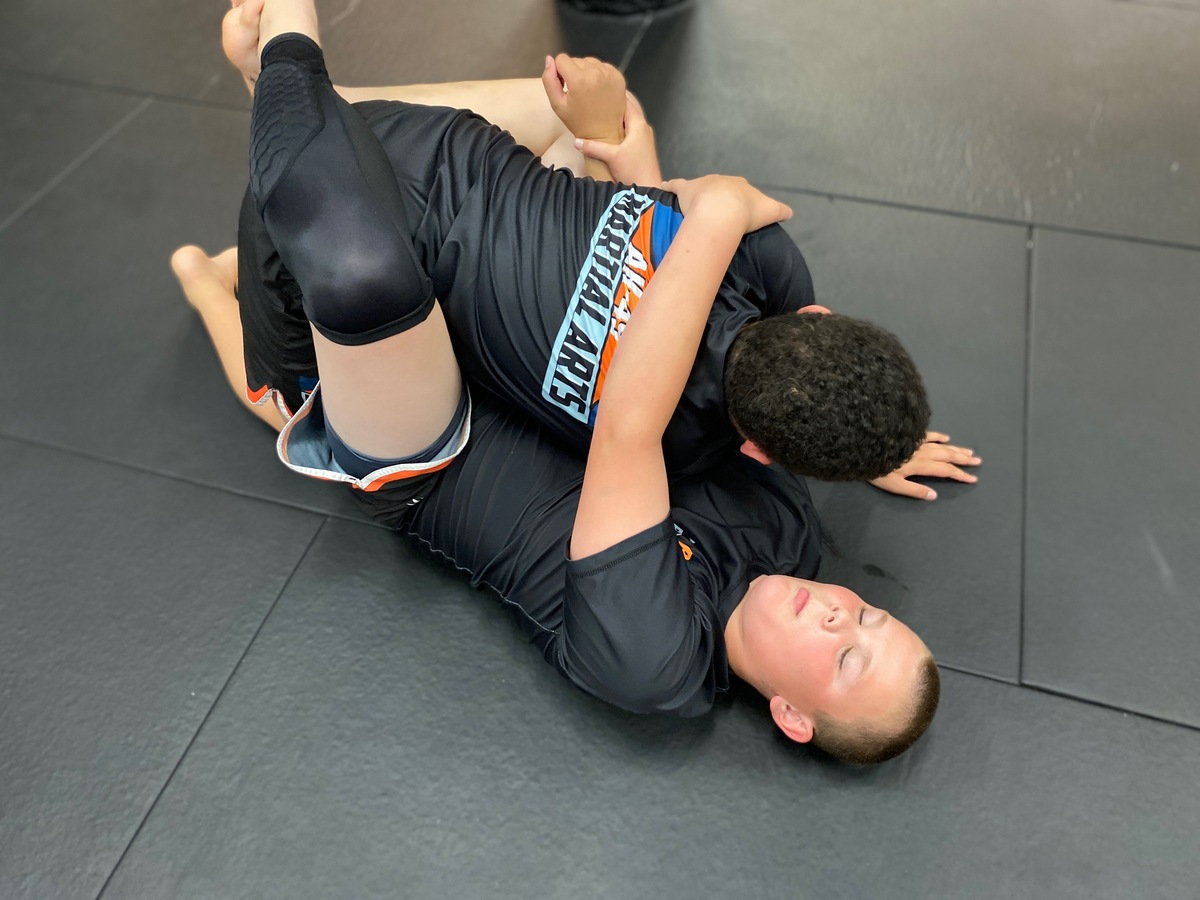
It takes regular training. If it turns physical and you can't get away, the skills that hold up are the ones you've drilled many times against a partner who resists. Under that kind of stress your heart pounds, your vision narrows, and moves you only saw once tend to fall apart. That's why physical self defense comes from training regularly in Brazilian Jiu Jitsu, kickboxing or wrestling over months. If someone grabs or pins you, keep your chin down to protect your neck, cover your head, and as a last resort go for what's open, like the eyes, nose or groin, to make space and get up and away. One class won't prepare you against someone athletic and powerful.
What training gives you. Grappling teaches you leverage, frames and position, so you're not trying to out muscle someone bigger. Striking teaches you to keep your distance, protect your head and make space. Training also makes you calmer when someone grabs or pushes you, because you've felt it before on the mat. You'll often train with bigger partners who go at your pace, and you tell the coach about any injury or if you're pregnant. Early classes cover basics like breaking a grip, framing with your arms to make space and standing up safely from the ground, slowly with a partner. Even with training, the goal is to break free and get to safety, using only as much force as you need to do that.
Things to look out for
Only thinking about strangers
Most of us picture danger as a stranger in a dark parking lot. Pushy or unsafe behavior from someone you know is easier to explain away, so it goes on longer.
The fix: Use the same rules with everyone. If a date, a coworker or a friend of a friend keeps pushing after you've said no, get distance and get help. On dates or at parties, keep your drink with you, have your own way home, and check that a rideshare's plate and driver match the app before you get in. Staying because you feel embarrassed is one of the common ways people end up in danger.
Asking instead of telling
You say "Could you maybe stop?" with a little smile so it doesn't seem rude. It sounds optional, so they treat it that way.
The fix: Make it a statement: "Stop. I don't like that." Keep a neutral face, your eyes on them without staring, and a firm voice. Practice it out loud so it doesn't come out as a question.
Headphones in, phone out
You walk to your car with music in and your eyes on your screen. You won't see or hear someone until they're right there, and anyone watching can tell you're not paying attention.
The fix: Phone in your pocket and earbuds out in parking lots, on trails and anywhere quiet. Have your keys in your hand before you reach the car, take a look around, and lock the doors as soon as you're in.
Waiting until you're sure
You notice someone and tell yourself it's probably nothing until there's no doubt left. By then the easy chance to leave is gone.
The fix: Move on the feeling. Cross the street, walk into a store or turn around. If you were wrong, it cost you a minute.
Expecting one night to make you ready
A one night class can teach a few good habits, and it can also leave you feeling more ready than you are. That false confidence can talk you into staying when you should leave.
The fix: Keep what's useful about awareness and leaving, then build physical skill the slow way. Train regularly, drill the basics, and let your confidence come from the reps.
Fighting over your purse
Someone grabs your bag and you hang on. A theft turns into a struggle, and you can get hurt over something you could replace.
The fix: Let it go. If you can, toss it away from you and move the other way toward people, then call for help when you're safe. If they have a weapon, give them what they want and get away. If someone tries to force you into a car, getting loud and getting away right there is usually safer than going anywhere with them.
Drills you can practice
Drill 01
Say it out loud
Pick 3 short lines, like "Please stop," "No, thank you" and "I'm leaving now." Say each one 5 times to a mirror. Round 1, check your voice: loud enough and firm. Round 2, check your face: neutral, with steady eyes. Round 3, check your body: tall, with your hands open in front of you.
Drill 02
The walk out
For the next 2 weeks, every time you leave work, the store or the gym, do the same things in the same order: phone away, keys in hand, one look around, one look inside the car. Lock the doors, then check your phone. It takes about 10 seconds, and after a couple of weeks it happens without thinking.
Drill 03
Calm, aware walk
Walk across a room or down your street with your head up, back straight and a brisk pace, with a relaxed face, looking around like the world is interesting. Do 5 minutes a day for a week. That same walk is how you leave a place that feels wrong calmly, without picking a fight.
Frequently Asked Questions
What's the best self defense for women?+
Awareness first: notice what's around you, trust your gut and leave early. Saying no out loud and holding it handles a lot of situations before they get physical. After that, physical skills come from training regularly in Brazilian Jiu Jitsu, kickboxing or wrestling.
What's the best martial art for women?+
Grappling arts like Brazilian Jiu Jitsu teach leverage and position, which helps against someone bigger. Kickboxing teaches distance, protecting your head and making space to get away. Either one helps if you keep training, and some of both is best. Pick the one you'll keep coming back to.
Do I need experience or to be in shape to start?+
No. You start where you are, and new students get paired with patient partners. The fitness comes from training. Sparring is optional, so you can keep drilling until you want to try it.
What should I wear to my first class?+
A shirt and shorts, whatever is comfortable. We have loaner gis for gi classes, so you don't need to buy anything first. If you're coming to No Gi and already own a rash guard, wear it.
Is a one night self defense class worth it?+
It can teach useful awareness habits and get you thinking about a plan. It won't build physical skills that hold up against someone athletic and powerful, and it's easy to walk out feeling more ready than you are. If you want the physical side, plan on training regularly over time.
Are You Ready?