
Can Adults Learn Wrestling
Wrestling | Starting Out
Can You Learn Wrestling as an Adult
Yes. Adults who never wrestled as kids can learn it, and plenty of people start in their 30s, 40s and later. Start with a good stance, hand fighting and low risk takedowns that don't burn all your energy, and drill slowly before you go hard. How you train matters more than when you start.
How adults get started
- 01
Tell your coach about old injuries
Bad knees, a sore back or an old shoulder injury all change how you should train. Tell your coach before class starts, so they can show you another way to do the same move. Tell your partner too, so they know to be careful with that side.
- 02
Start with stance, hand fighting and the sprawl
Your first weeks are about how to stand, how to move without crossing your feet and how to fight for your partner's hands. Your feet sit a little wider than your hips with one slightly ahead, weight on the balls of your feet, head up, hands out front and elbows in, and you try to keep your hands inside theirs. You'll also learn the sprawl, kicking your legs back and dropping your hips when someone shoots, which is your main defense against a takedown. Adults who skip these basics end up muscling everything and getting tired fast.
- 03
Learn to fall
You'll get taken down a lot while you learn, so learn to land before you learn to throw. Tuck your chin so your head stays off the mat, land on your side and the back of your shoulder instead of flat, and let your arms slap the mat instead of reaching back with a straight arm to catch yourself. Practice it slowly with a coach watching until it happens without thinking.
- 04
Use a middle stance
Stand between bolt upright and a deep crouch, with your shoulder roughly over your front knee and your knees doing most of the bending. A deep crouch is built for short matches, and it wears out your legs and lower back in a long round. A middle stance is one you can hold for the whole class.
- 05
Start with low risk takedowns
The single leg is a good first takedown because if it goes wrong you usually just lose the leg and go back to hand fighting. Get to the leg while you stay on your feet, and grab it above the knee instead of diving down to the ankle. Keep your head up and tight to their body, with your chin on their hip, so your neck isn't hanging out for a guillotine. A missed single still goes wrong sometimes, but a lot less often than a big dive at the legs.
- 06
Drill slow, then add speed
Learn each move slowly and cleanly before you try it fast. Speed comes on its own once the movement is right, and a sloppy move done fast is how adults get hurt. Practice a move plenty in drilling before you try it live. Lifts and throws come later and always under control, and slamming a training partner is never okay.
- 07
Warm up every time
Show up early enough to move around before class. Get your neck, shoulders, hips and knees moving with easy rotations and light movement until you're warm. A cold body that gets thrown into a scramble is a lot more likely to tweak something.
What makes it easier
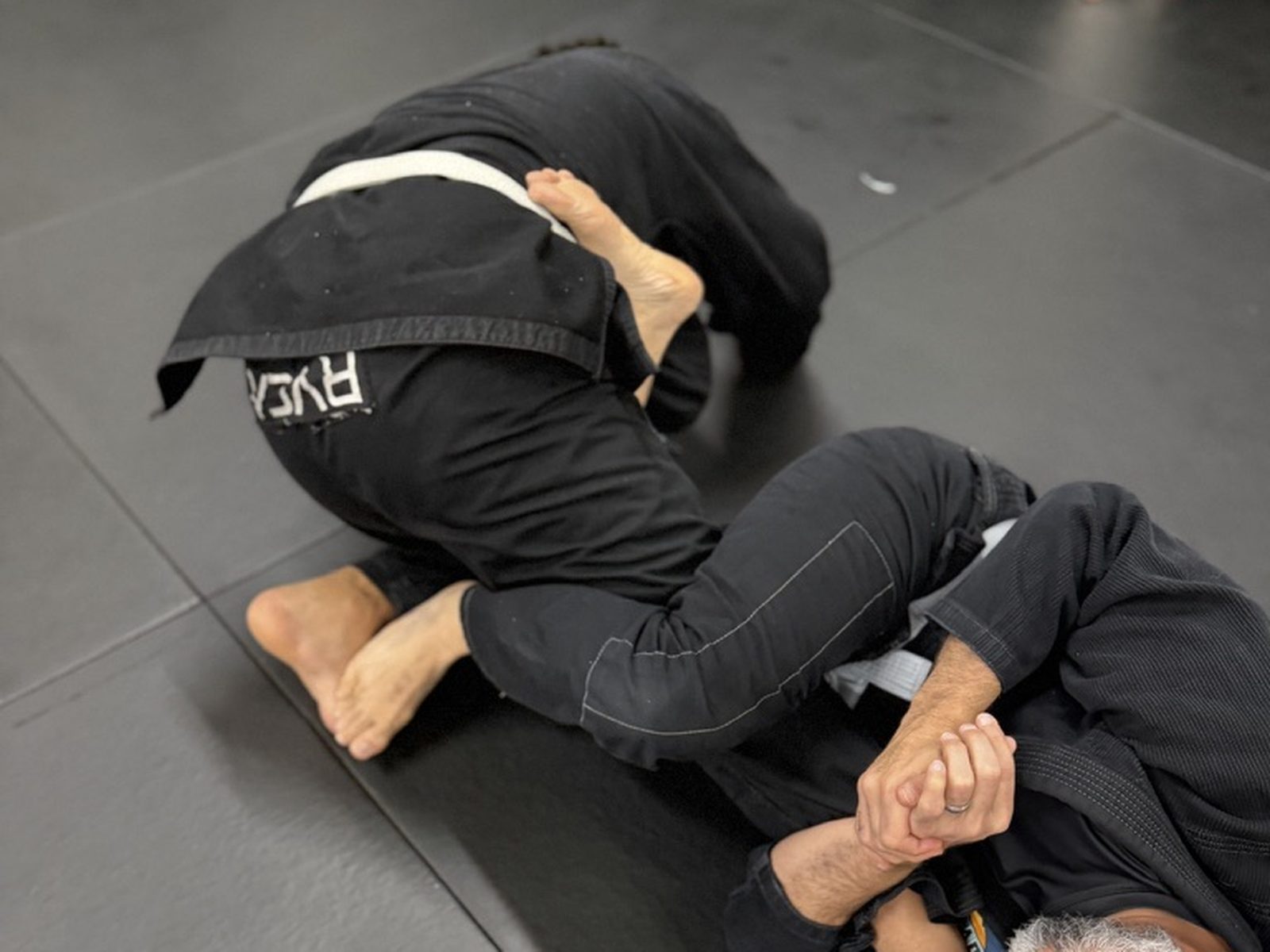
Pick your partners. Train with people who control their speed and strength, and who are there to learn with you. A brand new partner who's trying to win every round is the one most likely to hurt you by accident. Ask an experienced partner to go easy and work technique with you. Most of them are glad to.
Train at a pace you can recover from. For most adult beginners, two or three classes a week is plenty, and once a week still moves you forward. Recovery can take longer than it did at 25, so take your rest days seriously, sleep well and drink water. Staying on the mat week after week matters more than one big week followed by two weeks off sore.
Things to look out for
Trying to keep up with the young guys
You go as hard as the 20 year old athlete next to you on day one. You get sore, frustrated and banged up, and a lot of adults who start that way don't stick around.
The fix: You're only trying to beat the person you were last month. Go at your own pace, and let technique do the work instead of strength and speed.
Copying a deep wrestling crouch
You copy the low, bent over crouch you've seen in college matches. Your thighs burn after a minute, your lower back aches, and you're done before the round is.
The fix: Stand a little taller, in a middle stance with your shoulder over your front knee. You should be able to hold it for a full round and still move.
Diving to your knees from far away
You drop to your knees and lunge at the legs from across the mat. They sprawl, your head ends up by their hips and their weight lands on your neck and back.
The fix: Walk in until you can touch them and stay on your feet when you go for the leg. If you miss, you should still be standing in your stance.
Waiting too long to tap
You fight a choke or a lock past the point where you can get out, because you don't want to give up. Older joints and necks don't bounce back as fast, and holding on is how a good training day turns into weeks off.
The fix: Tap early, before it hurts, even if it isn't fully locked in. Then ask your partner what you missed.
Training through an injury
Something tweaks and you keep coming in at full speed, hoping it goes away. A small injury that needed a week off turns into one that hangs around for months.
The fix: Take the week off, get anything unfamiliar looked at, and tell your partners about it when you come back. If you hit your head and feel dazed or get a headache, stop for the day and tell your coach, and stay off the mat with any rash or sore until it's checked and cleared. Missing a week beats missing a season.
Waiting to get in shape first
You put off starting until you've lost some weight or done some running. Months go by and the day you start never comes.
The fix: You don't need to be in shape to start. A few weeks of training is what gets you in better shape, and nobody will think less of you for sitting out a round.
Drills you can practice
Drill 01
Stance and motion
4 rounds of 1 minute with 1 minute rest. Get in your stance and move forward, back and side to side in short steps without crossing your feet. Round one is easy pace while you check your stance in a mirror, and each round after that gets a little quicker. Stop a round early if your back or knees complain.
Drill 02
Level change and step in
3 sets of 8 with 1 minute rest. From your stance, drop your hips by bending your knees, step your front foot in like you're going for a leg, then step back to your stance. Keep your head up and your back fairly straight the whole time, and don't put your knee on the floor.
Drill 03
Technical stand up
3 sets of 5 each side with 1 minute rest. Sit on the floor, post one hand behind you and plant the opposite foot, lift your hips and swing your other leg back under you, then stand up into your stance. Keep your free hand up in front of your face. It's how you get back to your feet safely, and it's good for stiff hips. In wrestling you'll also learn to stand up from your knees with your hands fighting theirs.
Frequently Asked Questions
Am I too old to start wrestling?+
For most healthy adults, no. Plenty of people start in their 30s, 40s and later, and age mostly changes how you train. Start slow, tap early and pick careful partners. If you have a health condition, check with your doctor first.
Do I need to be in shape to start?+
No. Most people feel out of shape in their first class, no matter how old they are. A few weeks of training is what gets you in better shape. Rest when you need to and come back next class.
What's a good first takedown for an adult?+
A single leg. It's low risk, it doesn't need a big explosive dive, and if you miss you go right back to hand fighting. Learn it well, including what to do when your partner defends it, before you add more.
How often should I train as an adult beginner?+
Two or three classes a week is plenty for most beginners, and once a week still moves you forward. Give your body time to recover between classes. Steady training over months does more than a hard first week.
Does AK-49 Martial Arts teach wrestling to adults?+
Yes, through our No Gi classes, which are a hybrid of Brazilian Jiu Jitsu and wrestling. No Gi is its own class inside our Brazilian Jiu Jitsu program. New students get paired with patient partners, and you don't need any wrestling background to start.
Are You Ready?