
Downblocking
Wrestling | Defense
What Is a Downblock in Wrestling
A downblock is a defensive hand you keep low in front of your lead leg, so a shooter runs into your arm before they reach your legs. When they shoot, you drive that hand down onto their head or shoulder with your elbow tucked in and step your legs back. It's the first and smallest layer of takedown defense, and it's one of the first things a beginner should learn on their feet.
- 01
Good wrestling stance
One foot a little forward, knees bent, head up and your weight in the middle, in a half crouch you can hold for a whole round. Keep your lead leg light, so it can step back the moment they reach for it. A heavy front leg is easy to grab.
- 02
Hands in front, elbows in
Your lead hand hangs low in front of your lead leg, with that elbow and knee close together. Your rear hand stays in front of you as a second post. With your elbows tight, nobody can slip under your arms to your legs.
- 03
Watch for the level change
Look at their collarbones, not their hands or feet. Before a shot, their shoulders drop. Your eyes on their chest let you see that drop early and react before they're in on your legs.
- 04
Drive the hand down
When they shoot, thrust your low hand down onto their head or shoulder and let your body drop with it. Keep the elbow pointing back at you and your palm facing them. It should feel like you're planting a post in front of your leg, and they run right into it. The hand goes on the head or shoulder, not your whole weight crashing onto their neck, and in drilling go half speed.
- 05
Get low and get your legs back
Drop your level as you block and shift your hips back as you step your lead leg out of reach, so their hands can't follow your legs. If you stay tall and just stick your arm out, they run through it. Getting low puts your shoulder and weight into them, so your arm holds.
- 06
Back to your stance
Once their hands hit the mat, turn the block into an attack if it's there: grab the arm and drag past it, take a front headlock or go behind. If nothing's there, back your legs away and circle up to your stance with your down block hand ready again.
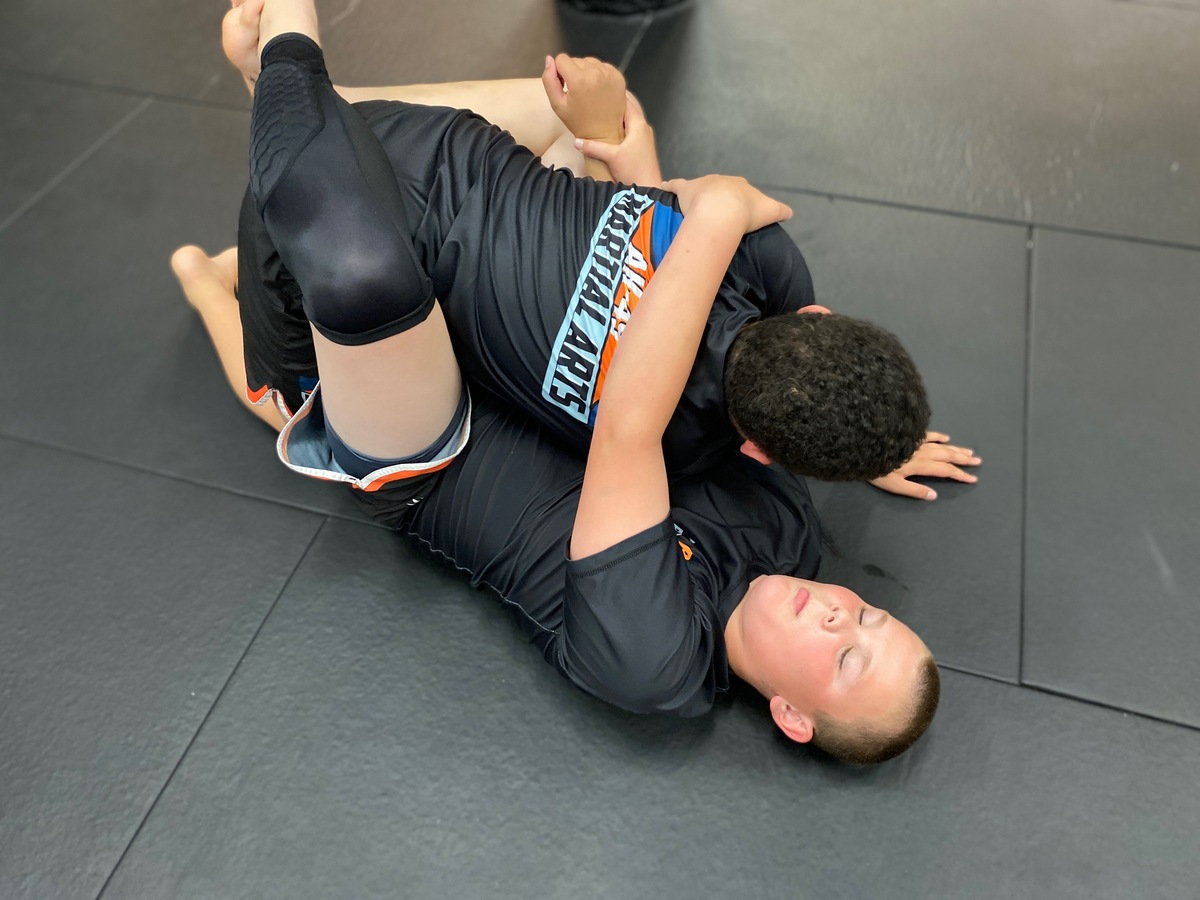
When to use it
Walking in to tie up. The scariest moment for a beginner is closing the distance, because that's when a partner can shoot from far away. Walk forward with your down block hand in place. If they shoot as you come in, they hit your arm instead of your legs. Once you're close enough to touch, you can reach for a tie up with your other hand.
When they shoot from too far out. A shot from long range has to travel, and the down block meets it before it gets to your legs. Their hands end up on the mat and their head ends up low. From there you can drag their arm and go behind them or take a front headlock.
Things to look out for
Reaching with both hands high
You reach for their head or neck with both hands out in front. Your legs are wide open, and a good partner ducks under your arms and takes them.
The fix: Keep one hand low at all times and reach with the other. Let your feet close the distance, not your arms. If you catch yourself with both hands up, bring one back down.
Elbow flared out
Your elbow points out to the side as you block. Their head pops up past your arm, you can't put your weight on them, and they take you over.
The fix: Point the elbow back at your own hip and your palm toward them. A downblock with the elbow in is hard to get badly wrong, so check it on every rep.
Blocking tall
You stay standing up straight and push your arm down at them. Your arm alone isn't strong enough, so they drive right through it and get your leg.
The fix: Drop your level as your hand goes down, so your shoulder is behind the block. Think hand and hips down together.
Heavy lead leg
You keep most of your weight on your front foot. Even with a good block, that leg can't move, and they can pick it up off the block.
The fix: Keep the lead leg light enough to step back at any moment. When they reach or fake, give it a small step back.
Watching their hands
Your eyes follow their hands or stare at their legs. A fake fools you every time, and the real shot is already in by the time you see it.
The fix: Look at their collarbones and let your side vision catch the rest. When the shoulders drop, the shot is coming.
Jumping to a full sprawl
Every level change gets a big sprawl. You end up flat and stretched out on a fake, which sets you up for a snap down or a second shot.
The fix: Use the downblock first, go to your knees if the shot is real, and save the full sprawl for when they're already on your legs.
Blocking and standing there
You stop the shot and then wait. They get their feet back under them and shoot again, and you've given them a free second try.
The fix: Make every block go somewhere. Drag the arm and go behind, take the front headlock, or circle back up to your stance right away.
Drills you can practice
Drill 01
Downblock shadow rounds
3 rounds of 2 minutes with 1 minute rest. Move around in your stance with your low hand ready and picture a partner shooting. Round one, slow blocks, checking elbow in and palm out on every rep. Round two, block and step the lead leg back. Round three, block, then circle up to your stance each time.
Drill 02
Mirror elbow check
Stand side on to a mirror and do 3 sets of 10 slow downblocks with each hand, with 30 seconds rest. Watch that the elbow points back at your hip and your body drops with the hand. Hold the bottom for a two count, then come back up to your stance.
Drill 03
Walk in with the hand down
4 rounds of 1 minute. Start a few steps back, walk forward in short steps with the down block hand in place, then reach with your other hand as if tying up. Back out and do it again. Your low hand never leaves its spot while you walk in.
Frequently Asked Questions
What is a downblock in wrestling?+
It's a low defensive hand that a shooter runs into before reaching your legs. You keep it in front of your lead leg and drive it down onto their head or shoulder when they shoot. It's the smallest, earliest layer of takedown defense. Often it stops the shot before you ever need to sprawl.
Should I downblock or sprawl?+
Downblock first, when they shoot from out of range and haven't reached your legs yet. If the shot is real and getting through, drop to your knees, and sprawl if they're already on your legs. Starting small keeps you balanced if it was only a fake.
Which hand do I downblock with?+
Usually your lead hand, since it's already low in front of your lead leg. Either hand can work, on either side of their head. What matters most is that your elbow stays in and your palm faces them.
Why do coaches say it's so important for beginners?+
New grapplers get taken down most often by long shots while they're reaching in to tie up. A down block hand covers exactly that moment. Even top competitors have said it fixed the shots they kept getting caught by.
Is the downblock hard to learn?+
It's one of the easier things you'll learn on your feet. The usual problems are timing and staying too tall, so keep your elbow in, drop your level and get your legs back. The hard part is the habit of keeping the hand low when you're tired, so drill it until it's automatic.
Are You Ready?