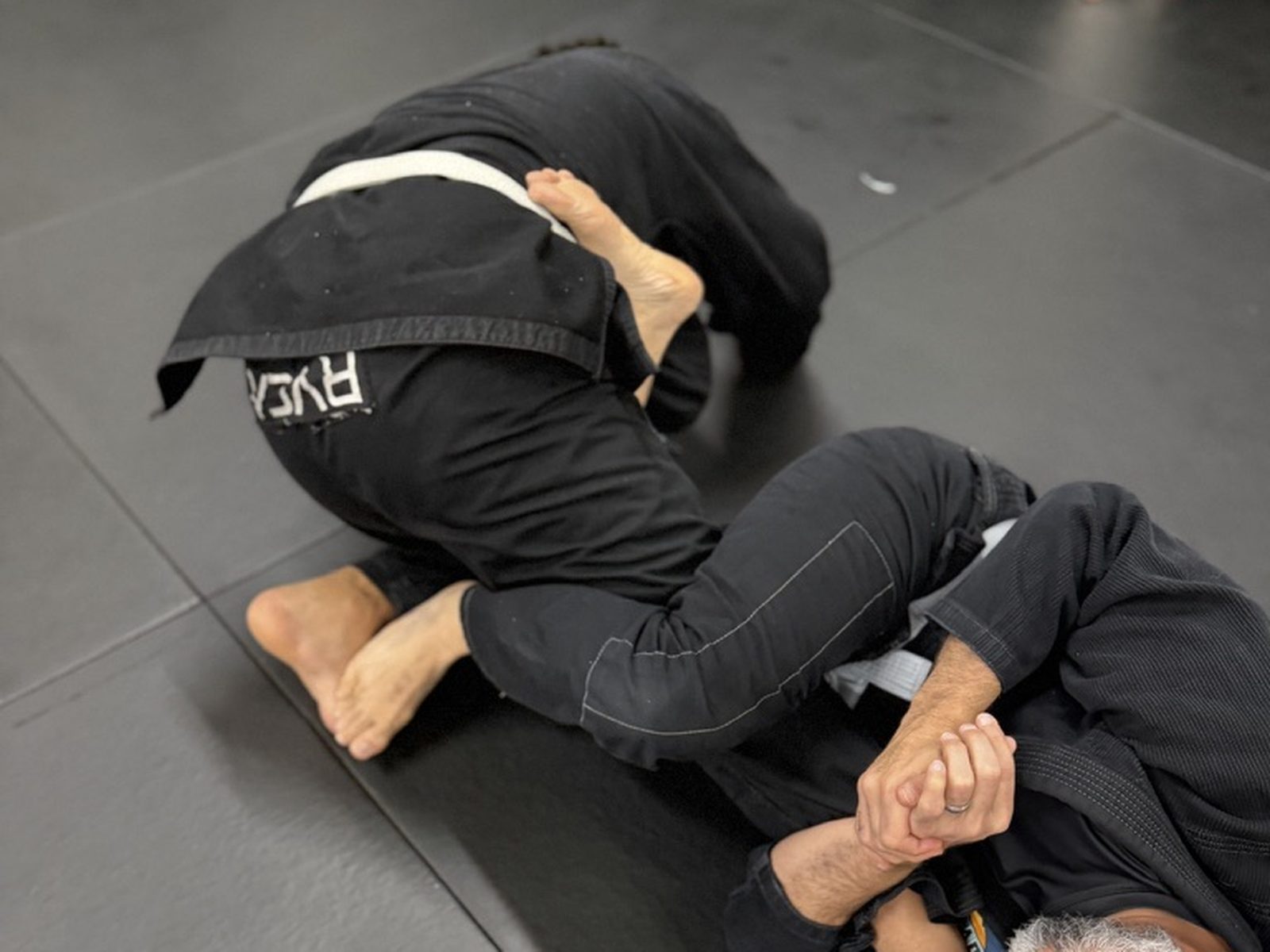
Single Leg
Wrestling | Takedowns
How to Do a Single Leg Takedown
A single leg is catching one of your partner's legs, right behind or just above the knee, and using it to put them on the mat. Do it from a good stance with your head up, stay on your feet instead of diving to your knees, and glue your ear to their chest and your shoulder to their hip. If it doesn't work, the worst case is they step the leg away and you go back to hand fighting.
- 01
Good athletic base
Feet about shoulder width, knees bent, weight in the middle and your head up. Stand a little lower than normal but not in a deep crouch, which burns your legs out in a long round. You should feel ready to move any direction, the same ready position you'd use in any sport.
- 02
Hands up, elbows in
Keep your hands in front of you and your elbows in close to your body, with your front hand guarding your front leg. Tight elbows keep their hands outside yours and make your own legs hard to reach. Reach mostly with your back hand so your front leg stays covered.
- 03
Win the hands first
Hand fight before you go for the leg. Get your hands inside theirs, strip their grips and pull on their head with steady pressure so they start moving. A partner who is stepping and reacting has a leg you can catch. A partner standing still with their hands on you doesn't.
- 04
Change levels with your legs
Drop your hips by bending your knees, not by bending at the waist. Your back stays straight and your head stays up, looking at their chest. If your head goes down, your hips come up and you get sprawled on.
- 05
Step in and catch behind the knee
As you drop your level, step your lead foot in close, right next to their front foot, so your hips come in under you instead of staying far away. Grab right behind or just above the knee with both hands, staying on your feet. With no shoes on, a grip on the ankle or lower leg slips right off. The moment you catch it, push their weight back onto their other foot so the leg gets light, then pick it up.
- 06
Ear to chest, shoulder to hip
Put your ear on their chest near the middle and your shoulder on their hip, with your back straight and the leg held high and tight against you. Lock your hands if you can. Your head in that spot makes it hard for them to push you away or catch your neck, and it should feel like you're leaning into them, not hanging off them.
- 07
Keep them moving
Don't stand still holding the leg. Watch their other foot. If it's out wide, circle toward the side of the leg you're holding and press your shoulder down on their hip until they sit, which is the finish called running the pipe. If it's right under their hip, reach for the other leg and finish with a double. You can also lift the leg high and step behind their standing leg to trip it. Set your partner down under control, never slam them, and once they land, keep hold of the leg and move up to their side with your chest on them.
When to use it
When their front leg is close. This is your takedown when their front leg is right in front of you and they're standing heavy on it. It often shows up after you've won the hands and they step in or reach for you. You don't need a big shot from far away, just a step and a reach. It's one of the first takedowns most people learn for that reason.
As a safe first attack. Because you stay on your feet, a single leg that doesn't work costs you very little. They step the leg back and you're right back to hand fighting, not stuck under their weight on the mat. That makes it a good takedown to try often while you're learning. Once you have the leg you can also go to the double or up to the waist. If they sprawl or wrap an overhook on you, square back up under them: hips forward, head on their chest, and the leg pulled tight to your body so they can't kick it free. If your posture breaks and your head is getting pushed to the mat, let the leg go and get back to your stance instead of holding a bad single.
Things to look out for
Diving to your knees from far away
You drop to a knee or lunge from too far out and reach for the leg. You're slow, they see it coming, and if they sprawl you end up on the mat with their weight on your back and your neck in danger.
The fix: Get close with hand fighting first, then step in and catch the leg while you stay on your feet. Your feet carry you in and your hands catch the leg at the end.
Grabbing only the ankle
You catch the foot or the lower leg instead of the knee. With no shoes there's nothing to hold, so they turn the foot and pull it free, then face you while you're bent over.
The fix: Grab right behind or just above the knee every time. If you start low, climb up to the knee before you do anything else.
Looking down
Your eyes go to the floor or the leg and your head drops. Your hips pop up behind you, your back rounds, and they can push your head down and sprawl or catch your neck.
The fix: Keep your eyes on their chest and your head up through the whole shot. Think head up, hips under you.
Bending at the waist
You reach down for the leg by folding over instead of bending your knees. You end up hunched under them, carrying their weight, and you can't drive or turn.
The fix: Bend your knees to get low and keep your back straight. Practice level changes in a mirror and watch that your chest stays up.
Letting your head drift
Your ear comes off their chest and your shoulder slides off their hip. Now they can push your head down and away, the finish gets hard, and your neck is open for a guillotine.
The fix: Glue your ear to their chest and your shoulder to their hip. If they push your head off, put it right back before you try to finish.
Holding a static single
You catch the leg and just hold it. They hop, hang their weight on your head and wait, and you burn out fast holding them up.
The fix: Keep them moving the second you have the leg. Step back, turn them, or switch to the other leg, and read where their far foot is.
Dumping your partner hard
You yank the leg or drive them straight back to finish fast. Your partner lands hard on their head or back, which isn't how you train with people.
The fix: Finish under control and lower them to the mat. Don't crank or twist the leg you're holding, and keep it moving the way their knee bends. In practice, if they tap or say stop, let go right away, and when you're the one being taken down, tap or speak up early if your knee feels caught.
Drills you can practice
Drill 01
Stance and level changes
3 rounds of 2 minutes with 1 minute rest, in front of a mirror if you have one. Round one, move in your stance forward, back and side to side, hands in front and elbows in. Round two, add a level change every few steps, bending your knees with your back straight and head up. Round three, change levels and step in as if catching a leg, then step back out to your stance.
Drill 02
Shadow single legs
4 sets of 10 slow reps, 30 seconds rest between sets. Step in, reach behind an imaginary knee with both hands, put your ear where their chest would be and lift. Switch which foot steps and which side you reach so you work both legs. Go slow and check that your head stays up and your back stays straight. In class you'll build from a partner who just stands and lets you catch the leg, to light resistance, to live hand fighting, so you get the feel before anyone fights back hard.
Drill 03
Carrying weight
3 sets of 10 reps from your knees, 30 seconds rest between sets. This one is from your knees on purpose, because sometimes a shot ends up there even when you try to stay up. Kneel with an imaginary partner in front of you and reach in on a leg while you keep your body upright, your head up and your chest and hips forward. Picture them sprawling on you and hold that upright posture for a two count before you come back. Try not to let your head sink toward the mat, because that's the spot that's hard to recover from.
Frequently Asked Questions
Where do you grab on a single leg?+
Right behind or just above the knee. With no shoes on, an ankle grip slips out too easily. Once you have the leg, push their weight back onto their other foot so the leg you're holding goes light.
Head inside or head outside on a single leg?+
Head inside, with your ear on their chest, is the usual choice for jiu jitsu and No Gi because it keeps your neck safer from guillotines. Head outside is a common version too, especially in wrestling, and some coaches prefer it in MMA. As a beginner, start with head inside and learn to keep it glued to their chest, then add head outside when your coach shows it.
Should I shoot a single leg from my knees?+
In No Gi it's safer to stay on your feet. Shooting on a knee is slow, and if they sprawl you're stuck on the mat under their weight. Staying up gives you the same leg with much less risk.
When do I switch from a single to a double?+
Look at their other foot. If it's right under their hip, reach across for that leg and finish with a double. If it's out wide, stay on the single, step back and turn them down.
Is the single leg good for beginners?+
Yes. It's low risk, and people at any age or size can do it. If it fails they usually just step away and you go back to the hand fight. Plenty of adults who never wrestled as kids learn it as their first takedown.
Are You Ready?