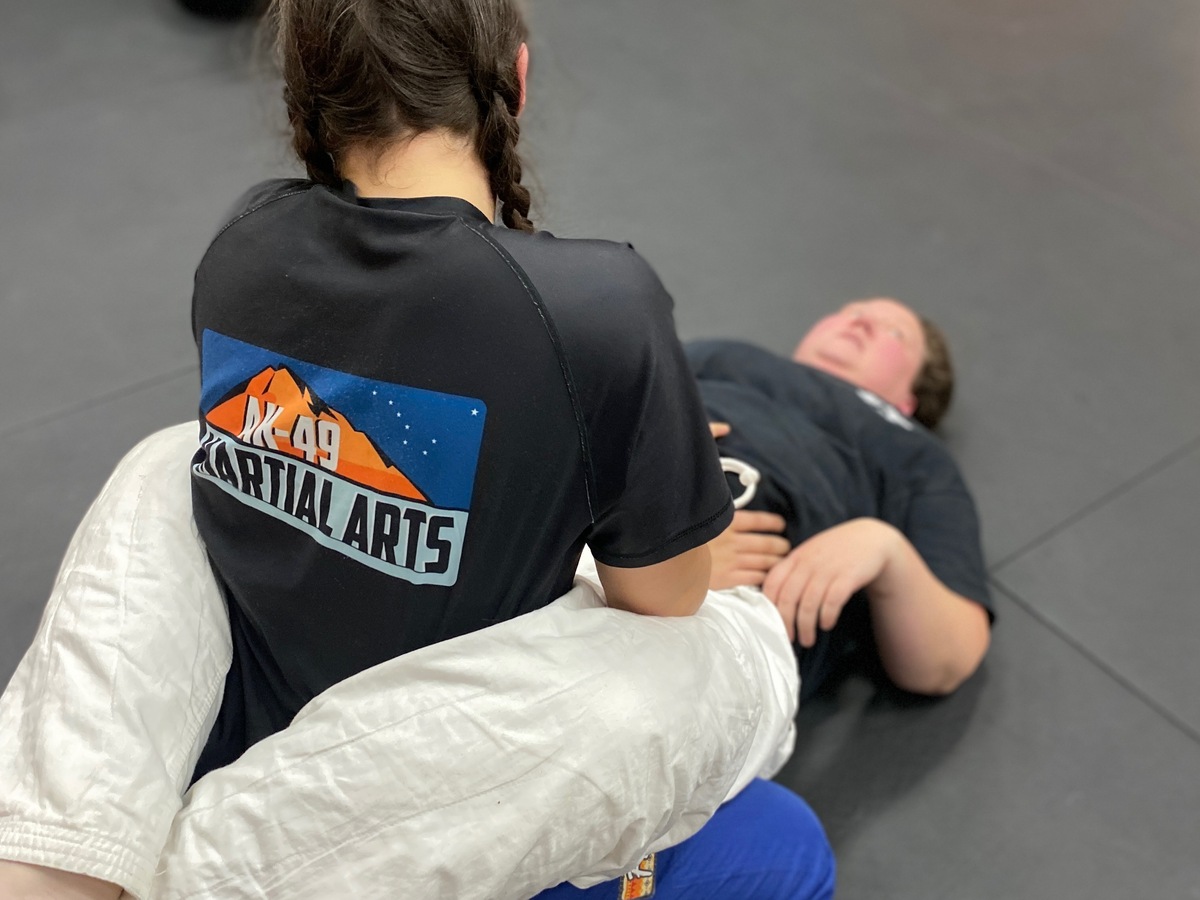
Standing Up From the Bottom
Wrestling | Bottom and Top
How to Stand Up From Bottom in Wrestling
The stand up is one of the most basic ways off the bottom: from your hands and knees with someone on top or behind you, you get back to your feet, clear their grip and turn to face them. Keep your elbows in tight and your head up, step your inside foot up, control their hand the whole way and keep your weight moving forward as you stand. Once you're up, turn to face them and get right back into your stance.
- 01
Base on the bottom
On your hands and knees, keep your head up, your back flat and your knees under your hips. A head that hangs down lets them push you flat to the mat. You should feel solid enough that a push from behind doesn't tip you over.
- 02
Elbows in, hands working
Keep your elbows tight to your sides instead of reaching out with long, straight arms. Long arms are easy to grab and hard to get up from. Your hands stay busy, fighting their hands and catching a wrist when you can.
- 03
Inside foot up, drive the elbow
Bring your hands up off the mat to the hand they have around your waist, and step your inside foot up, the foot closest to them, while you drive that elbow back toward them. That elbow keeps them from locking up your arm as you rise. Do it in one quick move.
- 04
Catch their hand and keep it
Grab the hand they have wrapped around your waist, right at your belly, with one or both of your hands, and hold it the whole way up. Hand control is what stops them from pulling you back down. The most common mistake on a stand up is standing without it.
- 05
Weight forward, chest down
Drive up and forward, away from them, staying a little low. While you rise, lean your chest a little forward over your feet so your weight stays in front of your hips. Stand tall only at the end, once you're on your feet and their grip is coming off. Don't sit back into them or lean your weight on your hands, because leaning back with your chest to the ceiling has no base and one push knocks you over.
- 06
Clear the grip and face them
Keep hold of that wrist and use your other hand, or a push of your hips forward, to peel their grip off your waist. Then turn to face them, still holding that wrist so they can't follow you around. Finish back in your stance, hands up and elbows in, ready to go again.
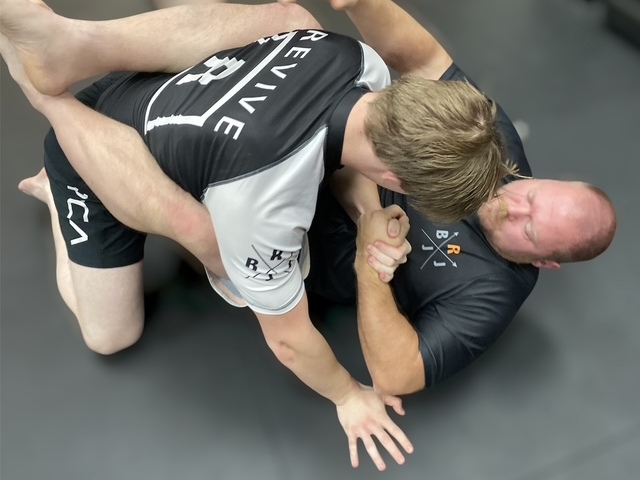
When to use it
When they're on your back. You got taken down or ended up on your hands and knees with your partner behind or beside you. Staying there gives them time to break you down or take your back. The stand up gets you back to your feet so you can start over from standing. It's one of the first escapes most people learn from bottom.
When you're flat on your back. If you're flat under someone, first get to your knees: take one foot out to the side, turn onto your side with your elbows in, and push up with your top shoulder in front of your bottom shoulder. From your knees you can then stand up the same way. In jiu jitsu, sitting back into your guard is another way out from there. If they hold you down with a tight chest wrap, a half nelson or a grip on your ankle, the stand up gets harder, and the sit out and the switch are other escapes from the same spot. If the stand up stalls, chain straight into one of those, and if they have no grip at all, just come up and face them.
Things to look out for
Arms stretched out
You post on long, straight arms or reach out to push off. They grab an arm, your elbows are far from your body and you can't get your feet under you.
The fix: Keep your elbows tight to your sides from start to finish. Think elbows in, the same as in your stance.
No hand control
You stand up but let their hands do whatever they want. They lock around your waist and pull you right back down to the mat.
The fix: Catch their hand at your waist and keep it as you rise. Don't let go until you've turned to face them.
Chest up to the ceiling
You lean back as you stand and your chest faces up. You have no base, and a small push or pull drops you.
The fix: Turn your chest toward the floor and keep your weight going forward. You should feel your weight over your feet, not behind them.
Sitting back into them
You push your hips back into your partner or drop your weight onto your hands. In No Gi they sit back, pull you onto them and put their hooks in on your back.
The fix: Keep your weight forward and walk away from them as you stand. Watch their legs so they can't slide hooks in.
Turning too early
You spin around to face them before their hands are off your waist. They follow you around, lock your body and you're back on the mat.
The fix: Clear the hands first, then turn. Hold their wrist as you turn so they can't come with you.
Looking down
Your head drops while you try to get up. Your back rounds and they can push you forward onto your face.
The fix: Keep your head up and your eyes forward. Head up, hips under you.
Drills you can practice
Drill 01
Technical stand ups
3 sets of 10 reps each side, 30 seconds rest. Sit on the floor, post one hand behind you and the opposite foot flat, lift your hips and swing your other leg back under you to come up to a knee or your feet. Keep your chest turned toward the floor as you rise and your free hand up in front of your face. Finish in your stance every time. This builds the base and hip movement for getting up in a scramble, and the wrestling stand up itself is the last drill below.
Drill 02
Back to your knees
3 sets of 8 reps each side. Lie flat on your back, take one foot out to the side and turn onto your side with your elbows in close. Push up to your hands and knees with your top shoulder in front of your bottom shoulder. Go slow and keep your elbows tight the whole time.
Drill 03
Stand up from hands and knees
3 rounds of 1 minute with 1 minute rest. Start on your hands and knees with your head up and elbows in. Bring your hands up, step your inside foot up, drive the elbow back, stand with your weight forward, then turn and finish in your stance. Switch sides each rep and focus on doing it in one smooth move. Turn on the balls of your feet so you don't twist a planted knee. In class, a partner starts by just resting on your back, then adds light pressure, then rides you for real. Top partners hold the waist and wrists, never the neck, and if a knee or your neck gets caught, stop and reset. Kids drill this at slow, controlled speed with a coach watching.
Frequently Asked Questions
What is a stand up in wrestling?+
An escape from the bottom where you get to your feet from your hands and knees, control their hands and turn to face them. It's one of the first bottom escapes most people learn. It gets you back to standing so you can start over.
Is the stand up the same in No Gi?+
Mostly. The big difference is that in No Gi you keep your weight forward and walk away while you stand, because if you sit back into them they can pull you down and get hooks in on your back. Watch their legs as you come up.
Why do I keep getting pulled back down?+
Usually you're not controlling their hands. Catch their hand at your waist as you rise and keep it until you've turned to face them. Standing up without hand control usually ends back on the mat.
Why do I keep getting knocked over when I stand up?+
Your chest is probably facing the ceiling or your arms are stretched out. Turn your chest down toward the floor and keep your elbows in. That gives you a base that's much harder to push over.
Is the stand up hard for beginners?+
It takes a lot of energy against someone holding you down, and it feels different live than it does in drills. That's normal. Drill the pieces slowly, and in class you'll practice it with partners who give you more resistance as you get better.
Are You Ready?