
BJJ Belts Explained
Brazilian Jiu Jitsu | Starting Out
BJJ Belts Explained: Order, Stripes and Time
Adults in Brazilian Jiu Jitsu go white, blue, purple, brown, then black, and each belt below black is split into four stripes. The IBJJF sets no minimum time at white belt, but asks for at least 2 years at blue, 1.5 years at purple and 1 year at brown before the next belt. Past those minimums, how fast you move up is your instructor's call, based on how you train and how you roll.
Kids use their own belt colors. See Kids BJJ Belts and Stripes.
The belts, in order
- 01
White belt
Everybody starts here, and the IBJJF sets no minimum time at white belt. This is where you learn to move on the ground, tap, stay calm on the bottom and escape the basic pins. Most of your rounds are about getting out of bad spots, and that's exactly what white belt is for.
- 02
Blue belt
You need to be at least 16, and the IBJJF asks for at least 2 years at blue before purple. A blue belt has a solid base: they can escape the main pins, hold the main positions and finish a few basic submissions. It's where people start building a game of their own.
- 03
Purple belt
Also open from 16, with at least 1.5 years at purple before brown. Purple belts have a game of their own and start chaining moves together, so when one attack gets stopped the next one is already there.
- 04
Brown belt
Open from 18, with at least 1 year at brown before black. Brown belts sharpen what they already have and fill the gaps in their game. They often help newer students in class, too.
- 05
Black belt
Comes after at least 1 year at brown, and the IBJJF minimum age is 19. Black belt is split into 6 degrees. Under IBJJF rules the first three come about every 3 years and the next three about every 5, so they mark years of training and teaching. After the 6th degree come the coral belts at 7th and 8th degree and the red belt at 9th and 10th, which take decades. Black belts keep learning and refining for as long as they train.
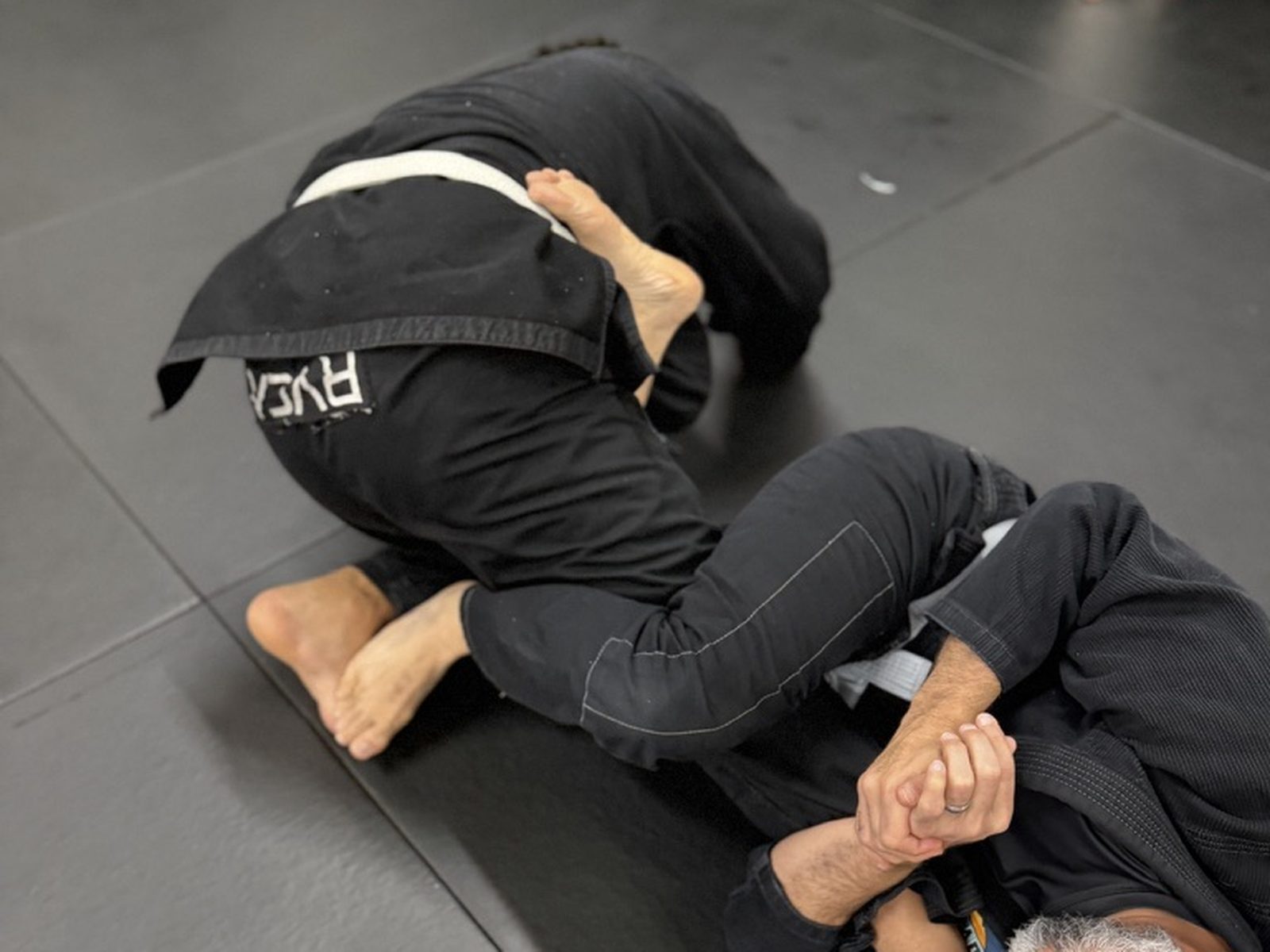
How promotions work
Stripes come between belts. White, blue, purple and brown are each split into four stripes, also called degrees. A stripe is a strip of tape on the black bar of your belt, and it marks progress inside the belt you already have. Gyms award stripes in their own way, and some don't use them at all. Black belt has its own degrees instead.
Your instructor makes the call. How long it takes from white to black is up to your instructor. In most gyms there's no written test. Coaches watch how you move in drilling and rolling, how well you know the basics, how you treat your partners and how steady you show up. The IBJJF minimums are the rules for its competitions and registered black belts, and many gyms move people slower than that. Whatever the belt, tap early to everyone on the mat, white belts included.
Things to look out for
Expecting a set timeline for blue belt
You read a number online and circle a date on the calendar. When the date passes, you feel behind and start wondering if you're doing it wrong.
The fix: There's no minimum time at white belt, so there's no set date. Your timeline is the only one that counts. Keep showing up and keep learning.
Mixing up stripes and belts
You hear someone has "two stripes" and think they're two belts ahead of you. Or you think every stripe means a new test.
The fix: Stripes are steps inside a belt. White, blue, purple and brown each have four. The belt color is the rank, and the stripes show progress inside it.
Comparing your pace to someone else's
The person who started the same week as you gets a stripe first, and it eats at you. People train different amounts, come in with different sports, and learn at different speeds.
The fix: You're only trying to beat the person you were last month. Look back at what you couldn't do a month ago, and measure yourself against that.
Chasing the belt instead of the skill
You count classes, ask about your next stripe and roll to look good in front of the coach. Coaches notice, and you learn less because you're playing it safe instead of trying new things.
The fix: Pick one thing to get better at each month, like escaping side control or keeping your guard. Get better at the basics and the belts follow.
Training in bursts
You come four times one week, then disappear for three. Each time back you're relearning the same moves, so it feels like you're not moving forward.
The fix: Pick classes you can keep every week, even if it's only one or two. Steady weeks add up faster than big weeks with long gaps between them.
Frequently Asked Questions
What is the order of belts in BJJ?+
White, blue, purple, brown, then black. Each belt below black has four stripes. Kids under 16 use their own belt colors under the IBJJF system, grey, yellow, orange and green, and move to adult belts at 16.
How long does it take to get a blue belt in BJJ?+
There's no IBJJF minimum time at white belt, so your instructor decides. It depends on how often you train, how steady you are and how you learn. The person who shows up steady for two years usually ends up a lot further along than the person who goes hard for two weeks and quits.
How long does it take to get a black belt in jiu jitsu?+
Your instructor makes that call. The IBJJF minimum times from blue to black add up to 4.5 years, on top of however long you spend at white. For most people it takes a lot longer than the minimums. Many people take one to three years to reach blue and ten years or more to reach black.
How many stripes are on a BJJ belt?+
Four on white, blue, purple and brown. They're strips of tape on the black bar of the belt. Black belt is split into 6 degrees.
Is there a test to get a new belt in BJJ?+
In most gyms, no. Your instructor watches how you drill and roll over months of classes and decides when you're ready. That's why steady training matters more than any single day on the mat.
Are You Ready?