What Is Rolling
Brazilian Jiu Jitsu | Starting Out
What Is Rolling in Jiu Jitsu
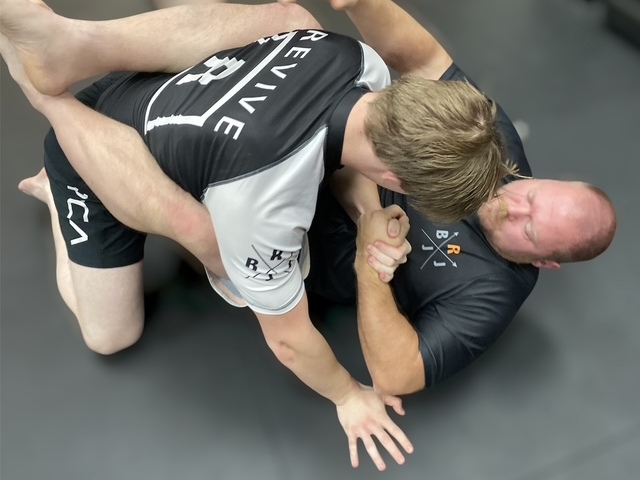
Rolling is live practice in jiu jitsu, where two partners try their moves on each other for real while the other one defends. It's the ground version of sparring, with no strikes. Good rolling is controlled, done to learn, and both people tap early and let go the moment the other one taps.
How rolling works
- 01
Two partners, real resistance
In drilling your partner lets you do the move. In rolling they don't, so you find out what actually works when someone is fighting back. The pace is kept below all out so everyone can keep training round after round.
- 02
How a round starts
Partners shake hands or fist bump. Many rounds start on the knees, and some start standing or from a spot the coach sets. If a round starts standing, ask your coach whether takedowns are in, and if you haven't learned them yet, sit down to your guard. A round runs on a timer, often around five or six minutes, and you usually change partners when it ends. In your first rounds, keep it simple: protect your neck, keep your elbows in, use your frames and try to keep your partner in front of your legs. Watch the space around you: if you drift near the wall or another pair, stop, and move back to open mat. If you're not sure what to do, ask your partner before you start.
- 03
Rounds from a set spot
A lot of rounds start from one position, like one person in side control or mount. The round stops when someone escapes, passes or taps, then you reset and go again. It lets you work one problem over and over, and it's an easier way into live rounds for a new student.
- 04
The tap ends it
When your partner taps, you let go right away and reset. When you're caught, tap twice on your partner or the mat, tap with your foot, or say "tap" out loud. Nobody wins or loses a practice round, so tapping just means you start again.
- 05
Drilling comes first
You drill a move slowly with a partner long before you try it live. Most coaches want new students to know a few basic positions and escapes first, because without them a beginner just muscles everything. Sparring is optional, and your coach will tell you when you're ready.
How to roll well
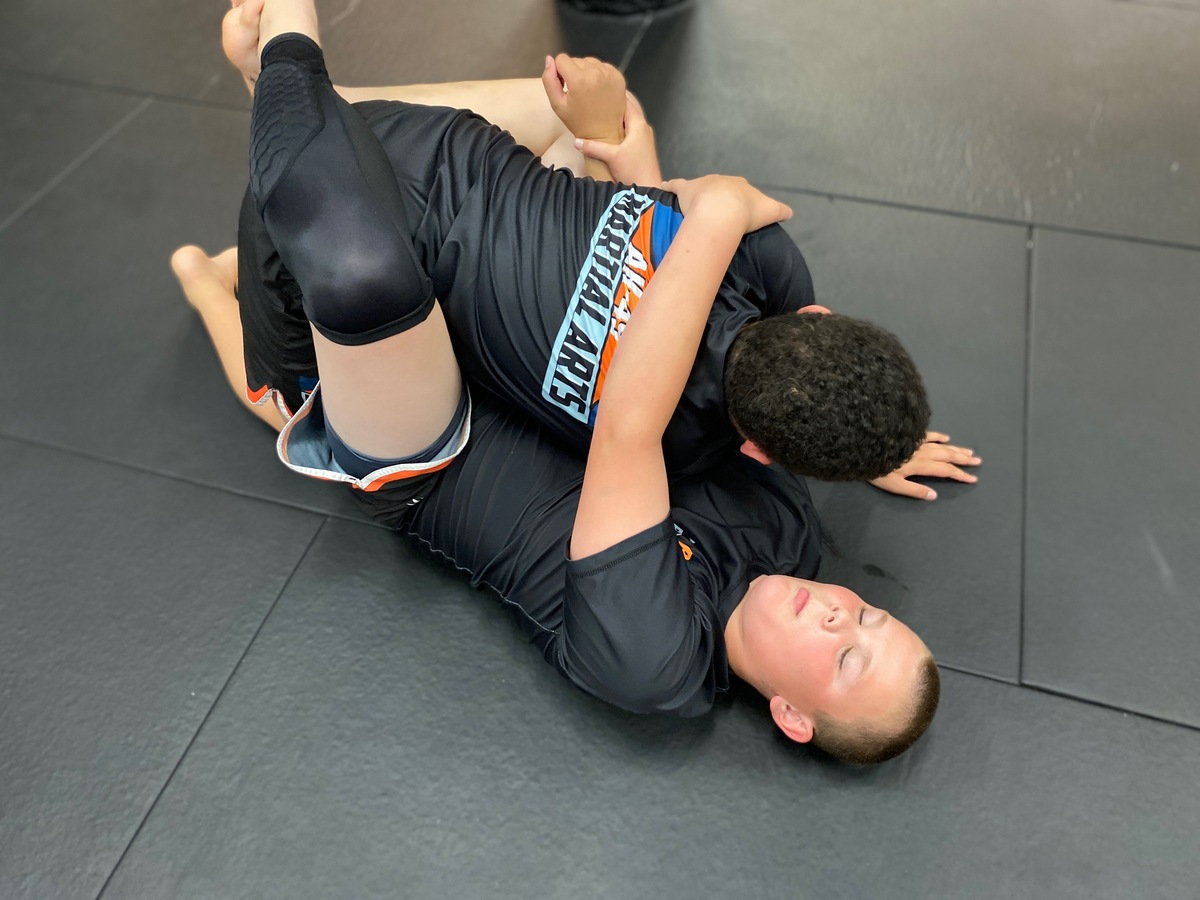
Pick one thing to work on. Go into a round with one goal, like escaping side control or keeping your guard. It's fine to tell your partner what you're working on, and a lot of people will start you in that spot. You'll get more out of five rounds with one goal than five rounds of just surviving.
Match your partner's pace. Try not to roll harder than the person in front of you. If they're going light, you go light, and put every submission on slowly so they have time to tap. Stay loose and keep breathing, and save the questions for after the round. The things that hurt people most in a beginner's round are slams, cranking a neck and twisting a knee. Leave those alone until your coach teaches them and says they're allowed.
Things to look out for
Treating every roll like a competition
You fight to win every round and refuse to try anything new in case it fails. You stop learning, and you wear yourself and your partner out.
The fix: Treat the round as practice for what you've been drilling. Getting caught while trying a new move is how you learn it.
Refusing to tap
You hang on in a choke or a joint lock to tough it out. A joint can go from fine to hurt in a second, and your partner doesn't know how much pressure you can take.
The fix: Tap as soon as you know you can't get out, before it hurts, and tap any time you feel panic or can't breathe. Chokes can come on fast, so tap early on those. If your hands are trapped, tap with your foot or say "tap" out loud. Tap clearly so your partner feels it or hears it.
Cranking submissions
You rip a submission on fast and hard. Your partner has no time to tap, and that's how people get hurt.
The fix: Put every submission on slowly and give your partner time to tap. If they tap, let go right away.
Rolling harder than your partner
Your partner is going light and you go all out. Rounds turn into fights, and people stop wanting to train with you.
The fix: Match their pace or go a little slower. Pay attention when someone smaller, older or newer is across from you.
Exploding with no plan
You get pinned and start bucking and thrashing as hard as you can. You burn out in a minute and end up in a worse spot.
The fix: Stay calm first, then work step by step: protect your neck and arms, build frames, and move your hips. Small moves work better than big panicked ones.
Holding your breath
You tense up under pressure and stop breathing. You tire fast, panic sooner and make bad choices.
The fix: Keep your breathing slow and steady any time you feel weight on you, and relax anything that doesn't need to be tight.
Getting angry after a tap
You get caught and come back in the next round trying to get even. It speeds everything up and makes the room less safe.
The fix: Reset, ask your partner how they caught you, and use it. Getting tapped in practice is part of learning.
Frequently Asked Questions
What does rolling mean in BJJ?+
Rolling is live practice where two partners try their techniques against real resistance on the ground, with no strikes. Both people try to get a better position or a submission while the other defends. The round ends on a tap or when the timer runs out.
Is rolling the same as sparring?+
It's the jiu jitsu version of sparring. There are no punches or kicks, and most rounds start on the knees or from a set position. The pace is kept below all out so people can train safely for many rounds.
Do I have to roll as a beginner?+
No. Sparring is optional, so you can sit out live rounds until you're ready. Most coaches want you to learn a few positions and escapes first anyway. When you start, rounds from a set position are an easier way in than full rolling.
How do you roll safely in jiu jitsu?+
Tap early, let go the moment your partner taps, and put submissions on slowly. Match your partner's pace and don't roll harder than they are. Tell your partner if you're new or if something is hurt before you start. Stop the round for any injury or if you hit your head, and tell the coach. Stay off the mat with a rash, a sore or anything that looks like ringworm until it's been checked and cleared.
Who should a beginner roll with?+
Your coach will usually pair you with someone patient. Upper belts are often good first partners, because they control the pace and have nothing to prove. Ask questions after the round, and they'll usually show you what happened.
Are You Ready?