Do I Have to Compete
Brazilian Jiu Jitsu | Questions
Do I Have to Compete in BJJ
No. Competing in Brazilian Jiu Jitsu is a choice, and plenty of people train for years and earn their belts without ever entering a tournament. Under IBJJF rules, belts come from your instructor's decision and minimum times, and at AK-49 Martial Arts even sparring is optional.
How belts work
- 01
Your instructor decides
Under IBJJF rules, the time from white belt to black belt is up to your instructor. There's no written test in most gyms. Your coach watches how you drill and roll over months of classes, how well you know the basics, and how you treat your partners.
- 02
Minimum times
The IBJJF also sets minimum times at each adult belt, starting at blue: at least 2 years at blue, 1.5 years at purple and 1 year at brown. Those minimums are the same for people who compete and people who don't. Gyms set their own pace on top of that, and most people take longer than the minimums either way.
- 03
Tournaments are optional
Belts don't depend on medals. The IBJJF's only exceptions to its minimum times are for world champions and for people who came up through the kids and juvenile belts. Everyone else moves up on the same terms, tournament or not.
- 04
Rolling is where you test yourself
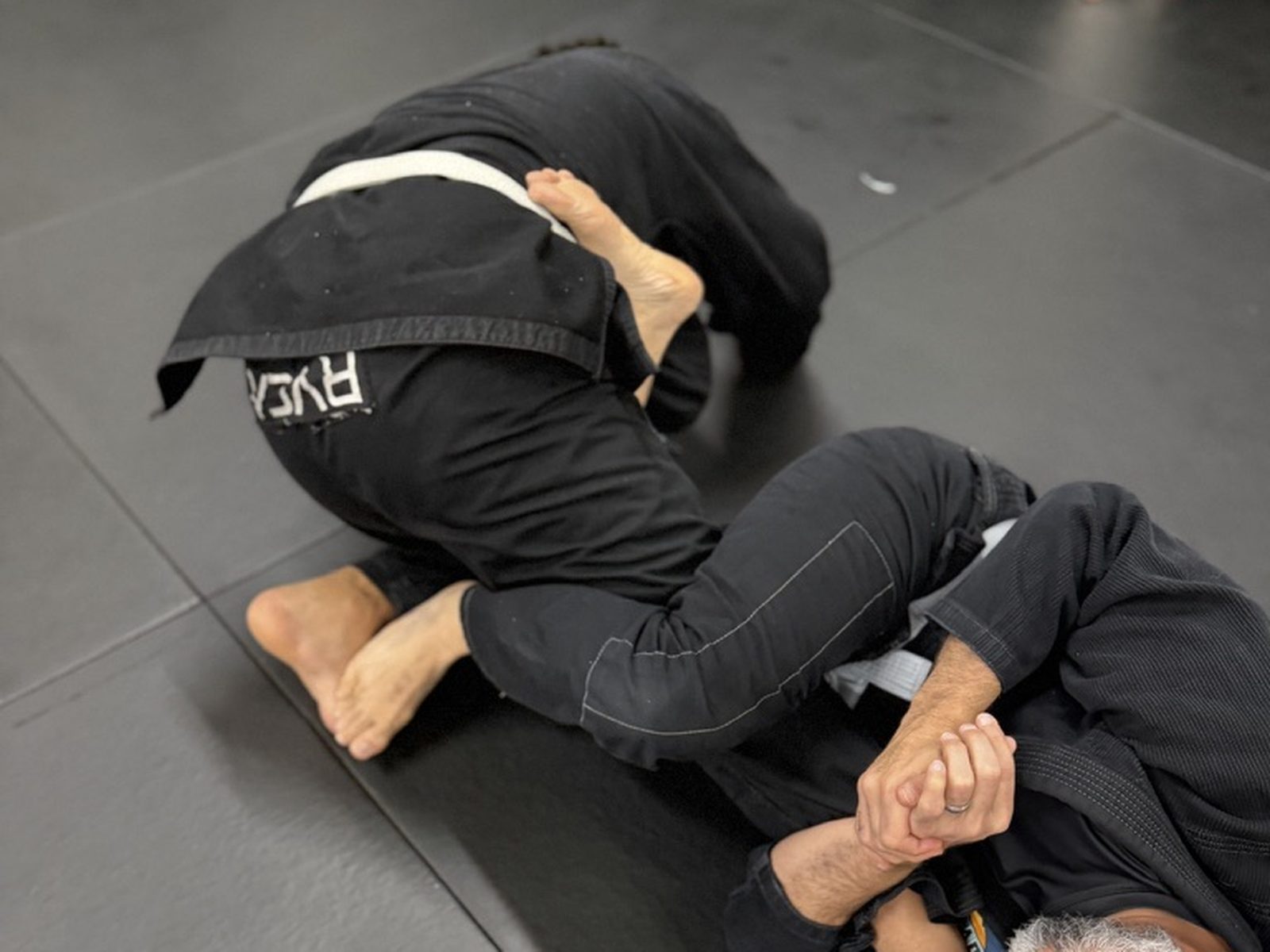
Rolling, the jiu jitsu word for sparring, means trying your moves on a partner who is resisting. You can ask your partner to go lighter before you start, and you tap with your hand or your voice when you're caught. It teaches timing, how to stay calm under pressure, and which moves you can actually pull off on someone resisting, all without stepping into a tournament. At AK-49 Martial Arts you start rolling when you're ready, and you can ask your partner to go lighter any time.

Training without competing
Train for your own reasons. People train jiu jitsu to get in shape, to learn to protect themselves, to blow off steam after work, or because they like the people. All of those are good reasons, and none of them need a tournament. Decide what you want out of it and tell your coach, so they know what to help you with. Our motto is Get Better. Get Tired. Have Fun.
Get better one class at a time. You learn one position, drill it with a partner and repeat it until it feels normal. Go into each class with one thing you want to work on, like keeping your guard or getting out from under side control. Jot it down after class with the one detail that made it work. That steady habit is what moves you forward, with or without a tournament.
Things to look out for
Thinking belts need medals
You hear about someone's tournament wins and figure that's how belts work. You start to think you'll be stuck at white belt forever because you don't want to compete.
The fix: Under IBJJF rules your instructor decides, along with minimum times. Show up, learn the basics well and treat your partners right. That's what coaches watch.
Treating every round like a tournament
You go all out every round to win it, even though nothing is on the line. You tire out in a minute, you learn nothing new, and going hard with no control is how partners get hurt.
The fix: Use your rounds to learn. Pick one thing from class and try it, and if it doesn't work, that tells you something. Apply submissions slowly, let go the moment your partner taps and tap early yourself. Rolling is where people get hurt when they go too hard, so control matters most there.
Feeling like you don't belong
Some people in the room compete and talk about it, and you start to feel like a second class student. That feeling makes it easy to skip class or quit.
The fix: People who don't compete are just as much a part of the gym as the people who do. Train for your reasons. Your coach wants you there either way.
Comparing your pace to a competitor's
A teammate who competes a lot moves up faster, and you feel behind. They may train more often and get tested under more pressure, so the comparison isn't fair to you.
The fix: Measure yourself against what you could do a month ago. Look back at one thing that used to stop you, like getting stuck under mount, and notice if it still does.
Signing up just to prove something
You enter a tournament because someone dared you or you want to show you belong, before you've learned to stay safe on the bottom. It turns into a stressful day and a bad first taste of competing.
The fix: If you get curious about competing, talk to your coach first. They'll tell you when you're ready and what to work on. It's always your call.
Drills you can practice
Drill 01
Bridge and shrimp
3 rounds of 1 minute with 1 minute rest. Alternate a bridge onto one shoulder with a shrimp to that side, then switch. These are the escape movements you'll use in every round, competing or not.
Drill 02
One goal notes
After every class for a month, write down one thing you worked on and the one detail that made it work. Before the next class, read it and pick your goal for the day. Over a month you'll see real progress on paper.
Drill 03
Technical stand up
3 sets of 6 each side with 30 seconds rest. Sit on the floor, post one hand behind you and the opposite foot in front, lift your hips and swing the other leg back under you, then stand with your hands up. This is how you get back to your feet safely in class.
Frequently Asked Questions
Do you have to compete in BJJ to get a black belt?+
No. Under IBJJF rules your instructor decides, along with minimum times at each belt. Many black belts never competed, though some gyms expect at least a little competition, so ask your coach how yours works. Coaches watch how you roll, how well you know the basics and how steady you show up.
Can I just train BJJ for fitness?+
Yes. Jiu jitsu works your whole body, and it rarely feels like a workout while you're doing it because you're busy solving the problem in front of you. You don't need to be in shape to start. A few weeks of training is what gets you in better shape.
Do I have to spar?+
No. At AK-49 Martial Arts, sparring is completely optional and nobody is pushed. Most students end up wanting to try it once they know a few positions. When you do, you can ask your partner to go lighter.
Is it worth competing at least once?+
Some people love it. A tournament puts you under more pressure than class, and that shows you what holds up when you're nervous. It's still up to you. A good sign you might be ready is when you can hold position and escape the main pins against people your size in class. Many tournaments have novice or beginner divisions, and some gyms run in house rolling days, which are a smaller step. Talk to your coach about when you're ready.
Do kids have to compete in BJJ?+
No. Kids move up their belts based on what they learn and how they train, and competing is a choice for them too. If your child wants to try a tournament someday, ask the coach first. Kids BJJ at AK-49 Martial Arts is for ages 6 and up.
Are You Ready?