
Training BJJ and Kickboxing Together
Brazilian Jiu Jitsu | Questions
Training BJJ and Kickboxing Together
Training both covers two big pieces of fighting: kickboxing for striking at a distance and Brazilian Jiu Jitsu for control on the ground, which is what MMA (mixed martial arts) is built from. The hard part is the space in between, closing the distance to a clinch or takedown, and that's where Muay Thai's clinch, wrestling and No Gi come in. For a beginner it works best with one art as your main one at first and your hard days spread apart.
How the pieces fit
- 01
Kickboxing: the standing half
Kickboxing teaches you to stand in a balanced stance, keep your hands up and your elbows in, and punch and kick without falling over. You learn footwork and how to see strikes coming. Those habits carry into everything else you train.
- 02
BJJ: the ground half
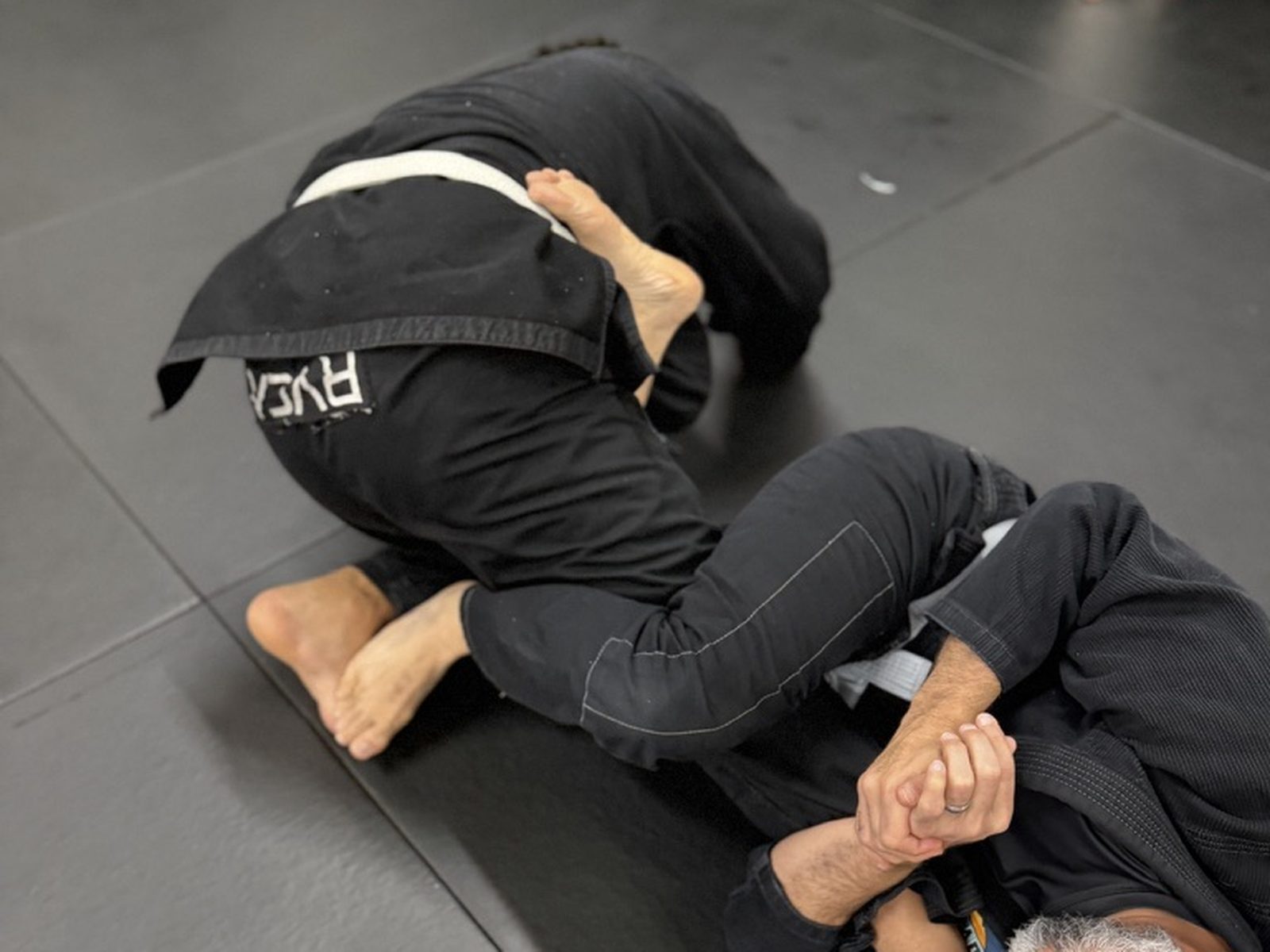
Brazilian Jiu Jitsu teaches you to hold a good position, get out of a bad one, and finish with a joint lock or a choke. You learn to stay calm with someone heavy on top of you. None of it depends on hitting harder than the other person.
- 03
The gap in between
Between punching range and the ground is the clinch, where you're tied up standing, and the takedown. Muay Thai's clinch is a natural bridge into grappling. Our No Gi classes are a hybrid of Brazilian Jiu Jitsu and wrestling, which is where takedowns live.
- 04
Know your range
When your extended hand can just touch their glove, you're at the edge of punching range. A step back usually takes you out of their hands, though kicks still reach farther, and a step in brings you close to the clinch. Feeling that line helps you know when you're about to get hit and when you can grab hold. Many strikers like to keep it at range, Muay Thai fighters do a lot of work in the clinch, and grapplers usually want to get to it.
- 05
Strikes change the ground
Once punches are allowed on the ground, the bottom player's first job is to not get hit. Stay tight to them with your hands inside, or keep them far away with a foot on their hip, and try not to let them sit in the middle with room to punch. Strikes on the ground get trained only in MMA work with a coach watching, gloves on and partners going light. Punches from the top also force reactions that open up submissions.
Why train both
A fight doesn't stay in one place. A real fight can start standing and end up on the ground. A kick turns into a clinch, the clinch turns into a takedown, and the takedown turns into a fight on the mat. Training some of both means you aren't lost wherever it ends up.
Each one helps the other. Kickboxing gives you balance, footwork and the habit of keeping your hands up, and that makes you harder to take down. Jiu jitsu gets you used to close contact and pressure, so a clinch or a scramble doesn't make you panic.
Things to look out for
Going all out in both from week one
You sign up for everything and go hard every day. Within a few weeks you're beat up, sore all the time and dreading class.
The fix: Pick one art as your main one for the first couple of months and take the other at an easier, technique focused pace. Add more once your body catches up.
Stacking hard rounds on the same day
Hard sparring and hard rolling back to back drains you. Tired people get sloppy, and both classes suffer for it.
The fix: Keep your hardest days apart. If one class is going to be intense, make the other one light drilling.
Skipping rest
You treat rest days as lost days and train through being run down. Your shins, joints and energy never get a chance to recover.
The fix: Rest days are part of training. Sleep, drink water and do some light walking or stretching on your off days. In striking sparring, wear a mouthguard every time, and men wear a cup. If you take a knock to the head in either class, stop for the day, tell your coach and don't spar or roll until you're cleared.
Trading punches as a grappler
If you're the grappler, standing in range and swapping punches plays to the striker. You take shots you didn't need to take.
The fix: Throw a strike to make them cover up, then step in behind it with your hands up and your head tucked, and tie up right away. Then take it where you're better. Your coach will show you safe clinch entries before you try them live.
Pausing after the clinch
You get the clinch and then stop to think. That gives them time to put their hips back and break away.
The fix: Keep working the moment you get there, toward the takedown or better control.
Lying flat with room between you
On the bottom with strikes allowed, a gap between you and them is where the punches land. Flat on your back you can't move or get up.
The fix: Stay tight with your hands inside, or push them far away with your feet, and work to get back up.
Frequently Asked Questions
Can I train BJJ and kickboxing at the same gym?+
Yes. AK-49 Martial Arts teaches Kickboxing, Muay Thai, Brazilian Jiu Jitsu and No Gi under one roof. You can train one side or both. Your first class is free, so try each one and see how they fit.
What's the gap between kickboxing and BJJ?+
Closing the distance to a clinch or takedown. Kickboxing keeps you striking at range and BJJ starts once you're on the ground. Muay Thai's clinch, wrestling and our No Gi classes fill that space.
Is BJJ plus kickboxing the same as MMA?+
They're two of the building blocks. MMA (mixed martial arts) is built from Kickboxing, Muay Thai, Wrestling, Brazilian Jiu Jitsu and No Gi. Training both is a big part of what an MMA fighter does.
Should I start with BJJ or kickboxing?+
Either works. Start with the one you're most curious about, because that's the one you'll keep showing up for. Once you're settled, add the other at an easier pace.
How should a beginner split the week?+
Make one art your main one and keep the other lighter for the first couple of months. Spread your hard days apart instead of doing hard sparring and hard rolling on the same day. Take real rest days, and add more training once your body has caught up.
Are You Ready?