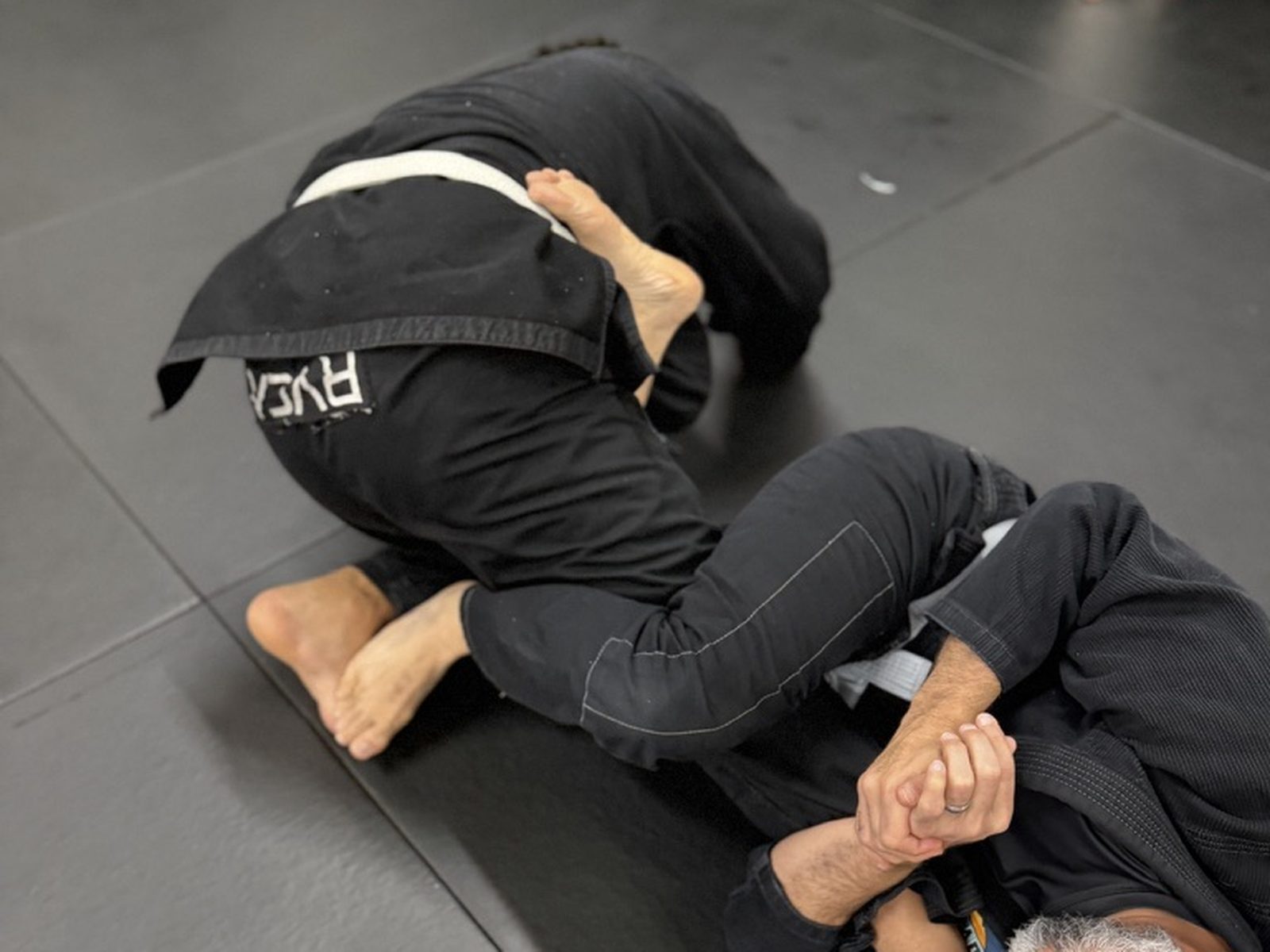
How Often Should a Beginner Train
Brazilian Jiu Jitsu | Starting Out
How Often Should a BJJ Beginner Train
For most beginners, two or three jiu jitsu classes a week is a good place to start, with a rest day between them. Once a week still counts, so pick classes you can keep and add one when your body and your schedule are ready.
How to build your week
- 01
Pick classes you can keep
Check the schedule and pick the classes you can actually keep, around work, kids and everything else. A plan you can stick to for months beats a big plan you drop in two weeks. Put the classes on your calendar like any other appointment.
- 02
Two or three a week to start
Two or three classes a week is enough to remember what you learned last time, with room for your body to recover in between. Try to leave a day off between classes at first. Your grip, neck and core are doing new work, and the rest day is when they catch up.
- 03
Once a week still counts
You'll get better, just more slowly, because a week is a long time to hold on to a new move. Pick one thing to work on each class and go over it in your head or on the floor a couple of times before the next one. If once a week is what your life allows right now, start there.
- 04
Add a class when you're ready
Once two or three classes a week feel normal and you're not dragging into class sore, you can add one. Add one at a time and see how your body handles it for a few weeks. Plenty of people settle around three or four a week once they've been training a while. More classes only help if you're fresh enough to pay attention in them.
- 05
Drill at home on off days
Solo movement drills turn days you can't get to the gym into days of progress. Ten or fifteen minutes of bridges and shrimps is enough. Keep it easy on rest days so you show up fresh for class.

Why steady wins
Some beats none. Health guidelines say adults should get about 150 minutes of moderate activity a week, and that some activity is better than none. One class a week is a lot better than waiting for the perfect schedule. It keeps your timing and your conditioning from slipping, so adding classes later is easier. Start with what you can do now.
Steady beats a big start. The person who shows up steady for two years usually ends up a lot further along than the person who goes hard for two weeks and quits. Two classes where you pay attention teach you more than five where you're too tired to think. Sleep, water and food are part of training too, because that's when your body recovers. A pace you can keep is the right pace.
Things to look out for
Going every day in week one
You're fired up, so you come to every class the first week. By week two your fingers are stiff, your neck is sore and you dread going, and a lot of people quit right there.
The fix: Build the habit first. Start with two or three classes a week, and add more once your body has gotten used to the work.
Thinking once a week is pointless
You can only make one class a week, so you figure there's no point and don't sign up. Months go by and you're still at zero.
The fix: Once a week still moves you forward. Start there, pick one thing to work on each class, and add a class when you can.
Rolling while you're worn out
You come in exhausted and go through the motions. You're too tired to learn anything, you start muscling your partners, and tired rounds are when people get hurt.
The fix: Show up to fewer classes with your head in them. If you're wiped out, drill and sit out the live rounds, or take the day off.
Ignoring soreness that won't go away
Soreness that sticks around from one class to the next, stiff fingers or achy knees every morning, means you're doing more than you're recovering from. Keep pushing and something small turns into time off the mat.
The fix: Normal soreness fades in a day or two. Sharp pain, swelling, a joint that feels loose, or pain that keeps getting worse is an injury, so get it checked before you roll again. For plain soreness, take a few days completely off, then come back with fewer classes for a week or two, and tell your coach if something hurts so they can help you work around it.
Skimping on sleep
You stay up late and train early on short sleep. You feel slow in class, you forget what you learned, and your body never gets a chance to catch up.
The fix: Treat sleep like part of training. Drink water after class, eat enough, and get to bed at a decent hour on training days. If you're sick, or you have a rash or sore you can't explain, stay home until it's better or a doctor clears it, so you don't pass it to your partners.
Drilling at home without thinking
You shrimp up and down the floor while your mind is somewhere else. Plenty of people can shrimp all day but can't shrimp out of mount.
The fix: Picture a partner and a situation while you move. Every rep, know who's on top of you and where you're trying to go.
Drills you can do at home
Drill 01
Bridge
Lie on your back with your feet planted near your butt. Look the way you're bridging, drive off your toes and turn up onto the top of one shoulder, never onto your neck or head, then come down and go the other way. Do 3 rounds of 1 minute, alternating sides, with 1 minute rest.
Drill 02
Shrimp
Lie on your side, plant your top foot, push and slide your hips away, keeping your elbow and knee close together. Do 3 rounds of 1 minute, switching sides every few reps, with 1 minute rest. Picture someone in side control and you making space to get your knee back in.
Drill 03
Reverse shrimp
Plant the ball of your foot and pull your hips toward it. Plant and pull, over and over, for 3 rounds of 1 minute with 1 minute rest, both sides. It changes your angle when someone gets past your legs, so picture turning to face them as you go.
Frequently Asked Questions
How many times a week should a beginner do BJJ?+
For most beginners, two or three classes a week is a good start, with a day off in between. That's enough to remember what you learned and still recover. If your schedule only allows one, start with one and add a class when you can.
Is once a week enough for jiu jitsu?+
Once a week still helps you improve, just more slowly than two or three. Go into each class with one thing to work on, and run through it at home before the next one. If that's what fits your life right now, start there.
Can I train BJJ every day?+
Some people do, but most beginners get sore and burned out fast. Your grip, neck and core need time to get used to the work. Build the habit first, and add classes once a few a week feel normal.
Can I practice jiu jitsu at home?+
Yes. Solo movement drills like the bridge, the shrimp and the reverse shrimp count as progress on days you can't get to the gym. Picture a partner while you do them. A few minutes of focused reps beats a long session with your mind somewhere else.
How do I know if I'm training too much?+
Soreness that doesn't fade between classes, stiff fingers or achy knees every morning, poor sleep, or dreading class are all signs. Take a few days off and come back with fewer classes for a week or two. If something hurts, tell your coach.
Are You Ready?