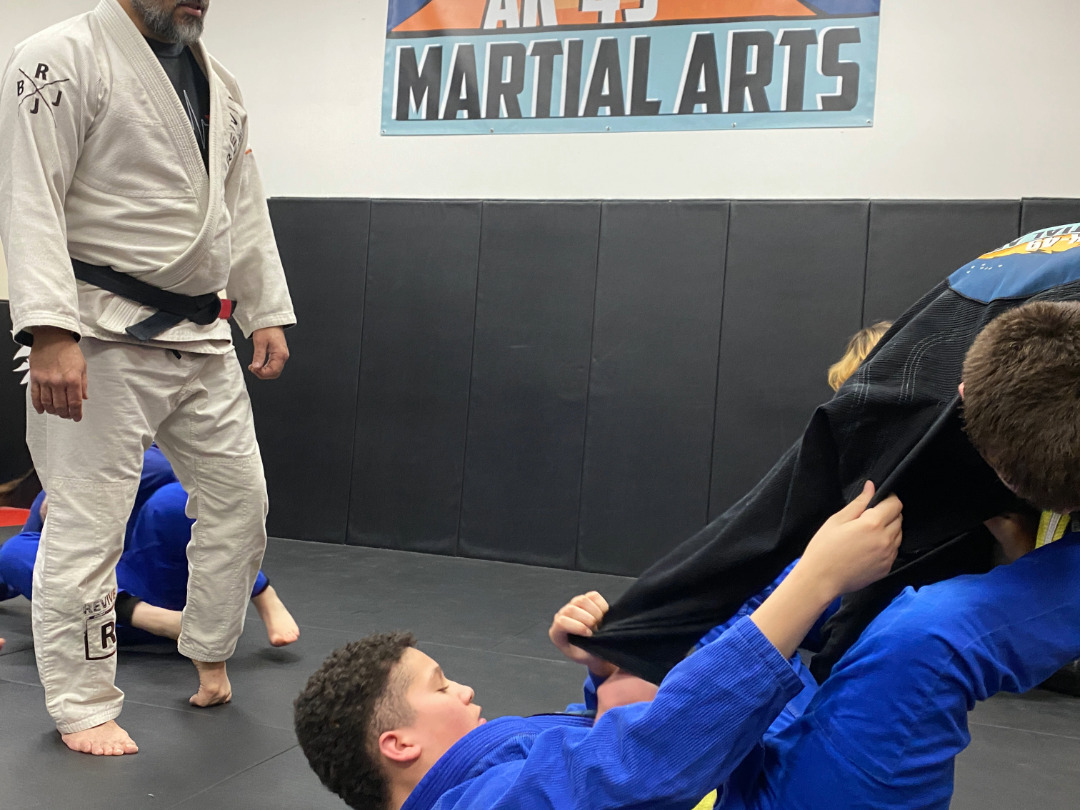
Is Kickboxing Good for Kids
For Parents | Questions
Is Kickboxing Good for Kids
For a lot of kids, yes. Kickboxing builds fitness, coordination and focus, and it gives a kid a healthy place to put their energy, as long as it's coached with care and the basics come before anything speeds up. At AK-49 Martial Arts, Kids Kickboxing is for ages 7 and up, and sparring is optional. Kids who spar wear full sparring gear, and depending on age, some kids have contact to the head at the level the coach sets.
What kids learn
- 01
How to stand and hold their hands
Kids start with a good athletic base and a guard: hands up by the cheeks, elbows in, chin tucked. It's the same start every adult gets. A kid who can hold that shape while they move has learned the most important habit in the sport.
- 02
How to make a real fist
Before kids hit anything hard, they learn to close the thumb, squeeze the fist inside the glove, keep the wrist straight in line with the forearm and land on the first two knuckles. Every punch comes from the face and goes back to the face. Kids hit at controlled power while their bodies are still growing, and getting the fist right early is what keeps their hands and wrists happy on the pads.
- 03
Pad work and footwork
Most of class is moving. Kids hit pads, move their feet without crossing them and work with a partner. Kicks are taught step by step: lift the knee, turn the standing foot, land a round kick with the shin rather than the toes, and put the foot back down in their stance. Push kicks land with the ball of the foot, toes pulled back. They leave tired in a good way, and it rarely feels like exercise to them.
- 04
Listening and remembering
A coach shows a combination, and a kid has to watch, remember it and then try it with a partner. That's a small focus workout every few minutes. Kids also get to try again when they miss, which is how they learn that practice works.
- 05
Control and respect
Kids take turns holding pads for their partner, and they learn that control matters as much as power. You look out for the person across from you. The room is positive, but the rules hold every class.
What keeps it safe
The basics come first. Kids learn how to stand, move and throw a clean punch and kick before anything speeds up. Contact comes later, and only once the basics are there. Most of a kids class is pads, footwork and drills, with coaches watching. Gloves and pads are provided, so your child doesn't need to buy gear to start.
Careful pairing, optional sparring. A kid isn't put in with someone much bigger and left to figure it out. New kids work with patient partners. Sparring is optional, and nobody is asked to do more than they're ready for. If a child takes a bump to the head, they stop for the day and the coach tells you. They don't go back to contact until any symptoms are gone, and a headache that gets worse, vomiting, confusion or unusual sleepiness means see a doctor right away.
What parents should know
Expecting overnight change
Parents sometimes hope a few classes will fix focus, confidence or fitness. When it doesn't happen in two weeks, the kid gets pulled out right before it starts working.
The fix: Give it a few months of steady classes. Fitness, focus and confidence build a little every week, and showing up is most of the work.
Expecting medical results
Some parents look at kickboxing for a kid with ADHD or big feelings and hope it works like a treatment. Every kid is different, and no class can promise that.
The fix: Think of class as structure and a lot of movement, with clear rules and short instructions. If you have questions about ADHD, anger or what's right for your child, talk with your child's doctor.
Waiting until your kid is in shape
Some parents think their child should get fit or more coordinated before starting. The kid waits, and the thing that would have helped never starts.
The fix: Bring them in as they are. Your child doesn't need experience or to be in shape already, because class is what builds both.
Rushing into sparring
A kid who spars before they can hold a guard and control their punches has a bad time and often quits. Hard contact too early also teaches them to flinch instead of think.
The fix: Let the coach decide when your kid is ready, and remember sparring is optional. Pads, drills and partner work come first.
Praising only the wins
If the only thing that gets noticed is beating someone or getting a new belt, a kid starts to fear mistakes. Kids who fear mistakes stop trying new things.
The fix: Notice the effort: the kick that's cleaner than last month, the round they finished tired. Good coaches do the same thing in class.
Not watching a class first
Every gym runs kids classes differently. If you sign up without seeing one, you don't know how the coaches talk to kids or how hard they push.
The fix: Come watch, or bring your kid for the free first class and stay. Look for kids who are moving, engaged and having fun, and coaches you'd be comfortable leaving your child with.
Frequently Asked Questions
What age can kids start kickboxing?+
Kids Kickboxing at AK-49 Martial Arts is for ages 7 and up. By seven, most kids can listen to a coach, follow a partner drill and stay with it for a whole class. If your child is younger and wants to grapple, Kids BJJ starts at 6.
Is kickboxing safe for kids?+
What keeps it safe is how it's coached. Kids learn the basics before contact, coaches pair them carefully by size and experience, and coaches watch the whole room. Sparring is optional. Like any sport there are bumps and bruises, and a coach who stops things early when something looks off is what you want to see.
Will kickboxing make my child more aggressive?+
We can't promise how any one child turns out. What class teaches is control: kids take turns holding pads, look out for their partner and hit hard only on the pads, with a coach watching. A kid who can hit hard and still do it the right way is learning something good.
Is kickboxing good exercise for kids?+
Yes. The CDC says kids 6 to 17 need 60 minutes or more of activity every day, including hard activity at least three days a week. A kickboxing class is an hour of moving, hitting pads and footwork, and most kids don't notice they're exercising.
Should my kid do kickboxing or jiu jitsu?+
Both are good, and it depends on your kid. Kickboxing is striking on your feet: punches, kicks and footwork. Jiu jitsu is grappling, where kids learn to control a partner and get to a safe position. Start with the one your child is most curious about.
Are You Ready?
Start Your Training Today
At AK-49 Martial Arts in Soldotna, Kids Kickboxing is for ages 7 and up. Coaches teach kicks, punches, footwork and pad work, and focus on coordination, listening and respect. For the first class, your child can wear a shirt and shorts, whatever is comfortable. Families come from Kenai, Sterling, Nikiski and all over the Kenai Peninsula. Your child's first class is free, so grab a free pass and bring them in.