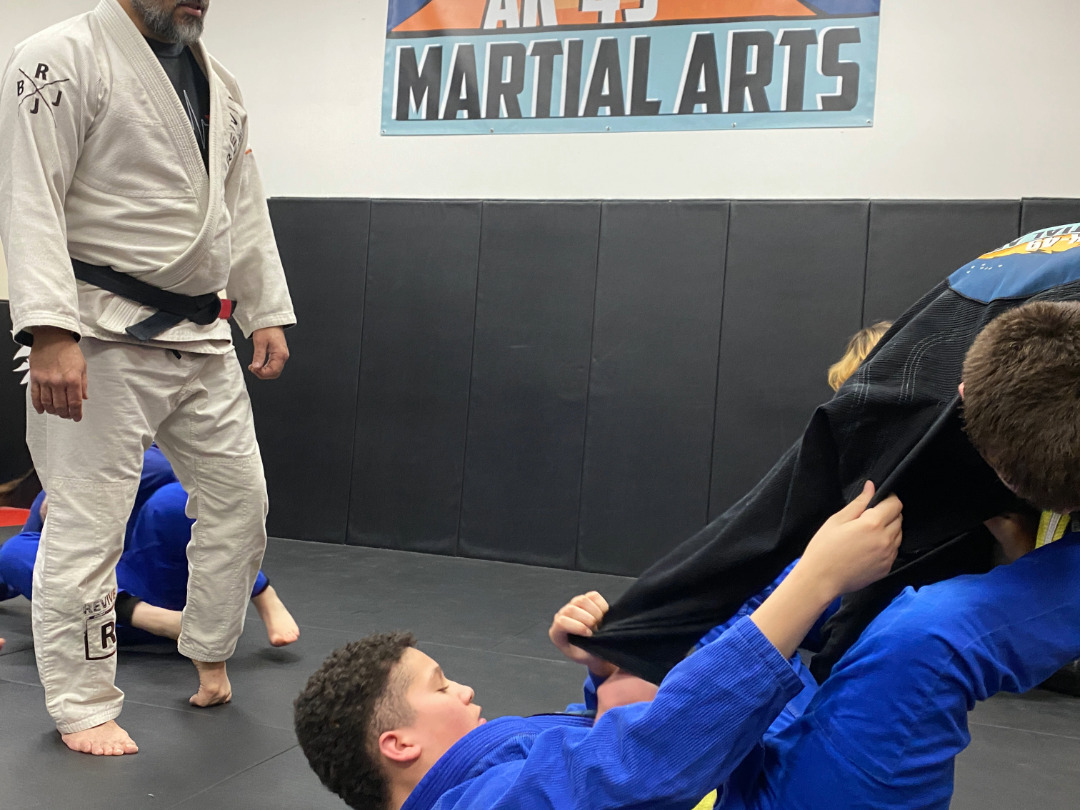
Kids BJJ Belts and Stripes
For Parents | Questions
Kids BJJ Belts and Stripes Explained
Under the IBJJF system, kids up to 15 use their own belt colors: white, then grey, yellow, orange and green, each with a white, solid and black version. There's no minimum time at any kids belt, so moving up depends on what your child learns and how steady they train. At 16, kids move into the adult belts.
Adult belts work differently. See BJJ Belts Explained.
The kids belt order
- 01
White
Every kid starts here. White belt is about the basics: how to move on the mat, how to tap, how to listen and how to be a good partner. Kids who show up steady and pay attention build everything else on this.
- 02
Grey
Grey and white, grey, then grey and black. Grey is open from age 4 under the IBJJF, so a 6 year old starting Kids BJJ can earn it. This is usually where kids show they can hold a basic position and use the moves they've drilled.
- 03
Yellow
Yellow and white, yellow, then yellow and black. Yellow is open from age 7. Kids at this stage start using what they know against a partner who is trying to stop them.
- 04
Orange
Orange and white, orange, then orange and black. Orange is open from age 10. Kids start linking moves together, so when one thing gets stopped they go to the next.
- 05
Green
Green and white, green, then green and black. Green is open from age 13 and is the last kids belt before the adult belts. Green belts often help the younger kids in class.
How stripes and ages work
No set time at any belt. The IBJJF sets no minimum time at any kids belt, so there's no date on the calendar for the next one. A belt usually comes after months or longer of steady training, and many kids spend a year or more at a color, depending on their age and how often they come. Each color also has a minimum age, so a skilled young kid still has to wait to be old enough for some belts. Coaches also look at how a kid trains: tapping and letting go right away, being a good partner and listening. Kids who come every week and pay attention move up; kids who come in bursts tend to stall.
Stripes mark the steps in between. Kids belts can feel like a long time between changes, so coaches use stripes to mark progress inside a belt. The IBJJF suggests splitting each kids belt with stripes and offers three optional schedules: monthly, three times a year and quarterly. Gyms award stripes their own way, so ask your coach what your child is working toward next. A stripe gives a kid something close enough to reach, and that keeps them coming back.
Common mix ups
Mixing up kids and adult colors
Your child gets a yellow belt and a relative asks when they'll be a blue belt. Kids colors and adult colors are two separate systems, which confuses a lot of families.
The fix: Kids keep their own colors until 16. Blue and purple are adult belts, and blue starts at 16.
Expecting a set stripe calendar
You hear another gym gives stripes every month and wonder why your child hasn't gotten one. Then you start to worry your kid is falling behind.
The fix: The IBJJF only suggests options, so there's no single stripe calendar. Ask your coach how stripes work in their class and what your child is working on.
Comparing your kid to other kids
A child who started the same month gets a stripe first, and your kid notices you noticing. Kids learn at different speeds and come in with different sports and ages.
The fix: Praise effort, listening and showing up, not the belt. Ask your child what they learned today instead of when their next stripe is.
Thinking tournaments decide belts
You figure your child needs medals to move up and push them into a tournament they're not ready for. A bad day there can make a kid want to quit.
The fix: Promotions come from what your child learns and how they train, and competing is a choice. If they want to try a tournament someday, ask the coach first.
Pushing the coach for the next belt
You ask about a promotion every week. The belt starts to feel like the point, and your child picks up on the pressure.
The fix: Let the coach make the call. Ask what your child needs to work on instead, and help them practice it at home.
Skipping weeks and expecting the same pace
Sports seasons and holidays pull your kid out for weeks at a time, then you wonder why the stripes stopped. Every break means relearning moves they almost had.
The fix: Pick a routine your family can keep, even if it's one or two classes a week. Steady weeks add up faster than big weeks with long gaps.
Frequently Asked Questions
What is the kids BJJ belt order?+
White, grey, yellow, orange and green. Each color after white has a white, solid and black version, so grey goes grey and white, grey, then grey and black. That's the IBJJF kids system, used by kids up to 15.
How long does it take to get a belt in kids BJJ?+
The IBJJF sets no minimum time at any kids belt, so it depends on your child and how steady they train. It usually takes months or longer of regular classes. Each color also has a minimum age, which can make some kids wait.
What age can kids get a yellow belt?+
Under the IBJJF, yellow belts start at age 7. Grey starts at 4, orange at 10 and green at 13. Those are minimum ages, and plenty of kids reach them later.
What do stripes on a kids BJJ belt mean?+
Stripes mark progress inside a belt, so kids have smaller steps between belt changes. The IBJJF suggests coaches use them and offers three optional schedules. Each gym awards them its own way, so ask your coach what your child needs to show for the next one.
What belt does a kid get at 16?+
At 16, kids move into the adult belts. Under IBJJF rules, grey, yellow and orange belts become blue, and a green belt may become blue or purple, at the coach's call. Gyms handle the switch in their own way, so ask your coach how they do it.
Are You Ready?
Start Your Training Today
At AK-49 Martial Arts in Soldotna, Kids BJJ is for ages 6 and up, and every kid starts at white belt. Kids learn the basics slowly and correctly before anything speeds up. Families come to us from Kenai, Sterling, Nikiski and all around the area. Your child's first class is free, so grab a free pass and bring them in.