Karate vs Kickboxing vs BJJ for Kids
For Parents | Kids
Karate vs Kickboxing vs Jiu Jitsu for Kids
Karate and kickboxing are both striking arts. Karate classes lean on line drills, forms and light partner work, and sport karate scores points for controlled techniques that stop short or barely touch, while kickboxing is trained for contact with a lot of pad work. Brazilian Jiu Jitsu is grappling with no punches or kicks, where kids learn to hold a position and control a partner.
How the three differ
- 01
Karate
Karate comes from Japan and uses punches, kicks and blocks, and there are many styles, from light point contact to full contact. A typical class runs line drills, forms called kata, which are set patterns of moves done on your own, and light or no contact partner work. In sport karate, points go to clean techniques done with control, and strikes to the head are pulled short or barely touch. Kids who like a clear routine often do well with it, and like jiu jitsu, most karate schools use colored belts to show progress.
- 02
Kickboxing
Kickboxing is built on punches, kicks and footwork, and it's trained for contact. Kids spend most of class on stance, footwork and pad work, and they take turns holding pads for a partner. Coaches teach control before anything speeds up. Kids with a lot of energy who want to hit something usually love the pads.
- 03
Brazilian Jiu Jitsu
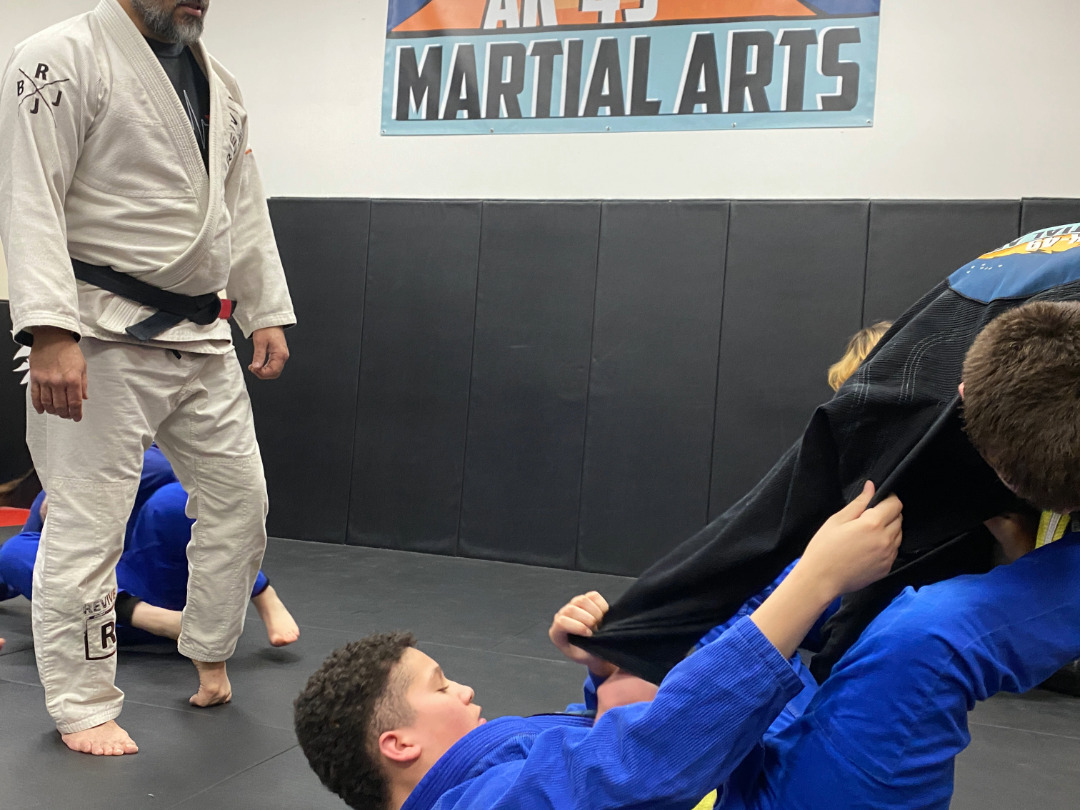
Jiu jitsu is grappling with no punches or kicks. Kids learn to get to a strong position first, then work toward a submission, and they tap to stop when they're caught. A lot of class looks closer to play than the other two, with bridging, scooting and rolling around on the mat with a partner. Technique helps a lot, so a smaller kid can learn to hold a good spot against a bigger one, though size still matters and coaches pair kids by size.
- 04
Where the contact is
In karate, partner work is usually light or no contact. In kickboxing, contact comes through the pads first. Kids Kickboxing sparring does have real contact, so it comes later, once a coach says the child is ready, and it's optional. Kids who spar wear full sparring gear, and depending on age, some kids have contact to the head at the level the coach sets. In jiu jitsu the contact is close the whole class, holding and lying on a partner, but nobody throws punches or kicks. Grappling kids need short nails, a clean uniform and a shower after class, and any rash or skin spot gets checked and cleared before they're back on the mat.
- 05
The school matters as much as the style
Two karate schools, or two jiu jitsu gyms, can feel nothing alike. Watch a class if you can and look at the coach more than the kids: are the kids moving and having fun, and does the coach correct them as well as praise them? Pediatricians say a sign of a good program is kids having fun, and a good kids class teaches the basics before anything live.
What kids do in our classes
Kids Kickboxing. Kids 7 and up learn how to stand, keep their hands up, move their feet and throw a clean punch and kick. A lot of class is pad work, and kids take turns holding pads for their partner, so they learn that control matters as much as power. Coaches drill fundamentals before anything speeds up. Sparring is optional, and nobody is pushed into it.
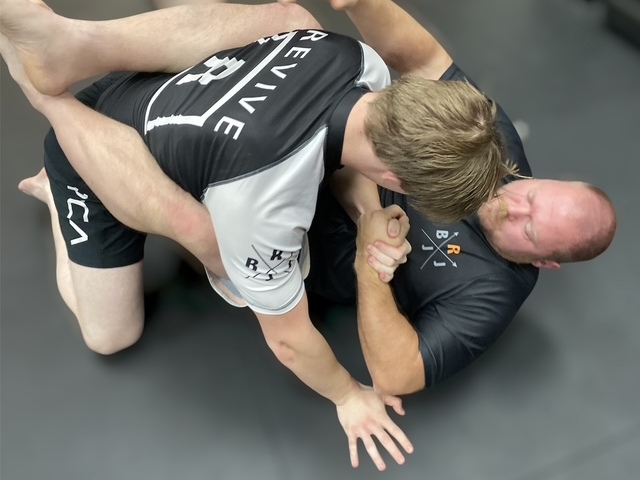
Kids BJJ. Kids 6 and up learn position before submission: get to a safe, strong spot first, then think about finishing. Chokes are taught from the beginning, so kids learn right away to tap when they're caught and to let go the moment their partner taps. Coaches pair kids carefully, so a child isn't left with someone much bigger. Kids No Gi is its own class inside the Kids BJJ program.
What parents should know
Picking by the name of the art
You choose a style because of what you've heard about it. Then the class turns out to be a poor fit because of how it's run, and your child asks to quit a few weeks in.
The fix: Watch a class before you decide, and watch the coach more than the kids. Look for a patient coach who corrects kids and keeps everyone moving. Trust what you see in the room over what you read online.
Choosing for yourself instead of your kid
You want your child to learn self defense or discipline, so they end up in the class you picked. A kid who dreads class stops trying and starts asking to stay home.
The fix: Ask your child which one looks fun, and let them try it. Kids who want to be there learn faster and keep coming back. Pediatricians say forcing a child into a sport isn't likely to bring long term benefits.
Expecting sparring right away
Some parents think a class is soft because it drills so much, or expect their kid to spar in the first week. A child who spars before they can control a strike or hold a position has a bad time and often quits.
The fix: Pediatricians say kids should learn form and skill first, then move up with a coach supervising. Look for a class that runs that way, and let the coach decide when your child is ready.
Waiting until they're in shape
You hold off until your child is fitter or more coordinated. The thing that builds fitness and coordination never starts, and months go by.
The fix: Your child doesn't have to be sporty or already in shape. Steady training builds fitness over time. Rest breaks are part of every kids class.
Thinking the first pick is forever
Parents worry that the first art they pick locks their kid in, so they keep researching instead of starting. Your child spends that time on the couch instead of on the mat.
The fix: Your kid doesn't have to be right on the first guess. At a gym that teaches both striking and grappling, a child can start in one class and try the other later. Pick the one they're most curious about and get them started.
Frequently Asked Questions
Is karate or kickboxing better for kids?+
Both can be good for kids. Karate usually has more forms and ceremony, and kickboxing has more pad work and is trained for contact. The best one is the one your child is excited to keep showing up for. If you can, let them try a class of each.
Is jiu jitsu good for kids?+
For a lot of kids, yes. Technique helps a lot, so a smaller kid can learn to hold a good position against a bigger one, though size still matters. There are no punches or kicks, and kids learn to tap early and to let go the moment their partner taps. At AK-49 Martial Arts, Kids BJJ starts at 6.
Which one is best for a shy kid?+
It depends on the kid. Some shy kids like the steady routine of a karate class. Others open up in jiu jitsu once they trust a partner, since a lot of it feels like play. Let your child try a class and see whether they're smiling by the end.
Will kickboxing make my child more aggressive?+
It's a fair worry. In class, kids hold pads for their partner, take turns and learn that control matters as much as power. Kickboxing gives a kid a time and a place to hit hard: on the pads, in class, with a coach watching. We can't promise how any one child turns out, but that's what class teaches.
Does AK-49 Martial Arts teach karate?+
No. We teach Kids Kickboxing for ages 7 and up and Kids BJJ for ages 6 and up, and every kids class works on coordination, listening and respect. If you're comparing, grab a free pass and let your child try a class. Watching your own kid on the mat tells you more than any comparison.
Are You Ready?
Start Your Training Today
AK-49 Martial Arts in Soldotna doesn't teach karate. We teach Kids Kickboxing for ages 7 and up and Kids BJJ for ages 6 and up, and every kids class works on coordination, listening and respect. Families come from Kenai, Sterling, Nikiski and all over the Kenai Peninsula. For the first class, a shirt and shorts are fine, and Kids BJJ has loaner gis. Your child's first class is free, so grab a free pass and bring them in.