Can You Train MMA Without Fighting
Mixed Martial Arts | Starting Out
Can You Train MMA Without Fighting?
Yes. Most people who train MMA (mixed martial arts) never compete, and plenty never spar hard. You learn the striking, wrestling and jiu jitsu through drills, pad work and controlled partner work, and sparring is something you can choose later, lightly, or not at all.
What training looks like
- 01
Warm up and technique
Class usually starts with a warm up, then the coach shows one or two techniques. You watch closely, then try the move slowly with a partner, taking turns. The first goal is getting the shape right, so speed and power wait until it looks clean.
- 02
Pad work
In striking, your partner holds pads and you hit them, then you switch. Holding pads is a skill too, because your job is to keep the person throwing safe. When you want to hit hard, that goes on the heavy bag, where nobody is on the other end. Wrap your hands and wear gloves for bag and pad work, keep your wrist straight behind the punch, and build up power over a few weeks instead of the first night.
- 03
Drills fast and light
Partner drills run at a speed you both agree on. Brand new students start slow, and once the move is clean it picks up to about 70 percent, quick with no power behind it. Seventy percent is a loose guide, so you and your partner set the pace together, and whoever is faster or more experienced matches the other person. If it gets too hard or too fast, say so, and a good partner eases off right away.
- 04
Grappling with control
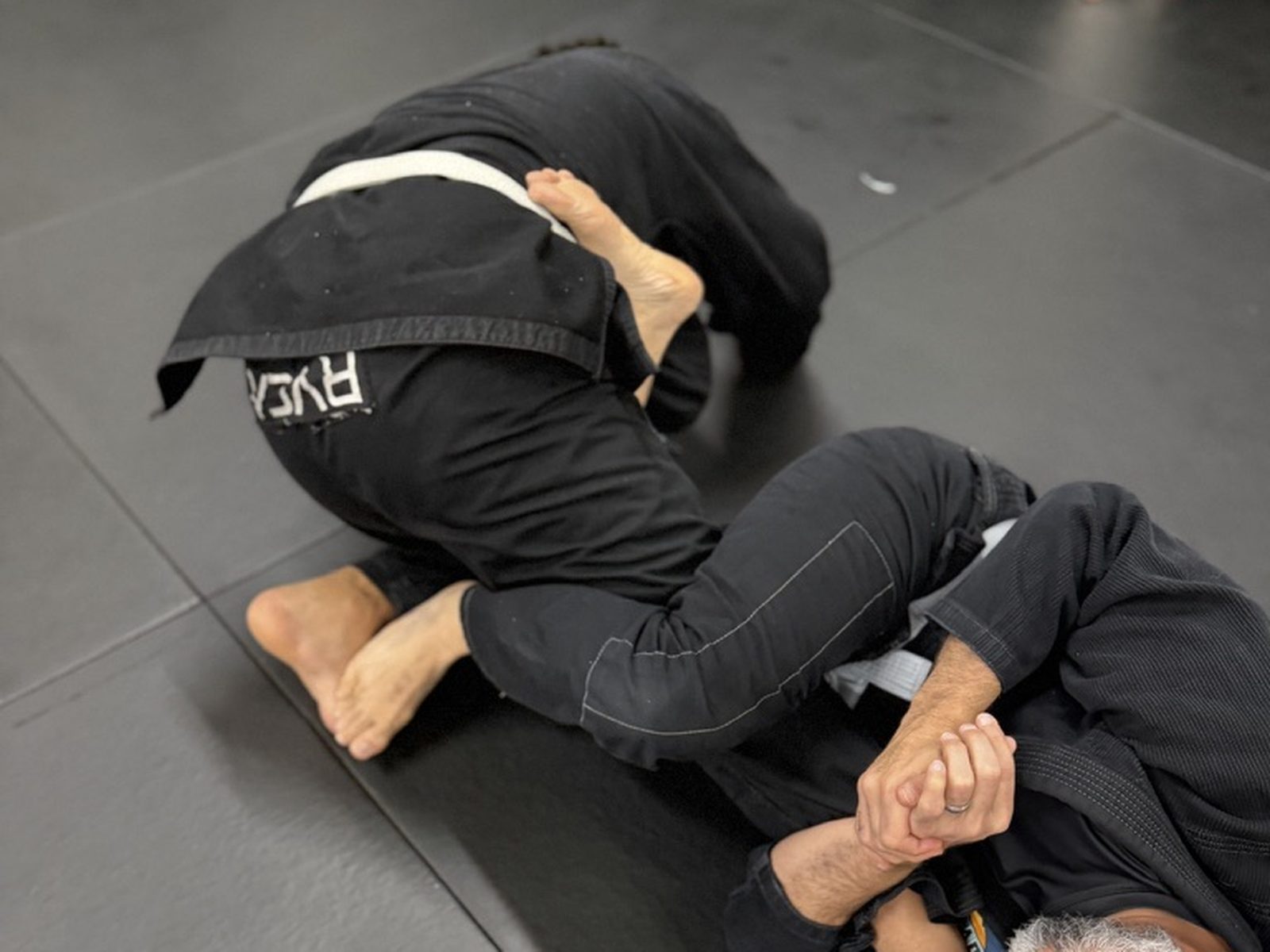
On the ground you drill escapes and positions slowly before anyone resists. When you're caught in a hold, tap early, before it hurts. Tap twice on your partner where they can feel it, or say "tap," and they let go right away. When your partner taps, you let go right away too. MMA also has the parts in between: the clinch, where you tie up standing, and takedowns and takedown defense, which are drilled the same slow and controlled way. That's where the striking and the grappling connect.
- 05
Technical sparring, if you want it
Technical sparring is the light kind, where both people try things and learn with the power turned way down. It's where your timing, your defense and your eyes get sharp, because your partner is moving and reacting like a real person. You decide if and when you try it, you wear a mouthguard and gloves when you do, plus shin guards for kicks, and men wear a cup. You can ask to keep it lighter or stop at any time.

Why people train
Fitness and a clear head. Most people come to get in shape and stay there. Striking and grappling both work your whole body, and class keeps your heart rate up for the whole hour. A lot of people also say an hour on the mat clears their head better than anything else in their week.
Skills and confidence. You learn to stand, move, keep your hands up, fall safely and get back to your feet, and you practice it against a real person. That builds a kind of confidence you can't get from watching videos. For self defense, awareness and staying out of bad situations come first. The physical skills come from training regularly over time.
Things to look out for
Thinking you have to fight to really train
You figure MMA is only for people who want to step in a cage, so you never walk in. Or you do walk in and feel like you have to prove something in every drill.
The fix: Training and fighting are two different things. Come to learn and set your own goals. Competing is a choice you can make later, or never.
Going full power in drills
You hit the pads or your partner as hard as you can on every rep. Your partner tenses up, the drill turns into a contest, and neither of you learns the move. Pretty soon people stop wanting to pair up with you.
The fix: Drill quick and light, about 70 percent, and save your power for the heavy bag. Think snap and bring it back. Matching your partner's pace is part of the skill.
Sparring cold
You jump into a live round without warming up or drilling first. Your body is stiff, you don't know how hard your partner plans to go, and the round ends up harder than either of you wanted.
The fix: Warm up and drill first so you both settle the contact level. Before the round, say out loud how hard you're going and agree if it's a technical day or a hard day.
Keeping up with the experienced people
You watch people who've trained for years move fast and hit hard, and you try to match them. You gas out, your form falls apart, and you're more likely to tweak something.
The fix: Go at your own pace and get the movement right before you add speed. Take a breather or a sip of water when you need one. The people you're watching started slow too.
Staying quiet when it's too much
Your partner goes harder than you're comfortable with and you say nothing because you don't want to look soft. You tense up, flinch and stop learning anything.
The fix: Say "lighter, please," or stop and reset. If you take a knock to the head and feel dizzy, foggy or get a headache, stop for the day and tell the coach. No contact until you're cleared, and get checked by a doctor right away if the headache gets worse, or you vomit or feel confused. Tell the coach if you're nervous about it, so they can change your partner or the pace. Everyone in the room was new once. One more thing that keeps everyone safe: wash your gear after every class, and if you notice a rash or sore on your skin, get it checked and cleared before you grapple again.
Frequently Asked Questions
Can you train MMA without sparring?+
Yes. At AK-49 Martial Arts sparring is optional, and nobody is pushed into it. You learn real technique through drills, pad work and partner work. Most students eventually want to try light sparring because it's where the skills start to come together, and you decide when that day comes.
Do I have to compete?+
No. Plenty of people train the arts behind MMA for years and never step into a fight. They come for fitness, to learn to handle themselves, or because they like it. Competing is a choice you can make later, or never.
Is sparring the same as fighting?+
No. Sparring is controlled practice with a partner, where you're both working on skills and the power is turned down. A fight is two people trying to win. In a good gym a coach watches the room and stops anything that gets too intense.
Will I get hit in my first class?+
You shouldn't be. Your first class is a warm up, technique and drilling with a partner, plus pad work in striking classes. Nobody puts a brand new student in a sparring round. Sparring comes after you've learned the basics, like keeping your guard up, moving your feet and falling safely, usually after a few months of steady training, and only when you choose it.
Can I still get good without sparring?+
You can get a lot better. Your technique, footwork, fitness and timing on the pads all improve with drilling. Reading a moving partner and staying calm under pressure come fastest from light technical sparring, so most people try it once they feel ready, at a pace both partners agree on.
Are You Ready?