The Building Blocks of MMA
Mixed Martial Arts | Starting Out
The Building Blocks of MMA
MMA (mixed martial arts) is built from striking, wrestling and ground fighting. AK-49 Martial Arts teaches it through four building blocks, Kickboxing, Muay Thai, Wrestling and Brazilian Jiu Jitsu, plus No Gi, where wrestling and jiu jitsu come together. Each one covers a different part of the fight: punching and kicking range, the clinch, takedowns and the ground.
The building blocks
- 01
Kickboxing
Kickboxing is your punches, kicks and footwork, and it's where most people learn a balanced stance, the jab, cross, hooks and round kick, and how to move with their hands up. MMA striking pulls from boxing, Muay Thai and kickboxing, so this is the base for everything you throw on your feet. You learn distance here too: how far your jab reaches and when you're close enough to get hit.
- 02
Muay Thai
Muay Thai adds knees, elbows and the clinch, the tied up range where you're chest to chest. Learning to control someone's head and arms up close takes away a lot of their room to swing. You start with posture, hand fighting and getting your arms inside theirs, slowly with a partner, and you don't yank or crank anyone's neck; if your neck feels strained, let go and reset. It also drills checking kicks, where you lift your shin to meet the kick with your toes up, and staying balanced on one leg.
- 03
Wrestling
Wrestling is takedowns, takedown defense and staying on top. It's called the first floor of MMA, because whoever decides if the fight stays standing or goes to the ground has a big edge. The basics are a low athletic stance with your head up and elbows in, changing levels with your legs, sprawling when someone shoots at you by throwing your legs back and dropping your hips toward the mat, up on the balls of your feet, with your chest heavy on their upper back and your hands blocking at their head and shoulders, and falling safely. To fall safely you tuck your chin and slap the mat with your whole forearm and palm, so you never post on a straight arm or a wrist. At AK-49 Martial Arts you learn it inside our No Gi classes.
- 04
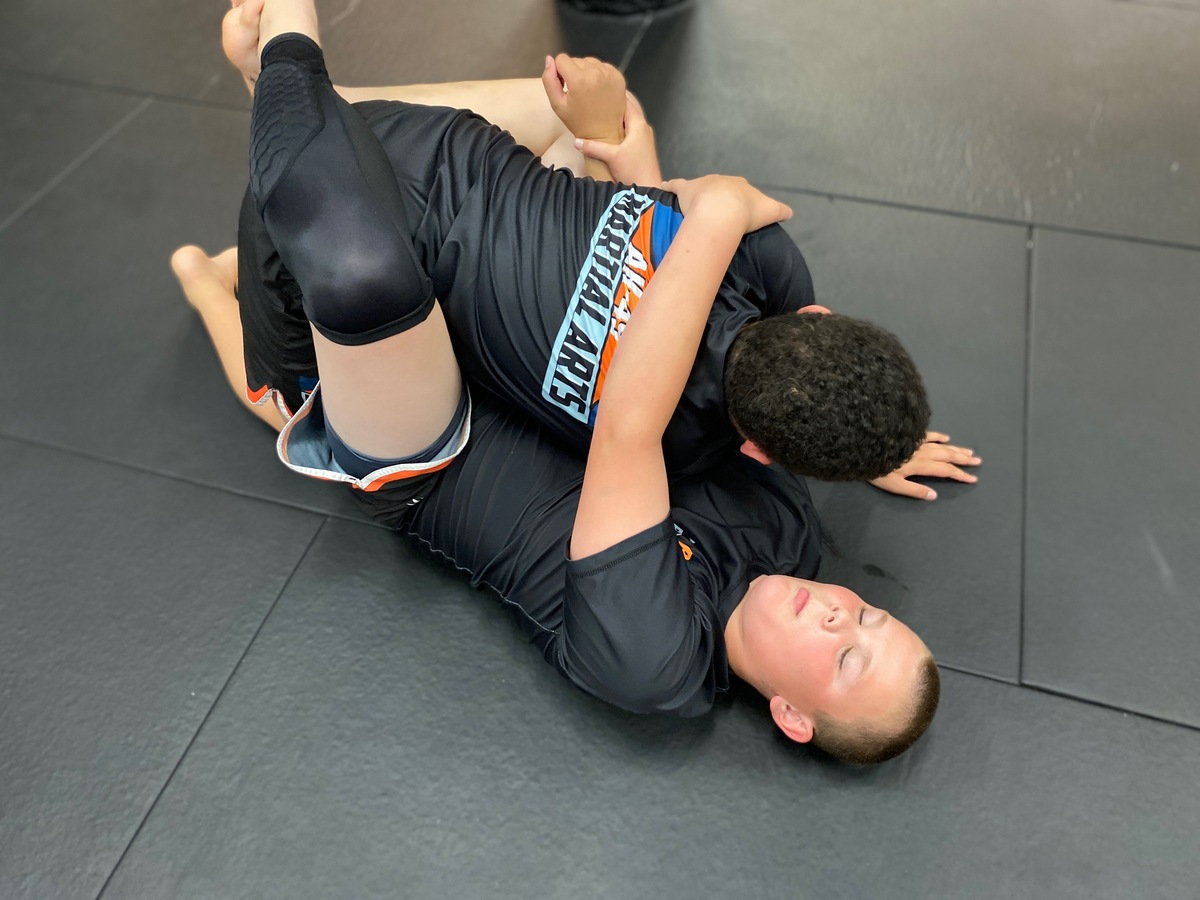
Brazilian Jiu Jitsu
Brazilian Jiu Jitsu is the ground. You learn to hold a good position, escape a bad one, and finish with a joint lock or a choke, always tapping early when you're caught and letting go the moment your partner taps. If you take a knock to the head in any class, stop for the day and tell the coach. In MMA the person on top can also punch, so you learn to cover up, control their arms and get back to your feet. Someone with good jiu jitsu doesn't panic on their back, which opens up sweeps and back takes.
- 05
No Gi
No Gi is grappling in shorts and a rash guard, with no jacket to grab. Our No Gi classes are a hybrid of Brazilian Jiu Jitsu and wrestling, so this is where the takedown and the ground work meet. You control wrists, the head and the body instead of cloth, which is the same kind of grip you use in MMA.

How they connect
Threaten both floors. Striking and wrestling work best together. If someone is busy guarding their legs, their hands drop and punches land. If they bring their hands up to block, their legs open up for a takedown. A strike also hides a takedown, because a punch makes them cover up right before you change levels.
One range flows into the next. In MMA a punch turns into a clinch, the clinch turns into a takedown, and the ground turns back into standing. Each building block covers one of those ranges, and the skill that ties them together is moving between them without stopping. In MMA a lot of this happens against the cage, so pinning someone there or circling off it becomes part of it too. You learn each piece on its own first, then start drilling the switches.
Things to look out for
Training one block and calling it MMA
You get good at punching, or good on the ground, and stop there. The first time someone takes you somewhere you never trained, you're lost.
The fix: Pick a home base, then add the other side once you feel settled. A striker needs takedown defense and a way back up off the ground, and a grappler needs to keep their hands up on the feet.
Trying to learn every block at once
You bounce between every class every week and never stay long enough for anything to stick. It feels busy, but nothing gets better.
The fix: Start with one striking class or one grappling class and show up a couple of times a week. Once the basics feel familiar, add a class from the other side.
Standing tall in your stance
A stance built only for punches and kicks sits tall, with your weight back. That works against strikes, but someone who shoots for your legs gets right underneath you.
The fix: Sit a little lower with your knees bent and your hips ready to sprawl. You should feel springy, like you could move your feet or throw your legs back at any moment.
Leaning on the high guard
In kickboxing you can cover up behind big gloves. MMA gloves are small, so punches find the gaps if you only shell up and wait.
The fix: Keep your hands up, and add footwork, parries and moving your head so you're not just absorbing shots. Use the shell to get out of trouble, then move.
Skipping takedown defense
Strikers often figure they'll keep it standing because they want to. Without a sprawl and good hips, the other person gets a lot more say in where the fight goes.
The fix: Drill your sprawl and your stance in every striking class you can. Stopping a takedown also wears the other person out, because shooting takes a lot of energy.
Frequently Asked Questions
What martial arts make up MMA?+
A striking art like Kickboxing or Muay Thai, plus wrestling and Brazilian Jiu Jitsu. Some people bring in boxing or judo as well. At AK-49 Martial Arts we teach it through Kickboxing, Muay Thai, Wrestling, Brazilian Jiu Jitsu and No Gi, and No Gi is where the wrestling and the jiu jitsu come together.
Which building block should I start with?+
Start with whatever pulls you in. If you want to learn to punch and kick, start with striking. If you like the idea of controlling someone on the mat, start with grappling. Show up a couple of times a week and add the other side once you feel settled.
Where does wrestling come in at AK-49 Martial Arts?+
Wrestling is one of the building blocks, and we teach it through No Gi. Our No Gi classes are a hybrid of Brazilian Jiu Jitsu and wrestling, so you learn takedowns, takedown defense and how to stay on top along with the ground work. You don't need any wrestling background to start.
What's the difference between Kickboxing and Muay Thai?+
Both use punches and kicks. Muay Thai adds elbows, knees and a lot of clinch work, and its stance is a little more upright and square. Kickboxing leans more on punches and footwork, and the boxing skills you need are taught inside both.
Do I need all of them to train MMA?+
Not at first. Most people start with one and add the others over time. To use MMA well you want striking and grappling both, but plenty of people train one block for years because they love it, and that's fine too.
Are You Ready?