Best Martial Art for Self Defense
Self Defense | If It Gets Physical
What's the Best Martial Art for Self Defense?
There's no single best art for self defense. Awareness and leaving early come first, and after that the art that helps most is one you'll keep training, with partners who actually resist you. Kickboxing and Muay Thai cover striking, wrestling covers takedowns and staying on your feet, and Brazilian Jiu Jitsu covers the ground, which is why MMA fighters train all of them.
What each art covers
- 01
Kickboxing
Kickboxing teaches you to punch, kick and defend strikes while you keep your hands up and your feet under you. You learn a jab, a cross and a teep that keep someone off you, and the biggest thing it gives you for self defense is distance: you learn how far away someone is, when they can reach you, and how to step out of range. Taking light shots in drills also helps you stop freezing or turning away when something comes at your face.
- 02
Muay Thai
Muay Thai adds elbows, knees and the clinch, which is the tie up you get into when someone grabs you around the neck or upper body while you're standing. Plenty of scuffles turn into someone grabbing you up close, so learning to hold your posture there and break free matters. It's hard training, and it fits you well if you like striking and want the close range too.
- 03
Wrestling
Wrestling is takedowns, control and getting back up, with no strikes. It teaches you to keep your balance when someone shoves or grabs you, to stop them from putting you down, and to get up fast if you do end up on the ground. At AK-49 Martial Arts, wrestling comes through our No Gi classes, which are a hybrid of Brazilian Jiu Jitsu and wrestling.
- 04
Brazilian Jiu Jitsu
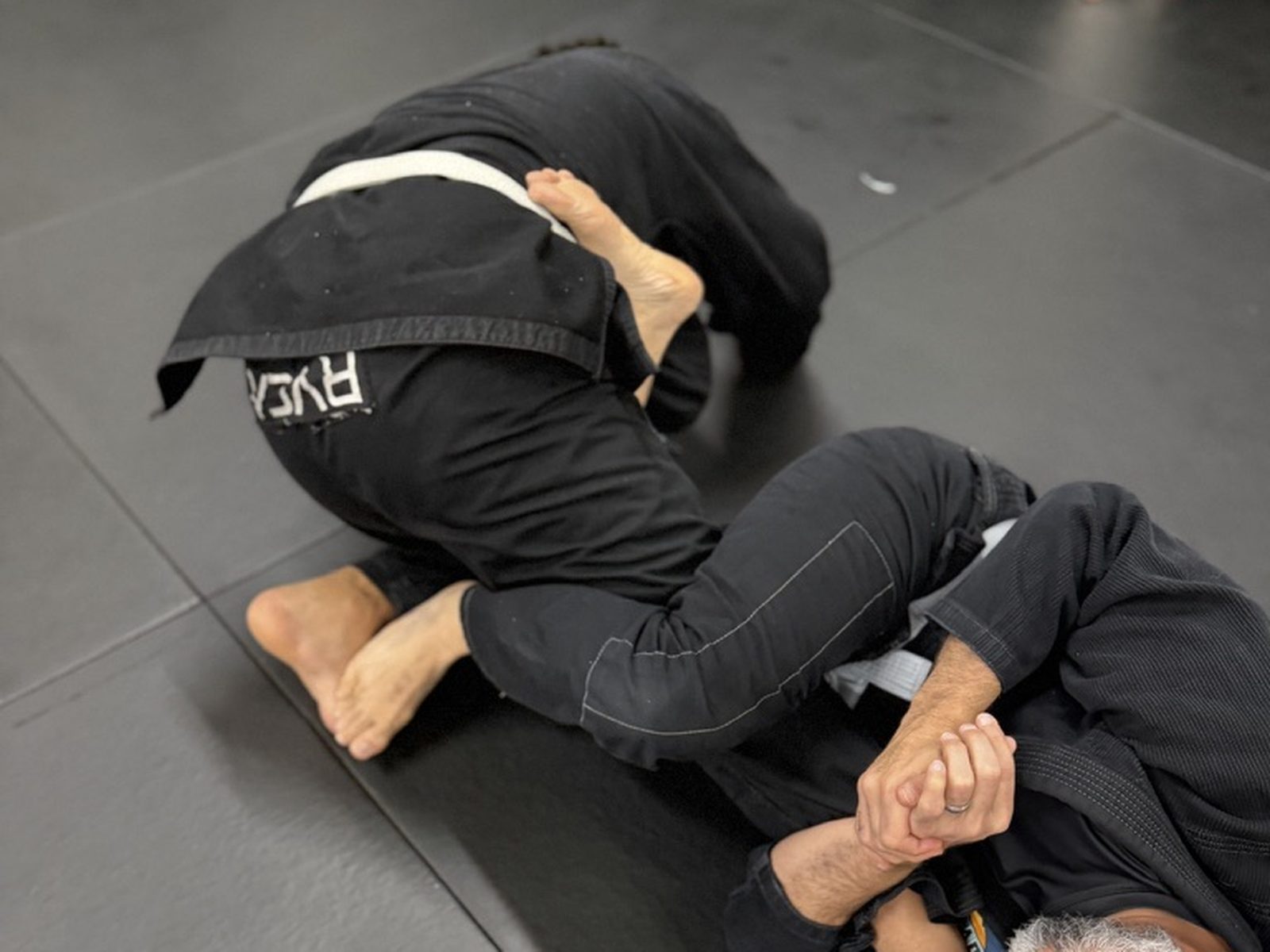
Brazilian Jiu Jitsu teaches you to stay calm and keep working when someone is on top of you, grabbing you or holding you down. It runs on leverage and position, which lets you do more with less strength once you know where to put your weight and how to frame with your arms and legs, though size still matters, especially early on. For self defense, the goal on the ground is to get back to your feet and get away, and jiu jitsu gives you the tools to do it, like bridging, shrimping and the technical stand up.
- 05
Live training is the test
Whatever art you pick, look for classes where you build up to partners who resist you at a safe, controlled pace. A move you've only done on a partner who lets you have it tends to fall apart when someone fights back and your heart is pounding. Under real stress you may get tunnel vision, shake or freeze for a second. Positional rounds, rolling and light sparring get you used to that and teach you to think under pressure, and that's the part that carries over.

Why train more than one
A fight doesn't stay in one place. A real fight can start standing, end up in a clinch against a wall, and finish on the ground, sometimes with more than one person involved. If you only know striking, a grab or a takedown puts you somewhere you've never been. If you only know the ground, you have no tools to keep someone off you while you're still standing. Some of each means you're rarely completely lost, wherever it ends up.
Start with one, then add the other. You don't have to learn everything at once. Start with the art you're most excited about and train it steadily until the basics feel comfortable. Then add the other side: strikers add grappling, and grapplers add striking. That's how MMA (mixed martial arts) is built at AK-49 Martial Arts, from Kickboxing, Muay Thai, Wrestling, Brazilian Jiu Jitsu and No Gi.
Things to look out for
Skipping awareness
You put all your thought into which art wins and none into noticing trouble early. Even good physical skills leave you starting behind if you only see the problem when it's already on top of you.
The fix: Put awareness and leaving first. Keep your head up, put the phone away in parking lots and quiet places, and go as soon as something feels off. If someone keeps coming closer, step back, bring your hands up open in front of you and tell them to back off while you move away.
Picking off an internet ranking
You read a list, pick the art at the top, and sign up somewhere too far away or at a time that doesn't fit your week. A few weeks later you've stopped going, and an art you quit doesn't help you at all.
The fix: Pick the art and the gym you'll actually keep going to. Watch a class, see how the coaches treat beginners, and try it. Steady training over months beats the perfect art you only train for three weeks.
Training once and stopping
You take one class or a weekend seminar and walk out feeling ready. Under real stress, skills you only touched once tend to fall apart, and that feeling of being ready can talk you into staying when you should leave.
The fix: Treat self defense as training over time. Come regularly, drill the basics until they feel boring, and let your confidence come from the reps.
Never training against resistance
Every rep is with a partner who goes limp and lets you do the move. It feels great in class, then the first time someone pushes back, nothing works and you don't know why.
The fix: Once you know a move, try it against a partner who resists a little, then a little more. Positional rounds and light sparring, when you're ready, are how a move goes from something you know to something you can do.
Treating the street like the mat
You learn some jiu jitsu and start picturing a street fight as a roll on soft mats. On concrete, with someone's friend nearby or a weapon you didn't see, staying on the ground is a bad place to be.
The fix: Use your ground skills to get back up and get away, then call for help once you're somewhere safe. If someone shows a weapon and wants your things, give them up. Treat any knife as a reason to get away, however much you've trained. If there's more than one person, getting up and out matters even more. Self defense laws vary by state, but in general force is only justified to protect yourself and only as much as you need, so the goal is always to get away. Save the long ground battles for class.
Frequently Asked Questions
What's the best martial art for self defense?+
There isn't one winner. Awareness and leaving come first. After that, train regularly in an art where partners resist you, like Brazilian Jiu Jitsu, kickboxing, Muay Thai or wrestling. The best one for you is the one you'll keep showing up for.
Is BJJ or striking better for self defense?+
They cover different parts of a fight. Striking teaches distance, protecting your head and making space to get away. Jiu jitsu teaches you to stay calm and get back up when someone grabs you or takes you down. If you can, train some of both.
What's the best martial art for a smaller person?+
Grappling built on leverage and position, like Brazilian Jiu Jitsu and wrestling, helps a smaller person a lot once they know it, because good position lets you do more with less strength. Size still matters, and striking helps you keep distance and make space to leave. Against someone bigger, the plan is to break free and get away.
How long until I can defend myself?+
There's no set date, so be careful with anyone who promises one. You pick up useful habits early, like protecting your head and staying calm when someone grabs you. Skills that hold up under real stress take steady training over a long time, and they keep building the longer you train.
Can I train more than one at AK-49 Martial Arts?+
Yes. Adults can train Adult Kickboxing, Muay Thai, Adult BJJ and No Gi, which is a hybrid of Brazilian Jiu Jitsu and wrestling. You can start with one and add another once the first feels comfortable. Kids train in Kids BJJ, 6 and up, and Kids Kickboxing, 7 and up.
Are You Ready?