
Underhooks
Wrestling | Ties and Grips
How to Use Underhooks in Wrestling
An underhook is your arm under your partner's armpit with your hand on their back or shoulder blade. Get it deep, lift the elbow high, keep your head up on that side and your hips close. From there you control their posture and can circle to their back, lock a body lock or hit a takedown.
- 01
Good wrestling stance
Knees bent, head up, hips under you and your weight on the balls of your feet. In the clinch your feet are split, one forward and one back, and you lean into them while staying relaxed. Balance comes first, because a perfect underhook on bad feet still gets you thrown.
- 02
Hands in front, elbows in
Keep your hands close together in front of you and your elbows tight to your ribs. When you both reach, the person whose arms are on the inside wins. Inside position is what lets you slide an arm under theirs.
- 03
Pummel inside
Swim your hand in under their arm, along their ribs, like you're doing a breaststroke. One clean way in is an inside grip on their wrist, then lift their elbow up and slide in under it. Keep it smooth and relaxed. A tense arm is slow and tires you out. Lean just enough that they carry a little of your weight, while your arms and shoulders stay loose, the way you'd lean on a counter.
- 04
Deep and high
Reach across their back toward the shoulder blade, not just into the armpit. Keep your fingers together and your thumb alongside them, cupping their back, so your thumb doesn't get caught and bent. Then lift your elbow up high so their arm and shoulder come up with it. A high underhook lifts them onto their toes, and you should feel their balance get light on that side.
- 05
Head up, hips close
Put your head on the same side as your underhook, up against their head or shoulder, and keep it up. Step your foot on the underhook side in toward them so your hips come in close. One underhook is the common fight, and if you get both arms under, called double underhooks, you can lock your hands for a body lock. If your head drops, you're walking into a headlock, and if your hips stay far away, your underhook has nothing behind it.
- 06
Use it, then back to your stance
Lift with the underhook to turn them, circle toward their back, or lock your hands into a body lock: both arms around their waist, hands clasped palm to palm, your hips tight to theirs. Their main counter is an overhook, also called a whizzer, where they wrap over your underhook arm and clamp down. Beat it by keeping your elbow high and your hips close, or swim the arm back out and in again. If they pummel back in and you lose it, don't hang on. Let go, step back out to your stance, and start the hand fight again.
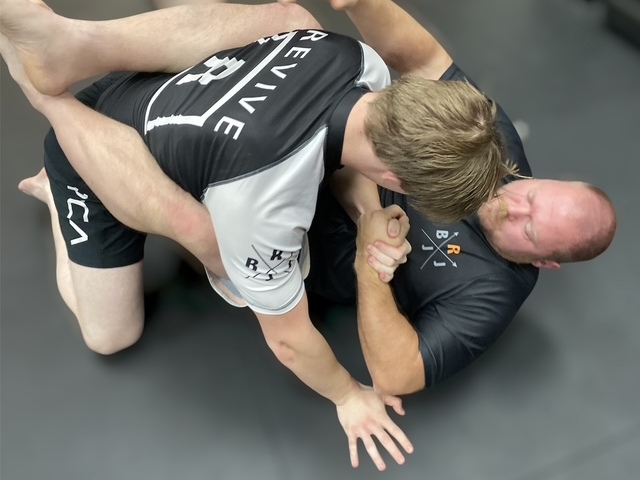
When to use it
When you end up chest to chest. In No Gi and MMA you'll often end up tied up close with your partner. Whoever has the underhook usually controls what happens next, because it lifts the other person's arm and opens their side. It also makes it hard for them to shoot on your legs. When you're tied up close, get your arm inside and fight for that underhook first.
To get behind them or take them down. An underhook lets you circle around to their back, and it leads straight into a body lock. It also sets up simple takedowns like the knee pick. Lift their arm high and step toward their back. Most people turn back in to face you, and as they do, their near leg steps up in front, so drop your level and grab behind that knee for the knee pick. If they don't turn, keep circling to their back.
Things to look out for
A shallow underhook
Your hand only reaches their armpit. They squeeze down with an overhook, strip it easily, or pummel right back inside.
The fix: Reach deep across their back toward the far shoulder blade and lift the elbow high. You should feel their shoulder come up with your arm.
Dropping your head
Your head sinks down by their chest while you fight for the underhook. They wrap the head and arm, and you're in a headlock or a front headlock.
The fix: Keep your head up and on the underhook side, pressed against their head or shoulder. Eyes up, chin in.
Feet too wide or square
You win the underhook but your feet are wide apart or side by side. They step in and throw you, or push you off balance.
The fix: Split your feet, one forward and one back, under your hips. Lean into them relaxed, so they're holding your weight.
Hips too far away
Your arm is under theirs but your hips are way back. The underhook has no power, and they push your head or hips away and reset.
The fix: Step in so your hip is close to theirs, and pull them up and into you with the underhook. Arm and hip work together.
Muscling it
You squeeze and push as hard as you can to hold the underhook. You burn out in a minute, and a tense arm is slower to pummel when they swim back in.
The fix: Stay loose, use your weight and keep your feet moving. Lean on them so they carry you, and save the hard squeeze for when you lock up a body lock.
Giving up your head for the grip
You reach so hard for the underhook that you let them move your head out of position. Now their overhook beats your underhook.
The fix: Win head position first, then go for the underhook. If you have to choose, keep your head where it should be.
Holding on after it's gone
They pummel back inside, and you keep hanging on with a weak, half underhook. They take the inside position and go to work on you.
The fix: Pummel back in right away, or let go, step out to your stance and reset.
Drills you can practice
Drill 01
Shadow pummeling
3 rounds of 2 minutes with 1 minute rest, in your split stance. Swim one arm in like you're going under a partner's arm, then the other, back and forth. Round one, slow and relaxed with elbows tight. Round two, add a step in with each swim. Round three, faster, but head stays up the whole time.
Drill 02
Heavy bag underhooks
If you have a hanging heavy bag, do 3 rounds of 1 minute per side. Underhook the bag deep, put your head on that side of the bag, bring your hips in and lift your elbow high. Walk a slow circle around the bag on your feet. The bag can't fight back, so this only builds the shape and the head and hip position. No bag? Shadow the same shape in the air.
Drill 03
Step in and pummel
4 rounds of 1 minute. From your stance, step your front foot in, swim the underhook in, bring your hips close and take two steps toward the underhook side, then step back out to your stance. Switch sides every rep. Keep your head up the whole time. In class, pummeling moves to a partner: first cooperative, trading underhooks at an easy pace, then light resistance where you both fight for inside position. Don't force an underhook by wrenching their shoulder or driving your head into their face or neck, and if a shoulder or neck feels strained, stop and reset.
Frequently Asked Questions
What is an underhook?+
It's your arm under your partner's armpit, with your hand on their back or shoulder blade. It lifts their arm and opens their side. Grapplers use it to control posture, get behind someone and set up takedowns.
How deep should my underhook be?+
Deep, with your hand reaching across their back toward the shoulder blade. Then lift the elbow high. A hand that only reaches the armpit is easy to strip.
What do you do from an underhook?+
Circle toward their back, lock your hands into a body lock, or hit a takedown like a knee pick. You can also just hold it and lean on them to tire them out. In MMA, people often throw a punch and fall into the underhook to start the clinch.
What's the difference between an underhook and an overhook?+
An underhook goes under their arm and lifts it. An overhook goes over the top of their arm and clamps it down. Generally the underhook is better for getting to the back, and the overhook is for putting weight on them or stopping their underhook.
How do I stop someone from getting an underhook on me?+
Keep your elbows tight and your hands inside, so there's no space under your arm. If they do get one, pummel your own arm back in underneath, or go over the top with an overhook and clamp down. Don't let them hold it and lift you.
Are You Ready?