
Wrestling Conditioning
Wrestling | Questions
Wrestling Conditioning: How to Build Your Gas Tank
Wrestling asks for short all out bursts, hard efforts that last up to about two minutes, and a steady pace you can hold for a whole round. Most beginners gas out from tension, held breath and wasted effort more than from poor fitness. Clean technique, steady breathing and showing up to train regularly build your gas tank faster than anything else.
What wrestling asks of you
- 01
Short bursts
A shot, a sprawl or a hard scramble is an all out effort that lasts a few seconds. You'll do a lot of these in a round, with less effort in between. Getting better at them means recovering fast after each one, not just going hard.
- 02
Hard stretches
Fighting off your back, finishing a stubborn takedown or getting out from under someone can be hard work for a minute or two straight. This is the part that makes your legs and lungs burn. You build it by doing it in class, round after round. Live rounds in grappling are often 5 or 6 minutes with a minute or so of rest, and an easy way to track progress is noticing how fast your breathing settles in that rest.
- 03
A pace you can hold
Underneath the bursts, you need a steady pace that lasts a whole round and a whole class. For your base work, an easy test is that you can still talk in short sentences. That base is what lets you recover between scrambles. If you only ever train at a sprint, the round lasts longer than you do.
- 04
Breathe and stay loose
Holding your breath and tensing every muscle burns energy faster than almost anything. Keep breathing steady the whole time and let a breath out on your hardest efforts. Keep your grip and shoulders relaxed when you're not using them, and save full strength for the moments that need it. Relaxed doesn't mean limp. Your frames and stance stay on.
- 05
Strength and cardio work together
Grappling takes both strength and endurance, and a lot of hard cardio can get in the way of building strength. That's why most of your conditioning should come from training itself, with extra work kept simple. Easy steady work like biking, rowing or brisk walks builds the base, and a few short intervals build the bursts. A simple week for a beginner is two or three classes, plus one easy cardio session and one short strength session if you have the energy. If you want a more detailed plan, ask your coach.
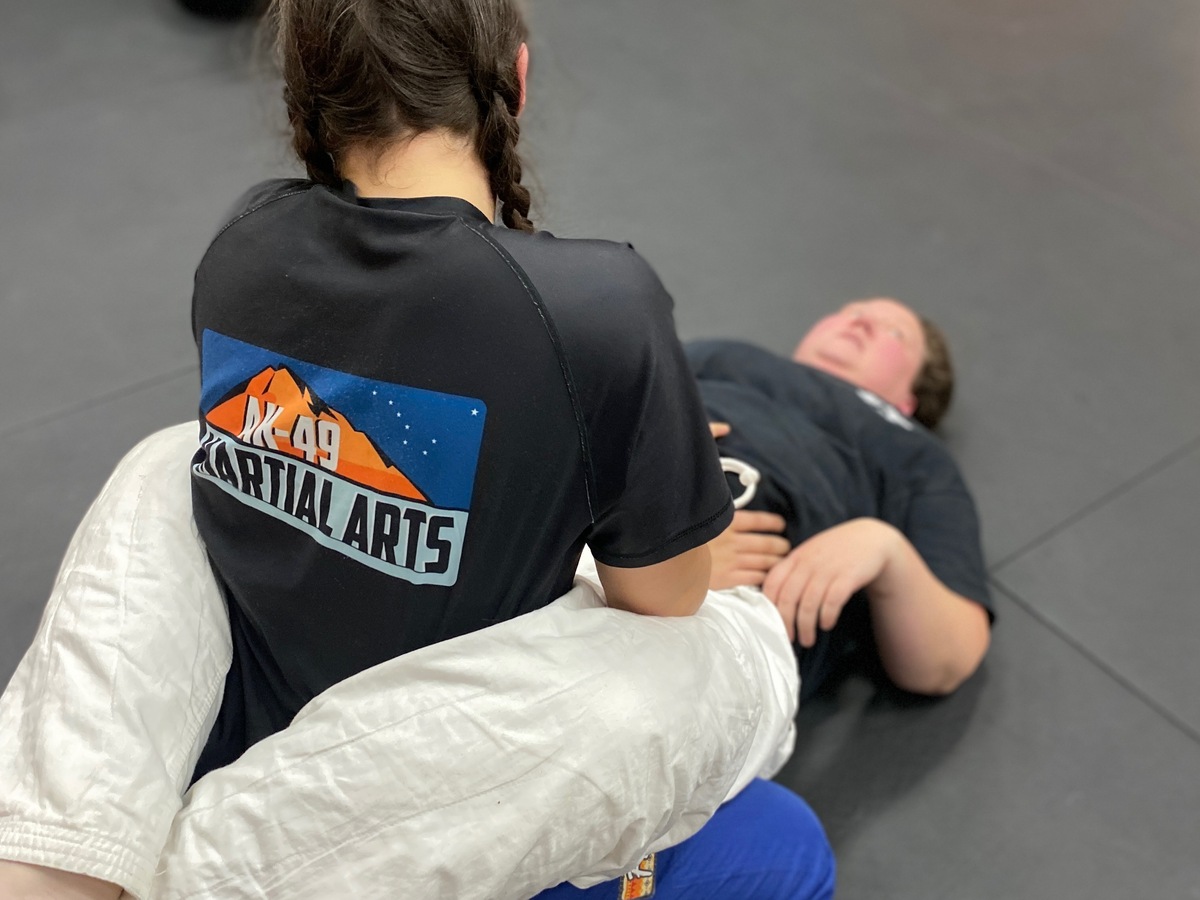
How to save energy
Clean technique saves your gas. Failed takedowns and failed submissions are two of the most tiring things in a round. Forcing a move your partner already stopped burns you out for nothing, so let it go and switch to something else. Move your hips to make space instead of pushing with your arms. The more efficient your technique gets, the longer you last.
Stand a little taller and don't carry them. A deep, bent over wrestling crouch is built for short matches, and it wears out your legs and lower back over a long round. A middle stance, with your shoulder over your front knee, is one you can hold all class. If a shot stalls and you're holding their weight up, don't hang on. Climb to their waist or let go and reset.
Things to look out for
A deep crouch for the whole round
You copy the low crouch from college matches and hold it all round. Your thighs burn after a minute, your lower back aches and you're done before the round is.
The fix: Use a middle stance with your shoulder over your front knee. You should be able to hold it for a full round and still move.
Holding your breath
You tense up and hold your breath every time something gets hard. Your heart rate spikes and you gas out in one round, then blame your cardio.
The fix: Keep breathing steady the whole time, and let a breath out only on your hardest efforts. In lighter rounds, check your breathing on purpose until it happens without thinking.
Going 100 percent every second
Every grip, every scramble and every position gets full effort. You're spent in two minutes, and a calm partner just waits for you to tire.
The fix: Match your effort to the moment. Go hard in bursts, then settle and breathe once you're somewhere safe.
Fighting a move that already failed
Your shot stalls or your partner defends, and you keep pulling and driving anyway. That's the most tiring thing you can do on the mat.
The fix: When a move stops working, let it go and go to the next thing, or back to your stance. A reset costs a lot less than a fight you've already lost.
Waiting to get in shape first
You put off starting until you've done some running or lost some weight. Months go by and you still haven't started.
The fix: You don't need to be in shape to start. A few weeks of steady training is what gets you in better shape. Rest when you need to.
Skipping sleep and rest days
You train hard every day and sleep five hours. You stay sore, feel slow and get more tired each week instead of less.
The fix: Sleep well, eat normal meals, drink water before and during class, never try to cut weight fast by skipping water or sweating it off, and take rest days between hard sessions. If you get dizzy, sick to your stomach, or feel chest pain or a pounding headache during a hard round, stop, sit out and tell your coach. Your body gets better while it recovers, not while it's beat up.
Drills you can practice
Drill 01
Stance and motion rounds
3 rounds of 2 minutes with 1 minute rest. Get in your stance and move forward, back and side to side in short steps without crossing your feet, staying at the same height. Round one, easy pace and steady breathing. Round two, add a quick level change every 10 seconds. Round three, keep the pace up the whole two minutes. Finish each round with 10 small hops on each leg, knee soft and hands up, to build the balance you need when someone has your other leg.
Drill 02
Sprawl bursts
6 rounds of 20 seconds work with 40 seconds rest. From your stance, sprawl by dropping your hips down and forward while your legs shoot straight back onto the tops of your feet, chest up as if it's landing on a partner's back, then circle back up to your stance and repeat. Do them on carpet or a mat. Focus on getting back to a good stance after every sprawl, not just going fast. Stop if your lower back complains.
Drill 03
Technical stand ups
3 sets of 5 each side with 1 minute rest. Sit on the floor, post one hand behind you and plant the opposite foot, lift your hips and swing your other leg back under you, then stand up into your stance. Keep your free hand up by your face and keep breathing as you stand.
Frequently Asked Questions
How do wrestlers build conditioning?+
Mostly by training. Rounds of drilling and live work build the bursts, the hard stretches and the steady pace all at once. Some people add sprints or simple strength work on top. The biggest gains for beginners come from relaxing, breathing and cleaning up technique.
Do I need to be in shape to start wrestling?+
No. Most people feel out of shape in their first few classes, no matter where they start. A few weeks of steady training gets you in better shape. Rest when you need to and come back next class.
Why do I gas out so fast when I grapple?+
Usually tension and held breath, plus fighting moves that already failed. Grappling also uses muscles you don't use much elsewhere. Keep your breathing steady, stay loose when you're not working and let go of moves that stall.
Should I run or lift weights too?+
Training is the main thing. If you want to add more, a mix of easy steady cardio for your base and some short sprints or hill work for the bursts both help, along with a little simple strength work. Ask your coach before you build a plan, so it doesn't leave you too tired to train.
How long until my cardio gets better?+
It gets better with every week you show up. Most people notice they're breathing easier and recovering faster after a few weeks of steady training. Showing up two or three times a week beats one hard week followed by two weeks off.
Are You Ready?